Category Archives

20 Articles
Bob Ryan Retires: All Hail the All-Time NBA Sage

Bob Ryan Retires: All Hail the All-Time NBA Sage

The encomia are surely piling up across the web, but I couldn’t let slide the fact that Bob Ryan has retired from The Boston Globe as full-time basketball sage and de facto Commissioner of all things hoops (a title bestowed decades ago, by his fellow scribes). Here’s a link to his farewell column, delivered Aug. 11 with his signature directness, brevity and authoritative elegance.

Having grown up in Greater Boston, I latched onto Ryan early, in the mid-1970s, when the Celtics were winning championships and knowledge of the team was nearly the exclusive province of Mr. Ryan, whose game reports and columns were often the only worthwhile analyses available the next morning. Yes, some games were televised locally, but only a few. Radio was an option, but Johnny Most was so bombastic, his account of the goings-down, while entertaining, could not be trusted.

Above all things, Ryan could be trusted — to authoritatively tell you the “why” behind wins and losses; the “who” when it came to contenders and pretenders. His appraisal of players was never erring. When Larry Bird was drafted, as a junior, and all of Boston watched his senior year at Indiana State wondering if his game would translate to the pros, Ryan put that matter to rest. He sized up Bird a basketball genius way before it was obvious to the rest of us, and so Larry turned out to be.

His between-the-lines sizing-up of personalities was similarly spot on and vital to a young basketball mind in its formative stages. It really was about the guy’s authority. You could tell when Ryan truly admired a player (Dave Cowens) or didn’t deem one worth a damn (Sydney Wicks). It was clear when he admired someone but didn’t necessarily like him (David Stern), and when someone didn’t like Ryan (Tommy Heinsohn). It was all done very professionally, perhaps a bit coyly, and I found it all thrilling — that someone could earn a living by chronicling such fabulously interesting things in a public forum.

All through my high school, college and early years as a sports writer, Bob Ryan’s professional life was the one I wanted for myself. One time, in high school, circa 1979, my mom got us tickets to a Celtics game (vs. the Jazz) at the old Boston Garden, where she endeavored to introduce me to the guy before tip-off. I remember that he was cordial but not especially helpful or inspiring. My mom was a bit disappointed, but I couldn’t hold it against him — he was probably concocting some new way to convey to readers the utter ineffectiveness of James Hardy and Ben Poquette.

I did indeed try to follow Ryan’s path but his times were not my times. In his farewell column, he writes about going straight to the Globe sports department after graduating from Boston College in 1968. In the mid-1980s, no one did that — years of daily newspapering experience were required before one would even be considered. Further, by that time, the Globe sports section was a veritable all-star team of talent, and thousands of aspirants were all clamoring for the opportunity to sit at Ryan’s knee, along with those of Will McDonough, Peter Gammons, Dan Shaughnessy and Leigh Montville. Even if you had the experience, and the chops, the Globe was notorious for its minority hiring policies. I remember one reporting colleague claiming that he’d already have a job on Morrissey Boulevard, “If only I were a black, female, Cape Verdean.”

In any case, dreams die and/or they’re deferred. I left daily newspapers in 1992, having had a chance to cover the Celtics (and all the Boston teams) for smaller newspapers with nothing like the Globe’s reach and influence. I was tired of making no money, tired of being essentially nocturnal. Soon the newspaper model would collapse, and I frankly count my blessings that I got out when I did.

Ryan pressed on through this period of industry decline, adapting to the web realities and even moving into television a fare bit. Personally, I could listen to him talk about basketball and other sporting matters till the cows came home, but I think even he’d admit that his rapid-fire, staccato delivery — along with his advanced age — never truly dovetailed with the medium as it exists in the 21st century.

This winter, at the height of the Jeremy Lin craze, Ryan sat and did a podcast with Bill Simmons, the guy who has emerged as Ryan’s heir apparent on matters NBA. Check it out here; it’s linked as part of my own post comparing/contrasting Billy Ray Bates and Lin. It would seem that Simmons was the guy who successfully crafted for himself a Ryanesque place in the basketball firmament, and I enjoy his writing and podcasts nearly as much.

Best of luck to them both. The torch has been passed.

Sadly, an Era Marked More by Near-Misses than Titles

Sadly, an Era Marked More by Near-Misses than Titles

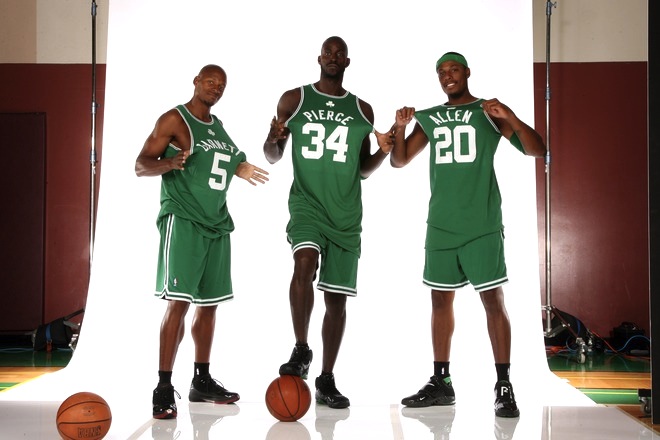
We Celtic fans will always have 2008, with its initial flood of exhilaration enabled by the Big Three. While their arrival immediately ended the longest championship-fallow period in the team’s storied history, there was in those days much talk of “The Window”, that period during which Boston’s already aged stars might reasonably deliver championships. To win it all in their first year together felt like gravy, a gift. Little did we know, five years on (with the development of Rajan Rondo into one of the NBA’s premier point guards) that one title would be the sum and total.

The reality is this: The Big Three era is over and but for that one title it will rightly be remembered more for a series of excruciating, valiant near misses . Wednesday night’s OT loss in Miami is merely the latest and perhaps final indignity.

Think of the 76ers from 1979-84. A great and wholly admirable team that played some of the most hotly contested, best-remembered playoff series in NBA history. But the numbers don’t lie. That group accounted for a single title, and that — hard though it is for Boston fans to admit — will be the identical legacy of this thoroughly likeable, often-heroic, somewhat unlucky, but ultimately underachieving Celtics incarnation.

A quick recap:

• 2008: A title, fairly won and glory be to God.

• 2009: Kevin Garnett is hurt late in the season, and the Celtics still take Orlando to 7 in the Conference Finals. Clearly undermanned, they battled and nearly stole the series. Valiant? Yes, but that and $8.50 will get you a cup of coffee.

• 2010: The nearest miss of them all, a Game 7 loss to the Lakers in the NBA Finals. Kobe went 6 for 24 and Boston (Kendrick or no Kendrick) couldn’t get it done.

• 2011: Out in the second round to Miami in a deceivingly competitive 5-game series wherein Rondo broke his elbow in Game 3. Even then, the final two games were toss-ups, and Boston blew an 8-point lead in the final two minutes of Game 5.

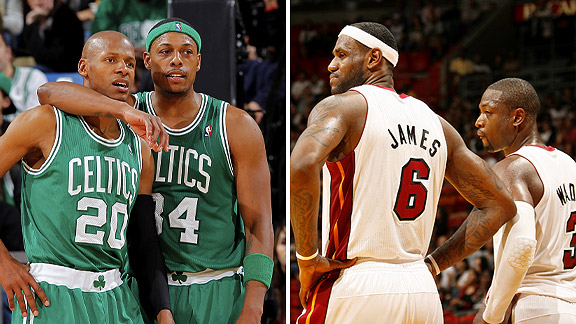
Picking over the debris of last night’s harrowing defeat in South Florida, which drops the Celtics in a 2-0 hole headed back to Boston, it’s difficult to find fault with the team — as it is difficult to find fault or cast blame associated with any of these playoff exits. Indeed, while the word “heroic” is tossed around all too lightly in American sporting circles, Doc Rivers’ crew once again proved lion-hearted in defeat. Ahead of last night’s Game 2, conventional wisdom held that Boston had to win or the series was over; no one would beat Lebron and DWade four games out five, even with 3 of those games in the Garden. Unfortunately for the Celtics — and they were monumentally unfortunate, watching James go to the line 29 times and accrue just 2 fouls in his nearly 50 minutes on the floor, while the guys who guarded him (Pierce and Pietrus) both fouled out — the 2011-12 season, and the Big Three Era, would appear to be done and dusted.

In the fourth quarter last night with just under three minutes remaining and the Celtics holding a 94-89 lead, I texted my friend Jammin’: “3 baskets or 6 points wins this game, but the Celts will need all 6… Proud to be a Celts fan tonite regardless.”

They got five, not six — good enough for overtime but not the victory they so desperately needed. But I’m no less proud.


Celts v. Heat: Plenty of Glamour and a Few Grudges

Celts v. Heat: Plenty of Glamour and a Few Grudges

Welcome back to Glamour Profession, the NBA podcast here at halphillips.net. Last year at about this time, the Celtics faced off with the Heat in Game 5 of their second-round playoff series, trailing 3 games to 1. Your pod host, Hal Phillips, was in New Zealand. Heading out to play the back nine at Kauri Cliffs Golf Club, some 17 hours ahead of Eastern Standard time, he checked the Game 5 score in the clubhouse — Boston led Miami by 8 with 2 plus minutes remaining. Standing over his approach on no. 10, his playing partner consulted the Blackberry and reported the game and series were over — the Celts having failed to score in those last 2 minutes. Well, here we are again, this time in the Eastern Conference finals. Both teams are beat up, short-handed by major injuries and seemingly inferior to either team contesting the Western Conference Finals, San Antonio and Oklahoma City. We caught up with the GP’s resident sage, Jammin’ Jim Jackson, at halftime of Sunday night’s Spurs-Thunder game to discuss that match-up and the pending Heat-Celtics series, which kicks off Monday night.

Jeremy Lin Channels his Inner Billy Ray Bates

Jeremy Lin Channels his Inner Billy Ray Bates


Two-plus weeks into the Jeremy Lin Era, you’ve no doubt heard the odd reference to one Billy Ray Bates. When basketball sage of yore Bob Ryan recently did a podcast with heir apparent Bill Simmons, Billy Ray’s out-of-nowhere emergence in 1980 was held up as the only apt comparison. Indeed, Ryan — whose stellar work for the Boston Globe in the 1970s and ‘80s fueled my interest in sports writing — claims to have been the first to make the Billy Ray analogy.

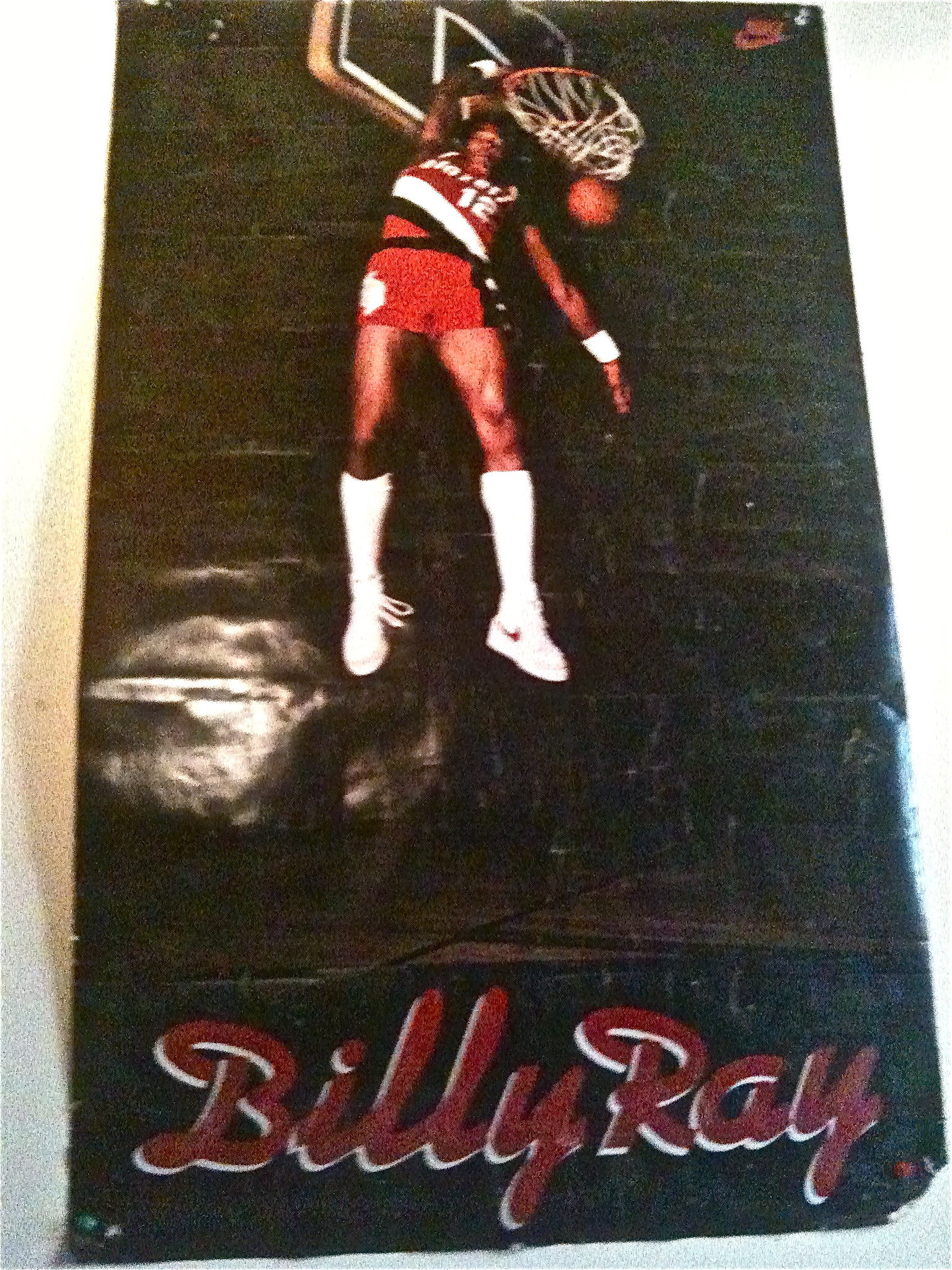
Not so. I believe I can claim to have made it almost immediately — not only because I, too, revere David Halberstam’s iconic book, “Breaks of the Game”, in which Billy Ray’s legend figures prominently, but because I stare Mr. Bates in the face every day when I sit down in my barn office. Yes, I own the poster pictured here and have since 1981. I only wish I’d have taken better care of it through the years. I mean, how many of these can there be out there?

Listen to the podcast linked above. It’s 45 minutes of all-world basketball chatter. But it should be said that even the Billy Ray analogy doesn’t quite fit (despite the fact that he, too, was cut by the Rockets before signing the 10-day contract that stuck). Bates was a brawny, 6’4” shooting guard, not a point guard like Lin. What’s more, he wasn’t completely unknown and unheralded: Billy Ray was voted Rookie of the Year in the Continental Basketball Association, the D League of its day; he won the CBA All-Star Game dunk contest and is reported to have broken no less than four backboards. Even in the media dark ages of 1980, word like that gets around.

In other ways, Lin has a ways to go in order to produce the same impact. Billy Ray was a gunner par excellence — he once scored 40 points (in 32 minutes) against the San Diego Clippers, and 35 in 25 minutes against the Mavericks — but he saved his best for the playoffs, averaging 25 ppg in the 1980 tournament and 28.3 ppg a year later (still a franchise record).

So while the Billy Ray-Jeremy comparison might be the best we can identify in the long history of the NBA, it’s not perfect — which merely speaks further to the truly anomalous goings-on in New York these days. The point guard aspect makes it completely unique. There simply isn’t any sort of precedent for a point guard emerging from developmental-league obscurity to score and dish on this scale.

If we mine the point guard vein a little deeper, we begin to better understand the evolution of this phenomenon. Lin was an excellent high school player and solid contributor on some decent Harvard teams, decent for the Ivy League anyway. But he never starred or produced anything like the numbers we’ve seen these last few weeks. Further, he was cut by both the Golden State Warriors and Houston Rockets this year. Clearly he didn’t show this sort of offensive firepower in either place.

Why? Well, because he was doing what he’d always done, what marginal back-up point guards in the NBA are supposed to do — that is, run the offense and avoid mistakes.

Lin himself has said that he was determined in New York to try something else — clearly what he was doing in Houston and Oakland weren’t working. This is not the same ol’ Jeremy Lin now setting the League on fire. It’s a radical departure, of his own making. That he landed in New York beside a coach who doesn’t care about defense (Lin remains a suspect defender) and encourages such aggressive (some would argue reckless) offensive hedonism is either blind luck, fate, or both.

Perhaps without knowing it, Lin changed his game in New York by channeled his inner Billy Ray.


What’s in a Fantasy Name? Only Everything

What’s in a Fantasy Name? Only Everything

The NBA Lockout has concluded. The players got played, and while anyone who doesn’t buy that assessment is encouraged to read Dave Zirin’s take, we owe it to the Hoop Gods, and ourselves, to press on.

Lots of rumors floating about as to how the 30 NBA teams will constitute themselves in the next 25 days, prior to the Christmas Day openers. Yet the situation is even more fluid on the fantasy front. Our league, Maine Hoops, has not even conducted the annual draft and poker bonanza; NBA free agency doesn’t commence until Dec. 9, and where those 30-odd influential players go will determine productivity not just for the 30, but for the rosters they join, or eschew.

The only responsible and productive thing to do, then, is to ponder the name of one’s fantasy team. Here is something we can control (our draft appears to be set for Sunday Dec. 18, with poker the night before).

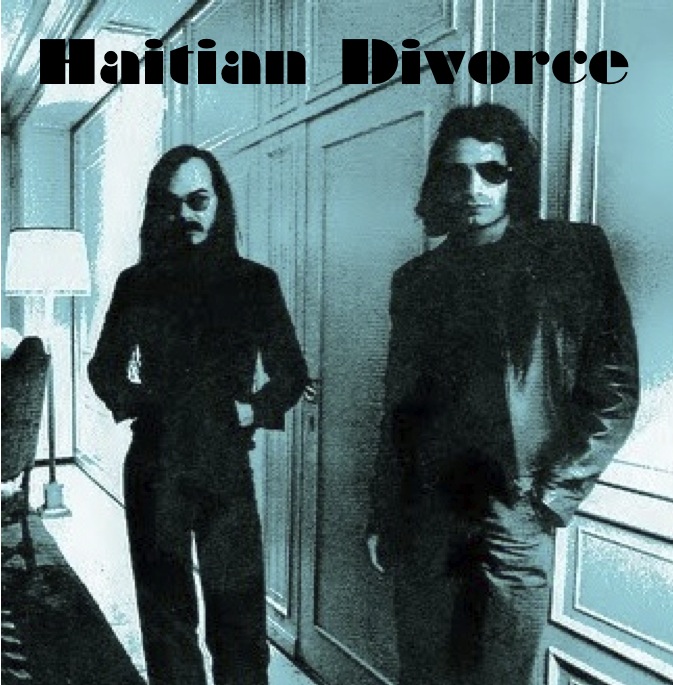
My friend Jammin’ and I co-own a team that, during the 2010-11 season, went by the name of “Haitian Divorce”. We like the Steely Dan theme (see our team logo from last year, above), and while it’s not been formally decided, I’m lobbying for another show of faith in the mystical powers of Fagen and Becker.

What’s clear is that Haitian Divorce, despite the killer logo, didn’t do the job; we finished tied for 5th last year in our 13-team league. So allow me to enlist your input. Here are some alternatives, in keeping with the Steely Dan theme. Let me know which ones you like best, or feel free to suggest alternatives:

Black Cow

Hats & Hooters

The Caves of Altimira

Chase the Dragon

Can you tell I’m listening to Aja and Gaucho while mulling this extremely serious matter? Lyric excerpts work as well as actual song or album names. I’ve already dubbed the basketball podcast here at halphillips.net “Glamour Profession”, so that’s out. Still, so much to choose from.

Schoolyard Supermen

Illegal Fun

LA Concession

Bodacious Cowboys

Mystical Sphere

Jammin weighs in with this: “If we must use a Steely Dan theme then the only choice would be Bad Sneakers… But it doesn’t really matter what we call our team because this is our year.”

True that.


The Top 50 College Basketball Players Ever: A Riposte

The Top 50 College Basketball Players Ever: A Riposte

As we inch toward another college basketball tournament (remember when March Madness actually finished in March?), Chuck Klosterman’s compelling, ambitious ranking of the top 50 college basketball players of all time deserves review — as does this piece below, which refines the matter for all time. Indeed, the foreseeable future won’t bring any changes because college basketball has come to be dominated by a serial collection of 1-and-done, unpaid contract workers whose impact on posterity is minimal, compared to those whose college “careers” lasted 3 or 4 years, not just 1.

When the ranking was first issued, back in 2011, it caught me unawares. By that time I had well developed my unlikely ambivalence toward college basketball. How else to judge its ever-lengthening regular season that, with each passing year, degenerates more brazenly into a tawdry exercise in mere broadcast-content provision? Ninety-five percent of Division I games these days are ultimately meaningless exhibition/cash-grabs leading up to an admittedly thrilling denouement, the NCAA Tournament, which can obscure, for one month each spring, just how ridiculous it is that these basketball “programs” are attached to, and wield such extraordinary fiscal and emotional power over, universities and their attendant communities. I won’t even get into the fact that all this money is being generated — for colleges, media outlets and corporate advertisers — on the backs, jerseys and computer-generated likenesses of unpaid laborers.

[For the record, I’ve transferred my hoop attentions to the unabashedly professional version of the game — for the same reasons Abraham Lincoln once threatened, rhetorically, to abandon his native country for Moscow: Our progress in degeneracy appears to me to be pretty rapid, Lincoln wrote to his friend Joshua Speed, in 1855. As a nation, we began by declaring that “all men are created equal.” We now practically read it, “all men are created equal except negroes.” When the Know-nothings get control, it will read, “all men are created equal except negroes and foreigners and Catholics.” When it comes to this, I shall prefer emigrating to some country where they make no pretense of loving liberty — to Russia, for instance, where despotism can be taken pure, and without the base alloy of hypocrisy.]

But there was a time in my life, from 1973 through the turn of the millennium, when I firmly and happily resided in the college basketball camp. Nothing so captured my sporting imagination in fact. As a middle-schooler, my friends and I devised a gaming scheme that pre-dated brackets: 32 teams in a brown paper bag, pull one for buck; if your team makes the Final Four you’re in the money. We closely followed teams from the old Yankee Conference and Eastern 8. I recall being devastated when one of those YC champs, Rhode Island, lost by a point in the 1978 NCAA Tournament — to Duke, which would go all the way to the Final (that Ram team, led by Sly Williams, was very, very good — Elite 8 good). The Big East took shape in 1979, when I was in high school, transforming (through the power of media exposure) players already known to us — Craig Shelton, Roosevelt Bowie, Corny Thompson, even Dan Calandrillo — from nice ballplayers into gods. In college I subscribed to something called Eastern Basketball magazine, written largely by a guy named Dick Weiss, whose life as it then appeared to me — covering college hoops 24/7 for junkies like myself — only strengthened my resolve to be a sportswriter.

Perhaps this is why Klosterman’s story struck such a nerve. It transported me to a time when I cared so much for college basketball, a time when the mendacity of it all wasn’t so striking, when perhaps the game wasn’t so shabby, or when I was naïve enough to believe it so. Chalk another one up to the palliative powers of nostalgia.

KLOSTERMAN’S LIST is preceded by several qualifiers, the rules of engagement as it were. The James Dean rule applies: Talent is the main criterion, but it helps to have died young. Most controversial but central to his working model is the idea that any player whose NBA stardom proved more “meaningful” than his college exploits is not eligible. Fair enough. If all were eligible, the Top 50 would too closely mimic the NBA’s Top 50 of all-time (issued in 1999), and what would be the point of that?

Read More

One Boy’s Particular Obsession, When Puma was King

One Boy’s Particular Obsession, When Puma was King


When I was 9 or 10 years old, the soccer shoe everyone wanted was the adidas World Cup. I wanted Puma’s King Pele model. I don’t toe the brand line as an adult, but as a childhood footwear consumer, I was always a Puma guy.

Never did swing that pair of King Peles with the ‘rents. They were top of the soccer cleat line, Puma’s anyway, and too expensive for a kid who needed a new pair every year. When I was about 12, I did get myself into the next step down, the Puma Apollo, which distinguished itself from the yellow swoosh and piping of the Peles with a white swoosh and a red dot — the dot being Puma’s trademark back-of-the-heal design. I had two pairs of Apollos then a succession of Pumas straight through my high school, club and college careers. My last pair was procured in Amsterdam, at the close of a backpacking expedition through Europe, the summer before my junior year at Wesleyan. The trip was nearly over, we’d soon be back at school for two weeks of soccer preseason, prior to classes. They were replaceables, the studs that is, and they were expensive but I had to have them. I emptied the vault to buy them, occasioning the first of many dire afternoons in Heathrow, waiting for a flight home with no money for food and nothing but a pack of Dunhills.

Truth be told, those particular cleats never proved very comfortable. Good for sloppy tracks but I had another pair of plastic molded-sole Pumas that got most of the run. For some reason I blacked out the swoosh with some dye that sat in a box full of shoe polish, brushes, rags and neatsfoot oil. It had been at my parents’ house; I took it to college to care for my various brogues and paint my soccer shoes. Is that gay?

More important, is it an actual swoosh that adorns Puma cobblery? I don’t know what to call that upside-down pipe that got wider as it traveled horizontally and form-fittingly from heel to mid-arch, before turning south and terminating where the arch met the sole of the shoe. Should Nike have control of that word? I think not.

Off the pitch I was obsessed with getting me a pair of Puma Clydes, blue felt low-top basketball sneakers with a gray inverswoosh and dot. I played hoops and these were THE coolest shoe anyone could hope to have in 1978, so far as I was concerned. I pleaded with my mom for some, but we stuck to our routine of buying cheap shoes that wore out about the time I outgrew them. However, my feet had stopped growing by 1978, and I argued that a pair of Clydes would last twice as long as the cheap knock-offs at Marshall’s. So she bit, and I remember gathering great confidence and strength from them, on court and off. Seriously. Shoes can do that. When were really young a new pair of sneakers would be appraised for speed in addition to élan. Look how fast they are… With my Clydes I experienced a pre-adolescent version of that sensation when wearing them, or simply by gazing upon them.

In the 9th grade I played my first real basketball, at junior high school, and I went in another direction: the Puma Basket, a white leather job with black dot and inverse-swoosh. I loved my Pumas so much, I devoted to them artistic energy. For fun I drew very detailed renderings of black cleats, taking great care to use just the right colors for the inverswoosh, and the dot, which was rendered in semi-circular fashion because I depicted the shoes in profile. In some junior high school art class I crafted a hollow rendering of the Basket out of clay, painting it and affixing a complete rawhide shoelace. Miraculously, this eminently breakable item still sits on shelf in my parents’ house.

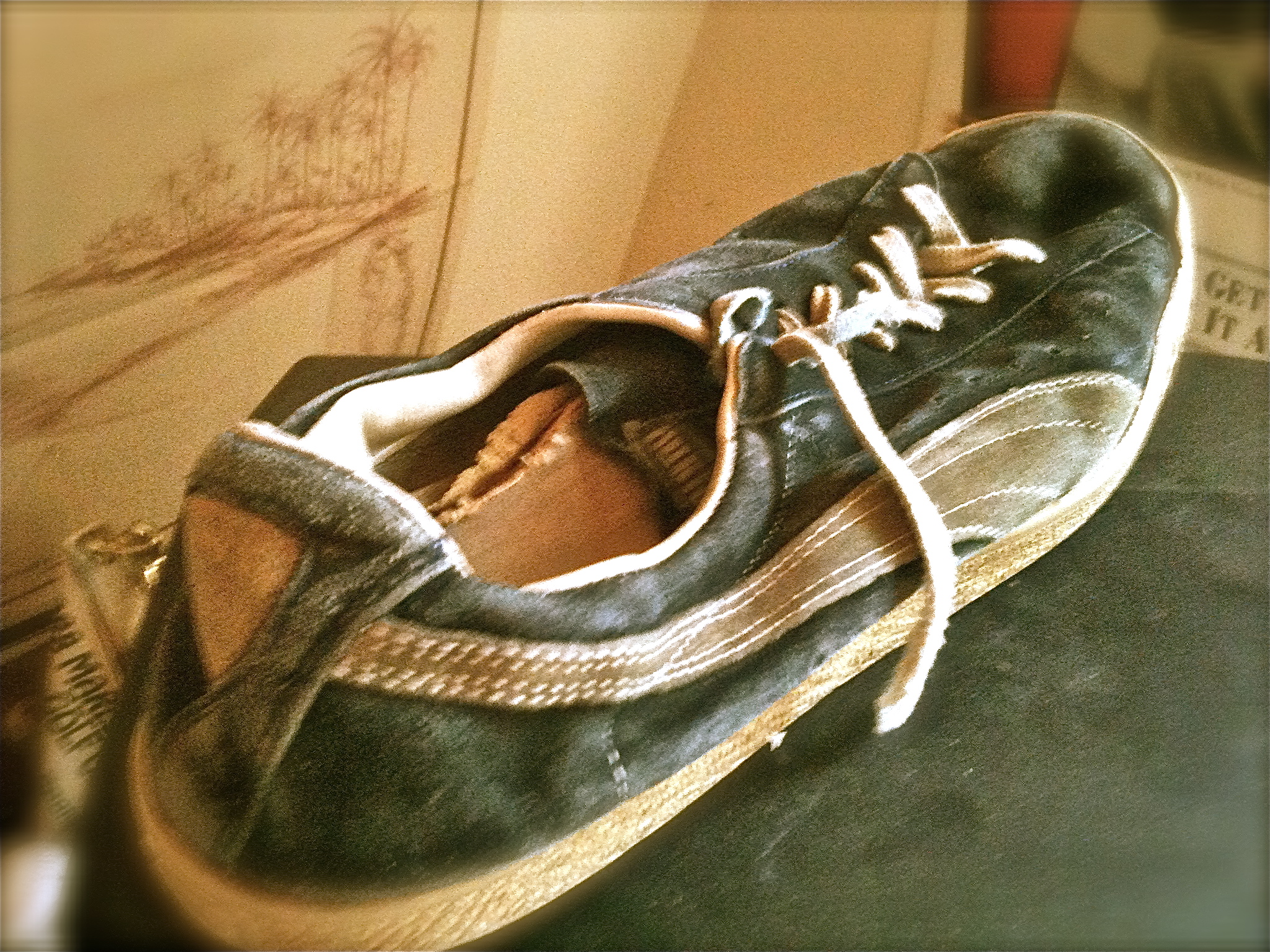
I was down there last month and noticed on my mother’s washing machine a shoe. I went over and inspected it, and here was the original right-footed Puma Clyde I wore so proudly the first day of the 8th grade, and many days thereafter. But how could it be here, and why?

My mother explains: When down parkas and comforters became available, we learned that you could wash them yourself — but you had to dry them properly, or the down would get lumpy. The instructions advised (still do, I guess) that you dry them “three times, with a tennis shoe or tennis ball in the dryer.” I guess “three times” insures they are really dry, all through, and the shoe or ball sort of “stirs” the down while it’s drying. The same technique works to wash/dry down pillows, which I’ve been washing the last few years…

Funny you should ask today because this morning I decided to put my comforter on my bed, and it was all flat; so I put it in the dryer and realized I’ve lost my SHOE! So I went to the garage and got a gardening clog made of rubber, which worked fine…

So yeah, I took her shoe, which was mine all along. I’m looking at it right now. And it feels really good.


Sports Couture Karma: Transgressions will cost you
The inimitable Maurice Lucas in the uniform his Blazers adopted immediately after winning their first NBA Championship, in 1977. They've not won another.

Sports Couture Karma: Transgressions will cost you


The inimitable Maurice Lucas in the uniform his Blazers adopted immediately after winning their first NBA Championship, in 1977. They’ve not won another.

So, I was watching some random highlight of a Patriots-Rams exhibition game about a year ago when it suddenly crystallized for me. It takes two points to make a line, and finally I had identified a second, solid example of Sports Marketing Greed/Hubris, Couture Division.

Bill Walton models the jersey that won Portland a title. A year later, in new togs, he broke his foot, demanded a trade and was never the same again.

Exhibit A) The Portland Trailblazers win the NBA title in 1976-77, wearing the same plain-Jane uniforms (white at home, red on the road; the “Blazers” lettering reading vertically down the jersey) they had sported since their joining the League in 1970. The very next season, they go to the arguably more attractive and apropos design — dual swaths, or blazes, of red, black and white that run diagonally across the breast and down the shorts. The result: They haven’t won a title since. Haven’t really come close, to be honest, despite a couple trips back to the Finals.

You think it’s an accident that one of the finest, most cohesive teams in NBA history literally disintegrated the moment they damned the championship karma and changed uniforms? Don’t be naïve… I had always wondered why the Blazers tempted fate in this fashion, but I couldn’t prove that some sort of karmic law had been transgressed, until now.

Exhibit B) The St. Louis Rams win the 2000 Super Bowl in their old yellow-and-blue uniforms. The next year, attempting to cash in at the merchandize window, they switch to GOLD and blue. Again, arguably an upgrade in style and originality, but a bald-faced affront to a clearly winning formula. They return to the Super Bowl in 2001, lose to an inferior Patriots team, and have since descended into chaos. Koros, Hubris, Ate, Nemesis — the classic Greek cycle of decline…

Purists will note that the Rams’ yellow-and-blue togs were not their originals. The dark blue-and-whites I associate with Roman Gabriel, Merlin Olson and the 1960s; the Rams actually go back to Cleveland in the late 1940s, and I have no idea what colors they wore then. My point: The yellow-and-blue had been worn a good long time prior to 2001, since the early 1970s. They were established.

A one-off merchandizing cash-in you MIGHT get away with. But you can’t  win a franchise’s first-ever championship and change things up so radically. You just can’t.

These have not.

These colors delivered to the Rams Super Bowl glory.

Fullcourt Pod: Deal with the Final Solution


No one would have lapped up another Celtics-Lakers series more ardently than Fullcourt Pod host Hal Phillips and senior analyst Jammin’. But rather than discuss whose pipe dream proved more fanciful (the Green one, or the Purple & Gold one), we concentrate on the matter at hand, which doubles as the cold, hard reality: this most intriguing Finals match-up that starts Tuesday night in Miami. Dirk and the Mavs weren’t chosen to get out of the First Round, but now all of America (outside South Florida) is pulling for them to win it all. Such is the low esteem in which we hold Lebron, D-Wade & Co. How did we get here? And where will it all go…

2011.05.30 Fullcourt Pod, Glamour Edition

Fullcourt Pod: NBA Playoff Chat for April 25, 2011

Fullcourt Pod: NBA Playoff Chat for April 25, 2011

It’s NBA Playoff time, about midway through Round I, and so we take stock of key developments courtesy of  Fullcourt Pod’s resident near-savants, Hal Phillips and Jammin’ James W. Jackson Jr. This week’s fixation and jumping-off point is Laker Coach Phil Jackson‘s indifference toward defending Chris Paul — or should we say inability?

2011.04.25 Fullcourt Pod