Category Archives

65 Articles
Glass Slipper Be Damned: Golf’s Underdog Complex Continues to Puzzle

Glass Slipper Be Damned: Golf’s Underdog Complex Continues to Puzzle

Keith Mitchell won last week’s Honda Classic, besting Brooks Koepka and Ricky Fowler with a 72-hole birdie. Headline writers at the Palm Beach Post were underwhelmed.

That giant sucking sound you may hear is the disappointment of American golf fans made manifest, as yet another “nobody” had made off with a PGA Tour title that might have gone to one of our darlings.

Intellectually, golf fans recognize that the lowliest shit-kicking tour pro can beat two-time defending U.S. Open champion Brooks Koepka on any given day — as Keith Mitchell did so cannily at last week’s Honda Classic.

What’s less clear is why such a result leaves us all so cold. Why are golf’s surprise winners Humpty Dumpty, and not Cinderella?

When a man like Mitchell comes out of nowhere, why do we root against him?

This phenomenon has been eating away at me for decades. Perhaps, like me, you’ve wondered aloud why golf fans rooted for Tiger Woods so ardently all those years,  while rooting against the likes of Bob May, Y.E. Yang and Trip Kuehne.

There will always be a minority who root against Tiger or Phil or Justin, I suppose. But it is a distinct, vanishingly small minority in golf, especially compared to our rooting habits in other sports. Why?

Given a choice, we prefer to live in singular times. It’s one reason why we can’t take our eyes off Tiger, or Dustin, or Rory — and continually compare them to Nicklaus, Palmer and Trevino. They are the best of our time, and something inside us craves the inevitable comparison with “all time”. This urge to confirm that our stay on Earth spans momentous periods in history is why Grandpa still natters on about the severity of snowstorms in the 1940s, why he prefers ballplayers from the 1950s. It’s why we have something called The Greatest Generation.

Still, in the world of sports fandom, while we recognize and quietly root for dominant teams or individuals to achieve this greatness (a greatness we can brag about to our grandchildren), there has always been room for Underdogs. We also root for them because their stories are irresistible, right? Only a neutral cad (or a Patriots fan) could have rooted against the Rams in the most recent Super Bowl. Who but a Yankees fan doesn’t routinely back anyone who might face them in post season? When UCLA won those 88 games in a row under John Wooden, or UConn those however many under Geno Aurriema, who didn’t root for someone to knock them off?

But golf, or some reason, is different.

It’s long been my feeling that we golf fans, we golf media harbor a most peculiar Cinderella Complex — an Underdog Aversion, if you will. When confronted with the prospect of a title going to Keith Mitchell, or (more to the point) a major title going to to Todd Hamilton, Ben Curtis, Mike Donald, Rich Beem or Charl Schwartzel, a good many of us reflexively hold our noses and root against them.

Read More

Frank Rodway, MTM & TBR: RIP

When I moved to Portland, Maine, in 1992, abandoning Greater Boston for what I then considered the ends of the Earth, I lived at the expense of my new employer for those first 2-3 weeks in the city’s lovely West End. It reminded me of the Back Bay and my temporary residence, the modern art-strewn Pomegranate Inn, was so cool — and my apartment over the garage so spacious and funky — I’d have just as soon stayed there forever.

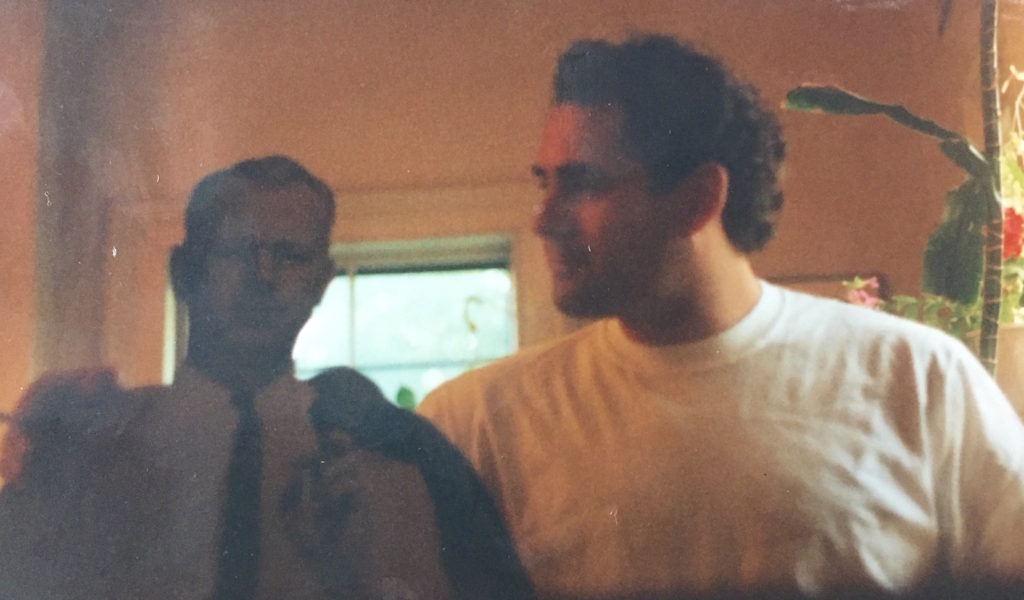
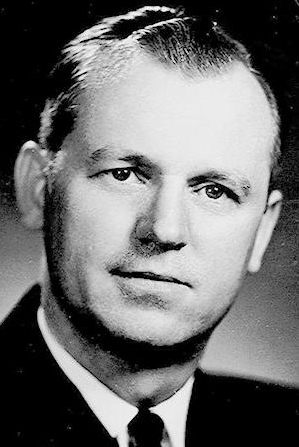
I met Frank Rodway because eventually I had to find my own place. At that time, Frank was owner and proprietor of Thomas Brackett Reed House, a 19th century brownstone once inhabited by and now named for the Maine Congressman and Speaker of the U.S. House of Representatives at the turn of the 20th century, when America was slowly transitioning from insular, adolescent republic to imperialist bestrider of worlds. Frank was then a small, trim, 60-something fellow with a fit, vaguely military bearing. Before he even walked me upstairs to the third-floor apartment then available for rent, I mentioned my two cats, Scott and Zelda. “Oh, well, we don’t take pets here,” he said. Frank showed me the place anyway, which gave me the chance to pursue an historical charm offensive. The space was great — 13-foot pressed-tin ceilings; windows stretching from the floor to somewhere above my head; $525/month, heated! What’s more, I had just finished The Proud Tower, Barbara Tuchman’s magisterial history of Thomas Brackett Reed’s very heyday. We mixed it up, Frank and I, trading Mark Hanna anecdotes, book citations and recommendations. Half an hour later as he and I were walking back downstairs, I said it was too bad about the cats. “Oh, don’t worry about them,” he said.

Frank Rodway passed away this past January at the ripe old age of 91, the result of a fall on icy pavement as opposed to simple old age. I was among five former residents of Thomas Brackett Reed House who showed up to his memorial service in South Portland. TBR House was a different sort of rental property: An historic landmark, for starters, watched over by a guy, Mr. Rodway, who knew that history but also how to engender esprit de corps. This quite elegant building had a guest apartment on the first floor that tenants could rent for $25 a night. I routinely stashed my parents and visiting Greater Bostonians there. Every Christmas, that guest room and the entire first floor played host to Frank’s holiday party, a shindig that routinely proved the event of the season, as current and former residents alike renewed old acquaintances and partook of Frank’s legendarily strong and plentiful punch. I should never have known Steve Weatherhead and his lovely wife Annetta; they departed TBR just before I arrived. But I met them at these Christmas parties, along with longtime golfing buddy Michael Moore. At Frank’s funeral service, Steve recalled these parties among other things, but not before answering the question that opened his remarks: “I mean, who goes to their former landlord’s funeral?” Well, if it’s Frank Rodway, you go. He was one of a kind, as this obit (clearly written by the man himself) attests.

Another former TBR denizen in attendance this past January was one Mary Fowler, my upstairs neighbor and probably the first real friend I made in Maine. She remains one, but I thought of her again, in the immediate aftermath Frank’s memorial, when Mary Tyler Moore passed away.

Mary Fowler and I had a running joke, each of us claiming to be the Mary to the other’s Rhoda. “Hal,” she would start in, with not inconsiderable finality, “Rhoda was the loud Jew and Mary was the tactful WASP. And my name is Mary. Clearly, I am Mary and you are Rhoda in this relationship.”

“But May-uh,” I’d say in my best Brooklyn accent, “while all that is true, you live upstairs in the apartment crowded by charming eaves, while I reside in the open and airy apartment downstairs. Cultural heritage has nothing to do with it. It’s all about upstairs and downstairs. All the action takes place here, in my apartment. There are no eaves here. These are 13-foot, pressed tin ceilings. It’s all about the eaves!”

Read More

Coats, Ties and Foursomes: Collegiate Golf in the UK

Coats, Ties and Foursomes: Collegiate Golf in the UK

For all the trans-Atlantic DNA we share with our British golfing brethren, it’s easy and, I daresay, somewhat natural to assume that college golf here in the U.S. is pretty much the same as it is over there. Not so.

Top players from the U.K. (and mainland Europe) routinely travel stateside to hone their games at American colleges and universities. Indeed, many of these men, women and their games will be on display later this month (May 19-31) at Rich Harvest GC, site of the 2017 NCAA Championships. But why do they make this trip in such appreciable numbers?

Because collegiate golf in the U.K. — like all college sports there — is decidedly low-key, even compared to the low-stakes Division III golf I played at Wesleyan University in Middletown, Conn., during the early 1980s.

Yet, for my money, one can place collegiate golf alongside beer and period cinema as something the Brits still do better, with more nuance and panache, than we do. Yes, our universities turn out more tour professionals, but for the majority of college golfers, in both countries, that’s not the aim. It’s about competition and its sensible integration with the game’s social niceties — and no one does that better than the British upper crust, whose ethos dominated my university golfing experience abroad. Coats and ties, foursomes in the morning, singles in the afternoon, and no less than two proper English piss-ups sandwiched between them. You can have your vans, your matching shirts and golf bags. To Yanks, collegiate golf in the U.K. may look and feel more like a club sport, but having played both sides of this fence, I’ll go with the Pommies.

At mighty Wesleyan, a perennial golfing doormat, the exercise we underwent during the ‘80s remains recognizable: Throw on a pair of khakis and a golf shirt; pile into a van and meet a different college team, or two, at the course venue; play 18 holes of medal (maybe match play, on that very rare occasion); shake hands, tally up the scores, pile back into the van and drive home to campus. Big-time Division I golf schools don’t play many dual or tri-matches like these any more, I understand. More often they play various invitational tournaments whereby dozens of schools show up in one place, seven guys from each team play medal, and the best 5 scores count. We did this, too, though only once or twice a season.

Collegiate golf in England during the mid-1980s, when I played for the University of London, was nothing like this. Nothing. For starters, and perhaps most important, we rarely played other schools. Instead, university teams were hosted by golf clubs themselves, which trotted out their best players for a day of intergenerational match play and assorted reverie. Here’s a typical match-day regimen:

Read More

B-listed by the USGA, Riviera Ponders What Might Have Been

B-listed by the USGA, Riviera Ponders What Might Have Been


[This piece was first posted in 2011. It seemed a good time to revisit, with the U.S. Open visiting yet another public course this June… hp]

I suppose we should count our blessings that a magnificent course like Riviera — a 1926 George Thomas design firmly ensconced in all the Top 100 lists that matter — still deigns to host PGA Tour events. As recently as 2001, when Riviera hosted the USGA Senior Open, club ownership was hell bent on securing a U.S. Open. There were multiple regrassings of the greens, which had not fared well during the club’s last major championship engagement, the 1995 PGA Championship, where our lasting image is a ground-level view of Steve Elkington’s winning putt bouncing frantically into our living rooms while traversing a hefty portion of Riviera’s pockmarked 18th green before disappearing into the cup. The 2001 Senior Open was to be Riviera’s chance at redemption, a very public audition for club ownership, tournament organizers and the course itself.

Looking back, the greens held up well enough but attendance was poor and it turns out not to have mattered a lick. The intervening years have witnessed a sea change in the USGA’s attitude toward the siting of its marquee event, and Riviera isn’t much discussed at all when future U.S. Open sites are the subject.

Why? Well, the 2002 Open at Bethpage really changed the way the USGA views itself and the national championship. The PR value of holding the tournament on a truly public course proved an undeniable boon to the USGA’s image and coffers. Crowds were huge, TV ratings soared, merchandize sales went nuts, and the USGA found a truly effective way to fight the impression that golf is game played exclusively by rich guys in bad pants. Private clubs weren’t barred going forward, by any means, but look at the list of Open sites played since 2002 and scheduled through 2017:

2017 – Erin Hills Golf Course, Erin, Wis.

2016 – Oakmont Country Club, Oakmont, Pa.

2015 – Chambers Bay, University Place, Wash.

2014 – Pinehurst No. 2, Pinehurst, N.C.

2013 – Merion Golf Club, Ardmore, Pa.

2012 – Olympic Club, San Francisco

2011 – Congressional Country Club, Blue Course, Bethesda, Md.

2010 – Pebble Beach Golf Links, Pebble Beach, Calif.

2009 – Bethpage State Park, Black Course, Farmingdale, N.Y.

2008 – Torrey Pines Golf Course, South Course, La Jolla, Calif.

2007 – Oakmont (Pa.) Country Club

2006 – Winged Foot Golf Club, Mamoroneck, N.Y.

2005 – Pinehurst Resort and Country Club, No. 2 Course, Village of Pinehurst, N.C.

2004 – Shinnecock Hills Golf Club, Southampton, N.Y.

2003 – Olympia Fields (Ill.) Country Club, North Course

2002 – Bethpage State Park, Black Course, Farmingdale, N.Y.

That’s 16 events, fully half staged at courses the public can play. Bear in mind that the USGA, starting in 1895, didn’t hold the Open at public course other than Pebble Beach until it visited another very expensive resort venue, Pinehurst No. 2, in 1999. The chances of a legitimately great but still private club cracking the rota of courses for Open consideration have literally been halved, and a place like Riviera doesn’t have a prayer.

Of course, there are other considerations when choosing Open venues. The USGA likes geographic diversity; it seeks to move the event around (again, to fight the image that the game is run by northeastern elites). It attempted for many years to find a Midwestern venue that would suffice. Medinah and Olympia Fields were found wanting — enter the public Erin Hills, in Wisconsin, scheduled to debut as host in 2017. The same issue applied to west coast venues (which also afford the USGA and NBC the opportunity to televise, very lucratively, weekend rounds in prime time). Pebble Beach is a natural (and technically public) but it’s interested in hosting only once a decade. This was the opening Riviera was hoping to fill, but instead that tryout went to Torrey Pines in San Diego, in 2008. Then it went to Chambers Bay, yet another muni, in Tacoma, Wash.

There are other aspects to the USGA’s formula. Opens require a vast amount of space these days. Note the presence of multi-course public facilities on this list, allowing onsite parking and space for long rows of hospitality tents and merchandise tents worthy of Barnum & Bailey. At Riviera, squeezed onto a superb but tight piece of ground, densely flanked by fancy homes, the window of opportunity appears to have closed for good.

Feeding the Faithful: Golfing the East Coast of Scotland, by Rail
The estimable Balgownie Course at Royal Aberdeen GC

Feeding the Faithful: Golfing the East Coast of Scotland, by Rail

WHEN GOLF was first conceived, participants arrived at the course on foot or horseback, or, if the company was honourable enough, by carriage. For this reason, it remained for centuries a parochial, largely Scottish pursuit. In the 18th and 19th centuries, however, all of British culture was transformed by an industrial capacity that among other things launched a transportation revolution.

Trains would change golf forever.

In particular, completion of the Forth Rail Bridge, in 1890, widely exposed the bounty of Scottish links courses for the first time — to the rest of newly mobile Britain and ultimately the world, which still marvels.

The advent of train travel did something else marvelous: It spurred the development of “new” Scottish links built specifically to accommodate the rail-enabled.

Golf may not have been formulated with trains in mind but the idea and practice of “golf by rail” shaped and grew the game during the late 19th century, its first true boom period, an age we now drape with garlands like “ancient”, “timeless” and “classic”. The railway made the game what it was, what it remains today in the minds of many. Without this transformation, the romantic golfing image of golf we so idealize (the one we still travel to Scotland to find) might never have materialized.

Indeed, the very idea of golf travel was born in this time. By 1890, the railways had cozied up to several superb links in the Scottish lowlands. It only made sense: Rail connected population centers, which lay mainly along the coast, close to sea level where terrain was flattest and bed construction easiest. Just a short walk from these new “centre city” train stations lay the common lands, the links where, for example, in East Lothian, clubs like North Berwick, Muirfield and Gullane already resided. Today they remain as practical to play by train as they did in the 19th century — which is to say, perfectly practical for golfers with a sense of history and adventure.

The Forth Rail Bridge, the world’s first steel span, made this travel scenario a practical reality in Fife, revealing the birthplace of golf to the game’s myriad new zealots.

“As the train neared St. Andrews and I noted the gradually increasing numbers of the faithful,” wrote A.W. Tillinghast on his first trip to “that Mecca for golfers”, in 1895, “I marveled that the popularity of the ancient game had continued, unabated throughout the centuries.”

Read More

Baronets & Collieries: Encountering Fowler’s Beautiful, Wild Place

Baronets & Collieries: Encountering Fowler’s Beautiful, Wild Place

Herbert Fowler is one of those architects whose name, curiously, isn’t readily attached to the many great golf courses he laid out and/or substantially retooled. Cruden Bay? That’s a Fowler. Royal North Devon? Fowler’s fingerprints can be found all over this west country antique. Indeed, his renovation of the Old Tom Morris original (a.k.a. Westward Ho!) fairly well accounts for the course we know today.

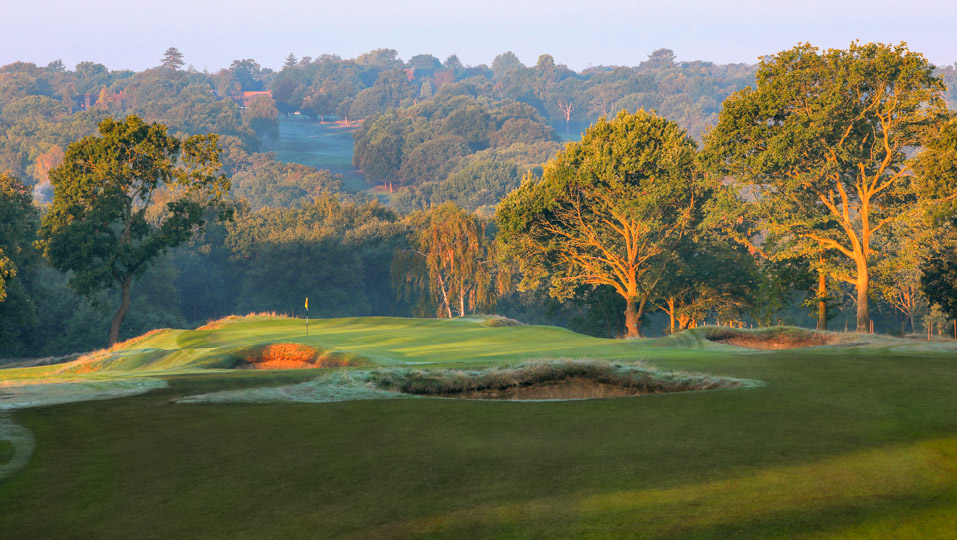
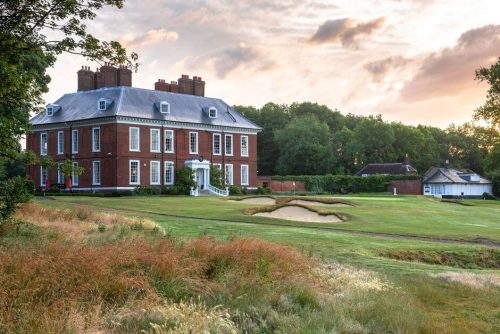
This lack of name recognition begins to explain why a venue like Beau Desert Golf Club, which Fowler designed nearly 100 years ago in the Staffordshire hamlet of Hazel Slade for the Sixth Marquess of Anglesey, rings few bells. Yet a better heathland course golfers are unlikely to come across, as indeed many have not.

Herbert Fowler

For his own part, The Marquess (nee Charles Henry Alexander Paget) recognized immediately that Fowler had created something extraordinary on his Beaudesert estate. When the course was completed, in 1913, Paget whisked Fowler off to the family’s “other” ancestral estate at Plas Newydd on the Welsh island of Anglesey. There the architect laid out a second course for the Marquess, Bull Bay Golf Club, another sterling Fowler product you’ve probably never heard of.

The majority of Fowler’s brilliant work was done in his native England, but he did get around. Fowler was the man who transformed a ho-hum par-4 at Pebble Beach into one of golf’s most heroic, par-5 finishing holes. His Cape Cod design at Eastward Ho! (whose peculiar moniker now makes perfect, book-ending sense) is an old-world delight. Fowler also refurbished the ancient Welsh links at Aberdovey where venerated golf writer Bernard Darwin learned the game and played all his life.

Darwin would complete the Fowler circle by eventually visiting Beau Desert’s 160 acres of elevated, exposed ground some 25 miles north of Birmingham. Afterward he asserted that, “Here might be one of the very best of courses, for the turf is excellent and there is a flavour of Gleneagles about it. It stands high and is pleasanter in hot weather than cold, for the wind can blow there with penetrating shrewdness.”

The Ryder Cup may have been contested nearby, at The Belfry; Little Aston may be the region’s most fashionable golfing address. But the finest course in this part of England is Beau Desert. And yes, Herbert Fowler designed it.

Read More

Pledge This: ‘I Support The SoPo Three’

Pledge This: ‘I Support The SoPo Three’

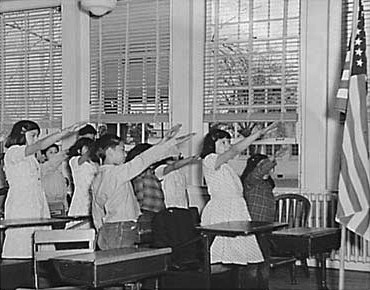
Students_pledging_allegiance_to_the_American_flag_with_the_Bellamy_salute

This is how American kids pledged allegiance to the flag pre-WWII. Honest.

[Ed. Apropos of its dodgy, opportunistic political history, the pledge is back in the news. Accordingly, hp.net has reposted this piece from 2015, or rather, we have pinned it to the blog’s most prominent position. All hp.net content remains live and searchable.]

SOUTH PORTLAND, Maine (Feb. 24, 2015 ) — The sad truth is, kids are easy targets when it comes to ideological inculcation outside the home. This time-honored strategy of ‘getting them while they’re young’ may have first been written down in Proverbs 22:6 (“Train up a child in the way he should go and when he is old he will not depart from it.”), but it’s a gambit that is surely much older than that. And so I was heartened to read of the South Portland, Maine girls who recently put their feet down re. the pledge of allegiance, which, I understand, is something SoPo kids — and most American high schoolers — are still expected to recite each and every morning.

Over the public address system, students at South Portland High School hear the same sort of thing we all grew up hearing: At this time, would you please rise and join me for the pledge of allegiance

In late January, however, class president, Lily SanGiovanni, made the decision to start adding what proved to be a controversial 4-word tagline … if you’d like to.

Naturally, in a country so volubly dedicated to liberty and free speech, people freaked out. Love of country was questioned. Ingratitude to fallen soldiers was charged. Educational bureaucrats wavered, then caved. The four words were eliminated.

What a steaming pile of crapola.

It’s probably been a while since most adults have taken a close look at the U.S. pledge of allegiance, or given it much thought. Revealingly, our culture does not ask adults to say these words, every morning, Monday through Friday — only our children are required to do that (if they go to public, taxpayer-funded schools). Still, we old folks can all recite it by heart: I pledge allegiance, to the flag, of the United States of America, and to the republic, for which it stands, one nation, under God, indivisible, with liberty and justice for all.

There. I did that from memory (!). See how impressionable young minds are over the long term? … But seriously folks, it’s instructive to examine this pledge, in the same way SanGiovanni and two of her classmates have done. They were uncomfortable with the invocation of a Christian God, every day, as part of a public statement that students enrolled in government schools are obliged/encouraged to recite every day. They have a point, but that’s not the half of it.

Let’s start with the name: Exactly what sort of authorities, in a democratic republic, would suggest that adult citizens make such a pledge? In my view, it’s not something free peoples should ever be asked to do — especially kids, whose feelings on these matters should formed by parents, not the state. This practice strikes me as something illegitimate or otherwise authoritarian “regimes” would insist upon: maybe the Czech government in 1967, or the Khmer Rouge circa 1975, or Josef Stalin any ol’ time.

In fact, see here the Oath of Allegiance Grandpa Joe did require of the Soviet people, starting in 1939: I, a citizen of the Union of Soviet Socialist Republics, joining the ranks of the Workers’ and Peasants’ Red Army, do hereby take the oath of allegiance and do solemnly vow to be an honest, brave, disciplined and vigilant fighter, to guard strictly all military and State secrets, to obey implicitly all Army regulations and orders of my commanders, commissars and superiors. I vow to study the duties of a soldier conscientiously, to safeguard Army and National property in every way possible and to be true to my People, my Soviet Motherland, and the Workers’ and Peasants’ Government to my last breath. I am always prepared at the order of the Workers’ and Peasants’ Government to come to the defense of my Motherland — the Union of Soviet Socialist Republics — and, as a fighter of the Workers’ and Peasants’ Red Army, I vow to defend her courageously, skillfully, creditably and honorably, without sparing my blood and my very life to achieve complete victory over the enemy. And if through evil intent I break this solemn oath, then let the stern punishment of the Soviet law, and the universal hatred and contempt of the working people, fall upon me.

Read More

Historical Fact & Fiction: Reviewing a Review from 1994

Historical Fact & Fiction: Reviewing a Review from 1994

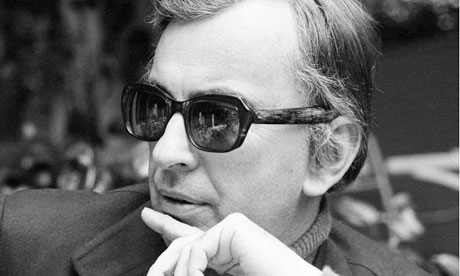
 Gore Vidal during a Los Angeles interview in 1974.


THE HAROLD HERALD BOOK REVIEW

Ambition as a Historical Catalyst:
Burr, Lincoln, 1876, Empire, Hollywood, and Washington D.C.
by Gore Vidal.
Ballantine Press, $5.95 ea.

By all rights, Aaron Burr should have been the third president of the United States. If not the third, then certainly the fourth. When he and Thomas Jefferson secured the identical number of electoral votes following the election of 1800, Burr stood aside, accepted the vice presidency, and bided his time. The presidency would certainly be his eventually. Hadn’t John Adams set the executive precedent by accepting the second spot, then ascending in due course? Hadn’t Jefferson promised his support when the time came? But Jefferson would prove unfailingly vague when it came to political commitments. He was wary of Burr and isolated the vice president within his Cabinet. Jefferson wouldn’t allow Burr to resign with honor — until, that is, Burr hadn’t the time to organize a credible campaign for 1804. Jefferson then framed Burr for treason, tried him and while he couldn’t prove the trumped-up charges, the president had by then effectively obliterated Burr’s political viability, thus securing his own and, by naming James Madison vice president, a Virginian ascension.

At least, that’s Burr’s version of events.

Or rather, that’s the version laid out by Gore Vidal’s title character in “Burr,” the first of six historical novels comprising the author’s American Chronicle, which I started in August and have finally finished. By tracking Aaron Burr and his descendants through the nation’s first 150 years, Vidal illustrates how ambition and decidedly unenlightened political scheming shaped and sustained the world’s first modern democracy. At the same time Vidal weaves an enormously intricate, believable tapestry where historic figures full of life mingle with the fascinating Burr and his equally engaging but fictional offspring. Vidal has clearly done a vast amount of homework. Yet while his narrative has an authority born of journals, letters and historical canon, Vidal’s real characters — like Jefferson and William Seward, Lincoln’s ambitious secretary of state — are unfailingly funny, sullen, outrageous, randy, paranoid and sometimes insane. In a word, human. Indeed, they take on the qualities of fictional characters because they’re depicted with such depth, wit and humanity. On scholarly grounds, historians wouldn’t dare recreate dialogue as Vidal has done. Besides, most historians couldn’t do it; they haven’t his skills as a novelist. Vidal can convincingly mimic Henry Adams and Mrs. John Jacob Astor, with equal parts style and integrity, because he’s a novelist with a supreme command of the subject matter.

When Vidal intersperses these historical figures with fictional characters (believably placed in the maelstrom of actual events), it’s hard to remember who’s real and who’s not. The author does his level best to remove any distinction.

Young Charles Schermerhorn Schuyler, a fictional law clerk and budding journalist, tells the story of “Burr”. Schuyler works for the title character and convinces the old man to dictate his fascinating memoir. This Burr does, in part. The bits and pieces of his amazing life — the raid on Quebec with Benedict Arnold, candid Burr-centric portrayals of all the founding fathers, his aborted conquest of Mexico, his many wives, his mysterious relationship with Martin van Buren, rumored to be Burr’s bastard son — are never published as memoir, per se, only as flashbacks set against Burr and Schuyler’s “contemporary” story, set in the 1830s. The young protégé is mesmerized by this window on the nation’s founding moments and men, but he is fairly well knocked to the floor when, upon the old man’s death, Schuyler learns that he, too, is Burr’s illegitimate son.

In “Lincoln,” volume II in the series, Schuyler disappears and Vidal centers the novel around two historical figures: the president and his young secretary, John Hay, who narrates. Schuyler reappears very late in “Lincoln” before resuming his narrative in the third volume, “1876.” Here Schuyler and his daughter hitch their political wagons to the shoo-in presidential candidate, Samuel Tilden, and their social fortunes to New York’s budding Astor-based society. At the beginning of “Empire,” Hay, now President McKinley’s secretary of state, returns as one of Vidal’s central characters, alongside Schuyler’s two grandchildren, Caroline and Blaise Sanford. Secretary Hay becomes Teddy Roosevelt’s vice president upon McKinley’s assassination. Blaise becomes William Randolph Hearst’s dilettante protégé, while sister Caroline — a former schoolmate of Eleanor Roosevelt in England — buys the fictional Washington Tribune, where she out-tabloids both Hearst and her jealous brother. “Hollywood” follows Caroline to California, where she helps pioneer the movie industry (with Hearst). Blaise buys the Tribune and remains in D.C. to savage President Wilson — and back the serenely dim, Republican hopeful, Warren Harding. In the closing novel, “Washington, D.C.,” Blaise is an aging, would-be kingmaker frustrated by FDR’s stranglehold on the body politic. The nation’s capital — a malaria-ravaged swampland in “Burr”; a provincial seat of government in “1876”; now, in 1945, nerve center of the world’s first superpower — has changed, but it still provides a fascinating backdrop for Vidal’s horde of schemers and climbers; all the folks who have made this country what it is today.

Imbued, as I am, with the arrogant notion that scholarly history is interesting enough (blame the Wesleyan history department), I’ve never been a fan of historical novels. Though I’ve always liked Mary Renault (“The Persian Boy”, “Mask of Apollo”), the genre allows too many liberties. Basically, it’s cheating.

But Vidal changed my mind. Well, he didn’t change it… Vidal proves it can be done well, even raised to high art. But good luck finding another author so capable.


Ed. So, I found this piece in an online issue of the Harold Herald, the proto-blog I published via Pagemaker, a Xerox MFM and the U.S. Postal Service in 1994. Disappointed I can’t find the ancient “print” version, as I recall spending a lot of time laying it out to make it look exactly like a NYTimes Book Review page. In any case, it remains an odd mix of fascination and dread to read oneself from 20 years ago, especially as I happen to be rereading “1876” right now. I back most everything I wrote here, save the last bit. I have, in the ensuing decades, found several historical novelists the equal of Vidal, but only in certain respects. Bernard Cornwell — he of the Sharpe’s Rifles series, set in Napoleonic times; an Arthurian trilogy of the highest quality; and several more multiple-volume depictions (of England in the of time Alfred, France in the middle ages, and even America during the Civil War) — is a thoroughly trustworthy historian and expert yarn-spinner. But he cannot write like Vidal. Few can. Renault is fabulous, but Vidal’s “Julian”, which I read after tapping out the above review, beats Mary in her own classical backyard. Hilary Mantel’s 21st Century series starring Thomas Cromwell and Henry VIII (“Wolf Hall” and “Bring up the Bodies” are to be capped by a soon-to-be-released third book) is superb — but she needs a few more under her belt, ideally something from a completely different era, to hang with Vidal.

The best moments in any good historical novel are when the author introduces and puts to lengthy narrative use juicy historical characters — their rendering and their interaction with fictional characters, when done well, can be thrilling. This might happen a half dozen times in any Cornwell novel. In “1876”, it happens every 15 pages: Grant, Mark Twain, Maine’s own James Blaine, James Garfield, an array of New York newspaper editors and publishers, The Astors, Samuel Tilden, even Chester A. Arthur for chrissakes. The density of these non-fictional characters in the narrative is dizzying, and Vidal delights in painting familiar icons in ways that deconstruct our preconceptions while remaining entirely plausible, not to mention historically accurate. This is some of what makes Mantel such a formidable player in the genre: She similarly packs her novels with historical figures, fascinatingly rendered, something her relatively modern subject matter (and our familiarity with many of her non-fiction characters) allows.

The piece de resistance of any historical novel, I’ve learned, is the author’s note at book’s close. Not all of these are handled the same way, but here, typically, the author details the liberties he/she may or may not have taken with historical events and personages. Invariably, they are minimal; it’s in the author’s interest to give that impression, of course. Oftentimes they’ll get into their sourcing, their bibliography, for the same reasons. Either way, it’s clear that extraordinary grounding in a subject is required, alongside and integrated with their abilities as storytellers. I remember when I first read the author’s note for Burr: Vidal basically says, “Everything depicted here is historically accurate; everything the non-fictional characters are quoted to have said was taken directly from primary sources, i.e. their letters, correspondence and memoirs.” I just skipped ahead last night to the Author’s Note for “1876”. It’s similarly brief. Vidal was obliged to move up Twain’s publication of “Huckleberry Finn” so it might be discussed during the author’s dinner at Delmonico’s with Schuyler in June 1876. Similarly, the massacre at Little Bighorn happened in July, but word of it didn’t reach back East for several weeks. Vidal wanted it in the air at the Republican convention in July, so he took that liberty. But that’s it. Everything else fits together like a sprawling Roman floor mosaic, the sweep of history accented here and there by bits of fictional color.

 What I didn’t know in 1994 was that Vidal wrote these books out of order, as it were. “Washington D.C” came first (published in 1967), followed by “Burr”, “1876”, “Lincoln”, “Empire” and “Hollywood”. What I couldn’t have known back then was that he would add a seventh volume, “The Golden Age”, that chronicles America during the Cold War. In this coda, Vidal takes us right up to the year 2000 (the year it was published), by which time the original thesis laid out in the very first book and supported throughout the series — that America’s republic, always built on the not particularly reliable or durable foundations of corruption, ambition and privilege, had, with the close of WWII, finally given way to outright empire — had indeed come to pass. “The Golden Age” features the broad cast of historical characters any reader of the Chronicle might expect, plus one that comes as a mind-bending but pleasant surprise: Gore Vidal himself. 

 Vidal never cottoned to calling this series his American Chronicle. That came from the publisher apparently. He preferred Narratives of Empire, and one can see why.


Recalling, Replicating Scenes from the Parking Lot at Ponkapoag
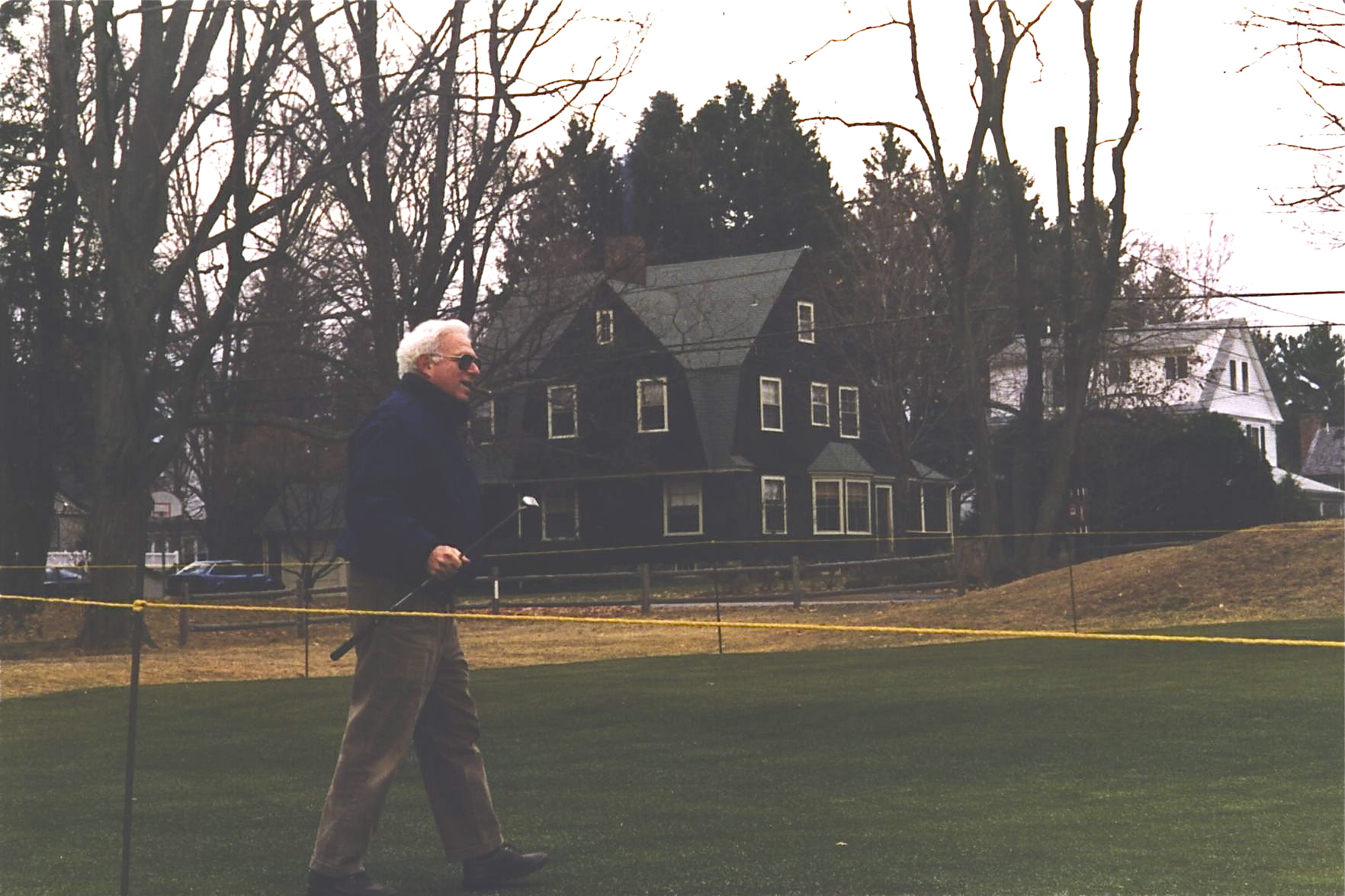
My dad on the 8th green at Nehoiden, right across the street from the house where grew up. It's late November; the greens have been staked for fencing at the first snow. We sprinkled his ashes here, and there's a memorial bench for him just right of this frame, on the 9th tee. There is no headstone in any cemetery for him. This is his spot, for all eternity.

Recalling, Replicating Scenes from the Parking Lot at Ponkapoag

H9

My dad with his dad, the original Harold Gardner Phillips.

I try to write each August about my dad, Harold Gardner Phillips, Jr., as he passed away (all too soon) at the end of this month back in 2011. This exercise is equal parts homage and memory aid as I suppose one fears these recollections, now perfectly strong, will somehow fade with time. This year the jog happened naturally, as today I stand poised at the fulcrum of a generational see-saw: My son Silas goes off to college tomorrow, and so the memories rush back re. the day my dad saw me off, out of the nest and into the world.

As is the case with so many stories I’ve shared about my dad, golf plays an intersectional role. This one’s even more fitting because it centers on Ponkapoag Golf Course in Canton, Mass., a municipal track we played dozens of times growing up. One used to be able to see it from Route 128, the frenetic inner ring road that circles Greater Boston, though methinks ever-maturing trees now obscure that view. Today there are only 27 holes at “Ponky”, but there used to be 36. The course one used to see from the highway was nothing special. The other 18, however, was a Donald Ross design from the 1930s that, despite the rigors of time, high traffic and miniscule maintenance budgeting remained damned sublime.

My dad and I played Ponky together on a several occasions, but this was mainly a place where he, my mom and various other parental figures dropped my friends and me for an entire day of golfing adventure. It also served as venue to a pair of tournaments: The CYO (that’s “Catholic Youth Organization” for those who may not have grown up in Boston, where the Church held such wide-ranging cultural sway) and the New England Junior Championship.

That day I left for college, a cloudy late August morning in 1982, I was scheduled to play a quarterfinal match at the New England Juniors, as I had qualified earlier that week for what stood to be a potentially anti-climactic match-play portion. I had packed our Dodge Omni that morning with all my stuff. Win or lose, I would decamp for Wesleyan University in Middletown, Conn., some 100 miles southwest, directly from the golf course.

As it happened, I won the match, bettering a kid from Rhode Island named Fred, 3 & 1. I signed my card, informed a quite delighted Fred that I would be withdrawing, told the officials, and walked off to the parking lot.

There to my surprise I found my dad, who had just rolled up.

As a kid, my competitive golfing career would never prove particularly extensive. Indeed, this tournament and the New England Juniors the year before were the only two events I had ever played, to that point. Golf was a fall sport at my high school, as was soccer, which took clear precedence. In other words, while my dad had played hundreds of rounds of golf with me over the years, and we maintained a spirited, running match for decades, he had never seen me play a proper tournament match against anyone else.

One time, in college, he showed up at Pleasant Valley Country Club near Worcester to see me play a collegiate match featuring Wesleyan, Springfield College (I think) and Assumption. I know the latter to be true, for certain, because I ended up facing a guy from Assumption that day named Frank Vana, who would go on to win multiple Massachusetts Amateur crowns. My dad worked near PVCC and he showed up on the 9th or 10th hole, at which point my game imploded. He scurried off after we finished 13, not wanting to cause/witness any more carnage.

For many years, I was never sure what exactly he meant to “do” that day — in the parking lot at Ponky. We had said our goodbyes that morning, and it wasn’t as though I was going off to war. But today, I can see he probably wanted one last moment with his boy, who would soon leave and return in some way, shape or form, a man.

I’ve been trying to remember what exactly my dad and I talked about during that moment in the parking lot. I surely went over the match with him, and the curious aspect of my winning but withdrawing. I don’t remember that we got into anything particularly deep. I remember being touched that he had shown up, but there were no tears. I’m pretty sure we shook hands.

See here a relevant excerpt from the eulogy I delivered for him in 2011:

My dad was not a particularly emotive man, not for most of the 40 odd years I had a clear picture of him. I remember one time I came home from college and was determined, in the sure and committed way of college students, to simply start hugging him and telling him that I loved him. I had seen other dads do this and had been impressed — that a father and son could be so open and physical in their affection for one another. I wanted that for my dad and me, to be honest. So I started out with hugs and, well… the man never really got comfortable with it. It just wasn’t his way. I remember telling him during this same period that I loved him, and noting that, to some extent, one is obliged to let people know that this is so, to verbalize it, to say it plain. He said that wasn’t his way, that he instead showed people he loved them. I remember thinking, at the time, that this was something of a cop-out.

But the man knew himself. As I grew older, I better recognized the ways he expressed intimacy and let you know how he felt. There are no rules or universalities for these things, I’ve learned, as I myself have grown as old and, in some ways, as wise as he. The more I observed this, over time, I can report that my dad did practice this sort of behavior consistently, with all sorts of people.

I think one of the keys to understanding and appreciating my dad is this: If he enjoyed something, his greatest joy was to share that enjoyment with you. If there was a piece of music that he found thrilling — and the man enjoyed a notably wide musical taste — he wanted you to listen to it and, ideally, derive the same thrill, too. If there was something he had seen on PBS or C-span, he wanted you to see it, too. If there was food item he had acquired or my mom had made, he wanted you to consume it. Right then. His enthusiasm for this sharing was really quite intimate, almost childlike in its enthusiasm. You might walk into my parents’ home, having not seen him for weeks, and his most deeply held desire was to have you sit down and watch an interview with the historian Gordon Wood, right then, so soon as you put your bag down.

And there was another aspect to this: He wanted you to listen or watch or taste or, to the extent possible, read this stuff WITH you. He wanted to sit right next to you while we watched the Gordon Wood interview, together — so he could pause the recording and discuss it. He wanted you to put the earphones on while he would stand right there beside you, grinning giddily, as you listened to some choral piece by Arvo Part. He would call just to see how far you were in a book he had recommended, to get updates on your progress…

I loved my dad but I, like many sons, have fashioned a great deal of my life in response to his. When Silas heads off tomorrow morning, there will be hugs. There will be tears. That said, I expect that whatever I’m feeling at that moment, is the same thing my dad felt that day, some 32 years ago, in the parking lot at Ponkapoag.

Silas is flying to Montana tomorrow morning, with his mom. I suppose that if I could practically meet them in Chicago for one last goodbye, I’d do it.

Silver Tribute Ends 23 Years of Jazz-Search Futility

Silver Tribute Ends 23 Years of Jazz-Search Futility

7020935053_94b0a8f169_z

Bald Hill played the Peace Fair on Brunswick Green Saturday. Our mando player, Ben, arranged the gig: His mother is a German war bride and longtime social justice activist. She administers this event, which annually draws a healthy cross-section of southern Maine’s aged hippie population. This year, for these unreconstructed lefties, we performed a Pete Seeger tribute/sing-along. The crowd was big (for a peace fair, in August) and the weather held off. But the noteworthy development arrived before I had played a note. Ben’s brother Matt, a gifted pianist, was up for the event and brought along a fellow Nutmegger native on sax. They started our set (we followed a five-piece that featured two steel drums) with a four-piece tribute to the recently departed Horace Silver (above), a jazz name I sorta knew but not really. Altogether appropriately, the song they chose was “Peace”, and it quickly transported me.

During the early 1990s, I worked as the news editor at a couple of daily newspapers in Massachusetts. The life was somewhat nocturnal: I’d arrive at 5 p.m., put the paper on the press at 2 a.m., and go home — unless the paper crowd had gathered for very late-night revelry. We were somewhat obliged to socialize together because who else was awake? Even a ridiculous schedule like this can become routine: I’d arrive in the newsroom and flip on NPR via WGBH in Boston. The first two hours of the work “day” were a mix of gay banter, serious story planning, photo assessment (from what had been shot that day) and assignment (to be shot that night), and front page/section layout. All this took place with All Things Considered airing in the background, as soundtrack.

At 7 p.m., things got more down to business. Reporters headed off to meetings or returned from accidents/crime scenes/sporting events to begin filing stories — stories that I would read and edit before sending the final layout to the paste-up/press operation a few towns over.

But nothing seriously got done, not at my desk anyway, until 7:04. WGBH aired a jazz program starting each night at 19:00 called “Eric in the Evening”. The show theme was this beautiful piece of jazz that dripped from the transistor radio each night, all on its own, starting at exactly 7 p.m. The routine of its play provided the perfect respite and regathering moment before the radio got turned off and we all transitioned to the mania of another evening on deadline.

I’m not a huge jazz guy. I like a massive cross-section of the genre, though when I pin myself down, I can see how the influence of Charlie Brown and Vince Guaraldi shaped this particular aspect of my musical taste. Dave Brubeck. Bill Evans. That’s the stuff I’m drawn to apparently: white guys from the late ‘50s and early 60s. Very uncool, I’m afraid. Just the way it is.

I left the Marlboro Enterprise and Hudson Daily Sun in 1992. I never did get the name of that theme music to “Eric in the Evening”. Every couple years it would jump into my brain — not because I’d heard it, but because I’d remember just how resonant and important it was to me, at one time, in my work life. I googled “Eric in the Evening theme” one time, with no luck. For a long time, apparently, Eric Jackson still hosted a jazz show on WGBH radio, but at some point he’d eschewed the regular-theme music thing, opting instead for excerpted bits from that night’s guest or spotlight artist.

Well, I can report without question that “Peace”, was in fact Eric’s old show theme. I knew it from the moment I heard the opening two measures at the 2013 Peace Fair. Only took me 23 years… And now Eric Jackson has passed away, at 72.

Here is Silver’s original version, from 1959. Here is the Tommy Flanagan version that specifically served as the “Eric in the Evening” theme. Peace out, Mr. Jackson.