Draft Kings Rule: Nuggets are the NBA’s top talent evaluators. And it’s not close.

Nuggets VP of Scouting

In hailing the all-world talents of Nikola Jokic, now an NBA champion and the most influential Serb since Gavrilo Princip, let’s also recognize that this cornerstone figure was taken #41 in the 2014 NBA Draft. He was chosen after Doug McDermott, whom the Nuggets took that year at #11. They are two of 20 Nugget draftees who remain active in this league, and that’s the organizational lesson delivered by Monday’s clincher: Draft Kings Rule.

Observers spent considerable time discussing team-building during these 2023 playoffs. First, it was the Heat’s predilection for making serviceable NBA squad players of undrafted castoffs. Then, when Denver started to look inevitable, the conversation moved to canny roster-development via the draft, wherein Joker remains Exhibit A.

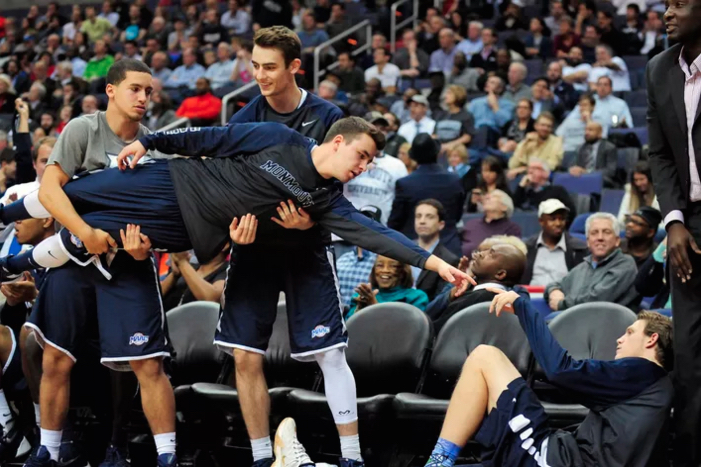
Yet the larger takeaways for NBA clubs and fans alike are simpler and self-evident: Denver is the league’s best talent evaluator, full stop, thanks to Vice President of Scouting Jim Clibanoff (pictured above) and his crack staff. The Nuggets not only draft more effectively, they also better assess the potential value of European, players discarded by competing NBA franchises and prospects outside the Lottery. They’ve exhibited these traits for a decade or more, as I will detail below, and theirs is the best, most practical example of how to develop championship-ready rosters in 2023.

Free agency remains vitally important, of course. I read somewhere during these playoffs that Denver’s title is the first from a Western Conference team not located in California or Texas since the 1979 Seattle Supersonics! Big markets/money will always give “coastal elites” a leg up in luring/landing established stars.

Yet Denver has shown league peers how to nullify these advantages in the 21st century. Once the new collective bargain agreement takes effect, and teams cannot afford three max stars going forward (thereby more evenly distributing plus-players around the league), the primacy of talent assessment is only enhanced.

Draft Kings Don’t Need No Lottery

By contrast, it’s time to get real on the most overhyped aspect of any NBA team-building discussion, the Draft Lottery. Based on the amount of media attention paid to these first half-dozen picks, one might reasonably assume this approach to be a proven strategy. It’s not.

The Golden State dynasty was not built via reliance on lottery picks, nor maneuvers to enable them. LeBron James was a lottery pick 20 years ago; his fellow Laker, Anthony Davis, ran out on the team that picked him no. 1. Kawhi Leonard went 14th and somehow managed to be the best player on two NBA Champions, just north of two separate borders (San Antonio and Toronto).

What’s more, it seems clear to me the Lottery affects championship fortunes and overall roster strength less and less. Lottery picks are, of course, getting younger and younger. It’s no coincidence they are less and less able to produce at the NBA level, especially within the 3-year rookie contract window. Joel Embiid and Zion Williamson are great players, when healthy, but they’ve delivered nothing in terms of playoff success to the teams that contorted their long-term fortunes to acquire them.

The demonstrable abilities of these younger and younger men, imbued with evermore AAU-enabled, one-and-done skill sets, makes them less and less NBA ready with every passing year. Why tank any season, much less two or three, to acquire them?

Read More

If Augusta National Pine Trees should fall (or fall ill), Would They Make a Sound?

Masters pine trees

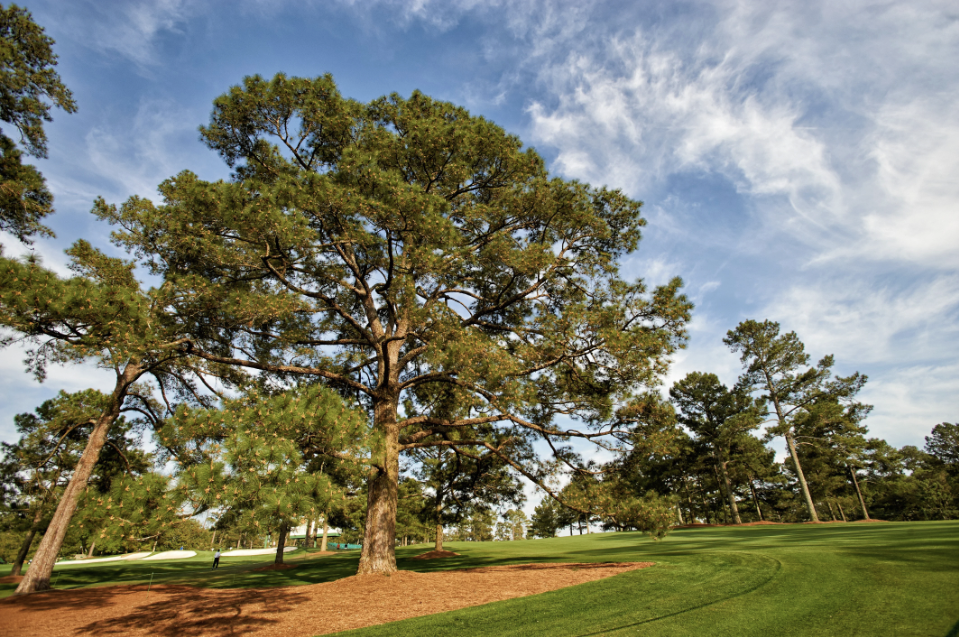
Ed. I’ve contributed dozens of stories to GOLF Magazine and golf.com through the years (I’ve served on the mag’s world top 100 course-rating panel since 1997). But none landed with such a thud as this one about Augusta National pine trees, published in the March 1999 print edition. In 24 years, I’d heard nothing re. the ill-health or subsequent removal of diseased loblolly pines at Augusta National GC — not until April 7, 2023, when a massive pine broke apart during the second round of Masters Tournament play. Suddenly the piece had new life. See comments below… Of course, trees are removed, tees are added, and the course of rivers change at ANGC and we hear nothing about those events, either — not until the club issues an official statement, or we see it on television the second weekend in April. The place is leak-proof. For the record, The Eisenhower Tree pictured above was a loblolly pine. It was taken down in 2014, because it was hit by lightening. Or so reads the party line.

•••

AUGUSTA, Ga. (April 1999) — Overlooking each fairway like a glowering gallery of green giants, the stately Georgia pines here at Augusta National Golf Club represent arguably the most recognizable feature at a course replete with recognizable features. Because The Masters is the lone major championship played at the same venue year after year, competitors, spectators and television viewers have established an unrivaled connection with and affection for Augusta National. Where else could a slow-moving stream and a few magnolia beds take on such mythic, eye-moistening qualities? Of course, fabled Rae’s Creek comes into play on just three holes whereas the towering pines frame nearly every shot. Their lower limbs pruned up to 100 feet, these majestic loblollies stand silent, like so many Doric columns, quietly lining the verdant corridors of America’s foremost golfing shrine.

Okay, reality check: Nothing lives forever. The patrician powers-that-be at Augusta National may have kept commercialism at relative bay and held the price of a chicken salad sandwich under $3, but they can’t fight Mother Nature. Trees are organic. They die, and a number of Augusta’s trademark loblolly pine are doing just that; some allege before their time.

Loblolly pine (Pinus taeda), which comprise 90 percent of the trees at the National, can be felled by myriad “stress factors,” as arborists like to call them: lightning strikes, disease, root pathogens, even the dreaded southern pine beetle. They can also whither and die following long, healthy lives of some 300 years in their natural, forest environment. Yet some of Augusta’s prized loblolly aren’t so healthy and may not witness their second century of shot-making — or so say certain tree-savvy visitors to Augusta who have noticed a change. Robust loblollies sport needles so darkly green they appear almost black from a distance. However, a disturbing jaundice has afflicted the relatively young pines that stand hard along Augusta’s 18th fairway — a clear sign of ill health, the experts say. Last year, during his first trip back to Augusta in a quarter century, architect Desmond Muirhead was floored by their lack of vitality. Other veteran observers of Augusta, most of whom insist on anonymity, believe there is a problem in paradise.

Golf, Money and Power

In his forthcoming book, “The Masters: Golf, Money and Power in Augusta, Georgia” (published by Villard, a division of Random House), author Curt Sampson isn’t nearly so discrete. He alleges that many more loblolly pine, especially those positioned along Augusta’s fairways, are suffering from poor health — a matter not unrelated, he says, to the club’s obsession with Edenic course conditions. Tipped off to the pine problem by his friend Muirhead, Sampson maintains misplaced fertilizer and overzealous irrigation practices have wrought considerable havoc with the loblollies, which are xerophytes — a fancy word for plants accustomed to dryer conditions. Further, for many years Augusta National maintained turfgrass well into wooded areas off the fairways. Today, this practice is an acknowledged horticultural no-no, as experts agree that trees and grass compete for the same nutrients.

Sampson — who claims to have consulted “an arborist who worked with Augusta National” but won’t name him — asserts the ailing loblollies, overfed for too long, have been living too fast and will die young. “If you stand on a promontory like the 10th tee,” Sampson says, “you can see the difference between the interior trees and those along the fairway; it’s like new denim compared to faded blue jeans. The pine lining certain fairways are saggy and yellowish. The difference is striking.”

There are significant factors to ponder when considering anything at Augusta National Golf Club, especially an unauthorized book alleging what amounts to horticultural malpractice. First, only Chairman Jack Stephens can speak for the club, meaning horticulturist Tom Crenshaw and consulting arborist Ken Knox cannot publicly address Sampson’s assertions. Second, while Augusta employees are allowed to share pertinent research information with colleagues, few people in the golf industry care to speak “on the record” regarding the National, so extensive and powerful is the club’s reach. Arborists enthusiastic about discussing golf courses issues tend to become quite concerned with anonymity when the course is Augusta National.

For August National Pine Trees: An adverse setting

That said, there are some meaningful distinctions to draw when discussing the health and life expectancy of trees on any golf course. First and foremost, experts agree they simply don’t live as long on golf courses as they might in a natural forested environment. Indeed, trees don’t live as long in any man-made setting, as it’s impossible to duplicate the complexity of any tree’s natural ecosystem — the ecosystem most conducive to maximum life expectancy.

“A tree living outside its natural environment — on a golf course, a city street or a suburban lawn — is far more likely to encounter stress factors incited by humans,” explains Dr. Jay Stipes, a plant pathologist at Virginia Tech in Blacksburg, Va. “For example, soil compaction: Feet and tires compact the soil, reducing pore space for oxygen. Too much compaction and roots get oxygen deprivation, and they begin to die.”

“Golf course trees simply do not live as long as forest trees, all things being equal,” said one arborist who is familiar with the situation at Augusta National but requested anonymity. “Only a fool would say no trees are unhealthy at Augusta. It’s not a magical place. God isn’t treating Augusta any differently. But it would be very unfair to say they’re dying prematurely… Of the 20, 30 or 40 things that play a role in tree health, water and fertilization play relatively minor roles. Augusta isn’t different from any other golf course; they have problems. But, if anything, the life span of these trees has been enhanced by the work being done there. That’s for sure.”

Read More
Universal NCAA Bids: Let’s Qualify every D1 Team for March Madness

Universal NCAA Bids: Let’s Qualify every D1 Team for March Madness

DaVinci hoops

Another bout of March Madness has come and gone. And now the money-grubbing power conferences are looking to further sully its pristine symmetry. From the moment the play-in gambit was instituted, in 2001, the slope got very slippery indeed. At first, just two small-conference champions squared off for the right to get boned, on 36-48 hours’ rest, by a top regional seed. Today it’s four, plus four more power conference also-rans. Let’s skip over mere half measures, or further regression, and proceed straight to the ultimate solution: Universal NCAA Bids. That’s right, tournament berths for every last Division 1 program, all 361 of them.

Don’t freak out: Here’s how quickly, seamlessly and magically it would work:

1) The regular season ends when February does. All 361 teams retire briefly to their ever-more plushly appointed training facilities, where they wait on the tabulation of a final computer ranking — 1 through 361. In essence, the period now devoted to “Championship Week” is given over to a 292-game, three-round, six-day tournament that produces the familiar, final bracket of 64.

2) The opening round — comprising 100 games and held the first Tuesday & Wednesday in March — pits the team seeded 361st (cue the “Team Irrelevant” stories) against the school seeded 156th. In between,  #157 takes on #360, and so on. You like Cinderella? I’ll give you Cinderella: Imagine the crazy shit that will inevitably stem from a 200-team first round — contested over two nights, at on-campus venues all across these United States. Elegant in its mayhem, Round I rewards the top 155 with byes (thus lending meaning toour otherwise meaningless regular season) and quickly reduces the field to 256, a bracket-friendly multiplier of 64.

3) Round II takes place Thursday & Friday, whereupon those 256 remaining teams — the bye teams and the Tuesday/Wednesday winners — contest 128 games and symmetrically reduce the field to 128. Traditionally, the Thursday/Friday segment of NCAA Tournaments delivers 32 games and a dependably crazed bacchanal of buzzer-beaters, nail-biters, upsets and blowouts, all in the space of 36 hours. A universal-bid Thursday/Friday takes that spectacle and quadruples it.

4) The 64 games comprising Round lll, on Saturday & Sunday, would approximate a mere doubling of the traditional Thursday/Friday pandemonium, while neatly and cleanly winnowing the field to the recognizable 64. Sunday night the remaining teams — retaining their original seeds — are assigned opponents and regions in the traditional manner we’ve come to expect.

Universal NCAA Bids: Elegant & Logical

Rounds I, II and III would essentially form a massive, universal play-in bracket unto itself — producing more money in less time, using a more competitively honest framework than the current play-in scheme. The odious, so-called Championship Week would do the respectable thing and disappear.

All 287 games are necessarily played on campus, at the higher-seeded school. This mechanism is critical because, in rewarding higher seeds, it assigns another, much needed element of meaning to the college basketball regular season. It also guarantees kick-ass atmosphere and avoids potential short-notice scheduling conflicts at neutral sites, while reducing site-rental and travel costs. There is no reseeding between rounds. The bracket holds its shape and schedule all week, meaning teams are locked into either a Tuesday/Thursday/Saturday schedule, or a Wednesday/Friday/Sunday schedule.

What’s more, there is no good reason why a 361-team women’s tournament could not, or should not, be administered in exactly the same way, during the exact same time frame.

One of the great attractions of March Madness, perhaps the greatest of all, is the meting out of  champions based purely on game performance. Polls don’t matter. Bowl traditions don’t muck up the works. Ultimately, seeds don’t either. By winning six games in a row, a deserving champion is invariably crowned.

The universal-bid system underlines, preserves and enhances this dynamic. As an added bonus, we dispense completely with any and all “bubble” and “snub” talk. Crucially, the regular season is dramatically transformed, for the better, in myriad ways I detail below. The bloated frippery of conference tournaments is eliminated. Bracketology? That irksome construct, along with the tiresome, flatulent conjecture that wafts about it, are similarly put out to pasture.

No More Perks for Major-Conference Also-Rans

The original play-in scheme, instituted at the turn of the millennium, was shameful enough. The 8-team “First Four” we’ve endured since 2011? Whatever.  I wish I could report that each of these “expansions” was undertaken in the name of inclusiveness and fairness. But let’s not kid ourselves: This peculiar arrangement was first advanced and expanded entirely in service of annually preserving tourney revenue and exposure for no more than a dozen would-be, at-large, major-conference also-rans — at the expense small-conference champions.

Today, the Atlantic Sun Conference title-winner is obliged to play-in against its Summit Conference counterpart because, if they did not, there would be no room in the field of 64 for some eighth- or ninth-place team from the Big Ten — a conference that now has 18 basketball members.

This is shameful. If you think about it, the entire bubble/Bracketology thing — as a media construct — is built around whether and which second-tier, major-conference teams make the tournament, at whose mid-major expense. It defies logic that such expansive hoo-hah fixates on a group of teams ranked 55-75 in the country, teams that will not win the title, almost certainly won’t make the Elite 8, and may not even win a tournament game. Accordingly and appallingly, play-in games have eventuated so these demonstrable haves might make more money — at the direct expense of have-nots. 

But here’s the good news: From the moment this play-in component was introduced, we began the inexorable move  toward the final, most competitive, most equitable, most evolutionarily mature, most lucrative solution: a pair of all-in, 351-team NCAA basketball tournaments. This format is nothing less than our national hoop destiny. It will generate way more money and fan interest. There’s no practical reason why all-in men’s and women’s tournaments cannot run concurrently.

Read More

Late-Nineties Flashback: The Great Maine Golf Development Binge

Maine Island greens

[Ed. This piece from 1998 was assigned and purchased by, but to my knowledge never appeared in, Downeast Magazine. At that time, the U.S. was opening 400 new golf facilities every year. Maine golf development was equally madcap. When I moved to New Gloucester that same year, only Fairlawn GC and Poland Spring existed nearby. In 2-3 years, Fox Ridge in Auburn (pictured above), Spring Meadow in Gray, and Toddy Brook in North Yarmouth had all opened for play. Heady times, as the story below relates. The correction arrived in 2008, when the U.S. golf course stock began to suffer a net loss of some 150 golf facilities each year. Since 2008, 11 Maine tracks have shuttered, including a favorite of mine, Sable Oaks GC in South Portland. I eulogize her here.]

By Hal Phillips
Maine Golf Development is booming, and it’s not clear exactly why. Developers of water parks don’t venture into the amusement industry because they’re particularly enamored of sharing flume boats shaped like giant logs. Nor do hoteliers invest in that business because they “have a thing” for walking down antiseptic hallways looking for ice machines. It’s understood these business decisions are calculated — based on demographics, market niches, the potential for profit and perhaps a paucity of existing competitors. Romantic notions or pure avocation don’t enter into these commercial equations.

Golf is a different animal. It’s an arena where the line between work and play has always been blurred. While “business” conducted on the golf course remains a genteel hybrid of recreation and vocation, data gatherers at the National Golf Foundation (NGF) — the industry’s research and information organization based in Jupiter, Fla. — are continually amazed at the scads of starry-eyed golf devotees who fund/build their own facilities because it’s always been their dream. “It’s sort of like, What do I want to do when I grow up?” said Barry Frank, a vice president at NGF. “Unfortunately, a great number of shirts have been lost in this process.”

Even so, new golf construction continues to boom nationally and Maine’s dreamers have proved no less fanciful in their ambitions. An astounding number of golf course projects, many spearheaded by first-time golf developers, are now underway here in Vacationland. A dozen new 18-hole layouts have just opened or remain in some phase of construction while another 10 facilities are adding nine. When Point Sebago Golf and Beach Resort opened for play in 1996, it was Maine’s first new 18-hole course since 1988. This sort of inactivity won’t characterize the next eight years.

“As a former banker, I know golf construction in Maine has lagged in past years, especially compared with national growth patterns,” said Arnold Roy, a Turner resident whose development syndicate, Fox Ridge Partners, will soon break ground on an 18-hole course in Harmon’s Corner, on Auburn’s south side. “We know there’s another golf course going in 15 miles down the road in Gray, but in the last 20 years there have been no new golf holes built within 20 miles of our site. And the interest in golfing has never been higher, as far as I can tell.”

Farms Give Way to Fairways

Following another national trend, Fox Ridge will be laid out on former farm land — so will the Gray course [Spring Meadows], a project developed by the owners of Cole Farms Restaurant on a fallow parcel directly across the street. Agricultural pursuits have also given way to golf down in Berwick; father and son Tim and Tom Flynn obviously believe their 160-acre parcel will prove more fertile when Outlook Farm Golf Club opens for play there next summer.

“I think what we’re seeing is pent-up demand,” said Brian Silva, the course architect who designed Outlook Farm. “Maine has been underdeveloped, in terms of golf for some time now. And the state certainly has its share of farmland which has seen better, more productive days.”

Read More

Breaking 120 at Augusta: Could a 16 handicap do it? Experts Weigh In

by Hal Phillips 0 Comments
another missed putt

[Ed. LINKS Magazine published this star-studded piece back in 2006, prior to the Masters Tournament claimed by Phil Mickelson. Breaking 120 at Augusta was a bit simpler back then. He prevailed over a course measuring 7,445 yards; ANGC plays another 120 yards longer today, and green speeds only get faster with the passage of time. Yet the back tees continue to require but a single forced carry. Length would not be the issue. If our mythical 16-handicapper can’t make 5-footers, there’s no WAY he breaks 120.]

By Hal Phillips
Sitting in the sports book at the MGM Grand surrounded by hundreds of television sets and the milling masses of Vegas hopefuls, one has the opportunity to place any number of over/under bets. But here’s one you won’t find on offer in the Land of Neon, or anywhere else for that matter: If a verified 16 handicapper were to play Augusta National Golf Club under tournament conditions — from the newly lengthened tips, playing to Sunday pins, putting everything out — would that average, workaday chop break 120?

“That’s a very interesting question,” Greg Norman told me. “On the surface, it looks promising for a 16 handicap, because he has about 30 shots to play with. But I think those 30 shots would go away in a hurry.”

One hundred and twenty strokes: Over or under?

We put this proposition to a collection of tour pros, golf course architects and high-profile swing gurus. All agreed that our mythical 16 (the average USGA handicap is actually 15.2) would post a big number. But how big, and why? Have the recent course changes at Augusta, engineered in response to technology-aided balls and equipment, put 120 — that’s 12 triples bogeys and six doubles — beyond reach of the common man?

Breaking 120 at Augusta: Tech Talk

One of golf’s great appeals is its ease of transference — that is to say, while we can’t readily imagine ourselves shedding 280-pound tacklers on the floor of the Rose Bowl, we can see ourselves playing Pebble Beach or Pinehurst no. 2. And on a good day, the average handicapper can expect to produce a performance that is at least recognizable beside that of a professional.

The response to technology, however, has begun to render this transference less and less tenable, and no major championship venue illustrates the growing disparity between pros and average golfers better than Augusta National, where back-tee yardage has gone from 6,985 yards to 7,445 in just six years.

“I think the golf course is a lot harder than people realize, in large part because of elevation changes and uneven lies,” Norman added. “The only true level lies you get at Augusta are on the tees! You can’t really appreciate these nuances on television, and they make club selection very difficult. And it’s a whole different ballgame now that they’ve added so much length.”

That said, our panel of experts felt the putting surfaces — for years, the layout’s primary defense against scoring — would bedevil our mythical 16 handicapper most of all. Back-to-back 490-yard par-4s, like 10 and 11, might oblige an average player (a smart one, at least) to simply play them like par-5s. But this sort of damage-control isn’t possible on the greens at Augusta, where flat-stick marvel Seve Ballesteros once described his four-putt at no. 6 thusly: “I miss. I miss. I miss. I make.”

“People would be amazed at the number of putts they would take,” said architect Jim Hardy, himself a former Tour player and noted swing teacher. “The average 16 playing to tournament pins, with Sunday green speeds, could easily — and I know this sounds peculiar — take 55 putts at Augusta. If he normally shoots in the low 90s, he’s going to take 20-25 more putts than normal. That’s 117, so your over/under is right on the money.”

But would he succeed in Breaking 120 at Augusta? “Just barely,” Hardy decided.

Read More

Iceland Travel: Where the Fun is Truly a Matter of Degree

Grimsey Island

While rounding a mountainous spit of land north of Husavik, my Iceland travel companions and I reckoned we’d better stop the car and get a picture. We’re honestly not the selfie-taking types, but 66.201 degrees was as far north as any of us had ever traveled before — or were likely to travel again. So we smiled as naturally as possible, took the picture and pinned the exact spot via the magic of Google Earth.

Technically, Iceland is one of only seven nations whose respective land masses are crossed by the Arctic Circle, a theoretical line of demarcation whose invisible shadow circles the globe at exactly 66.300 degrees north. Yet only two slivers of this country can claim truly Arctic coordinates: Grimsey Island, dead north of our pin, barely visible across 5.9 miles of open ocean; and small portions of the north-jutting spit immediately to our East, along an uninhabited stretch of Route 870 northeast of Blikalon.

Locals here don’t feel cheated by this near miss. At all. Their most chic sportswear company, 66°North, revels in it. Their cold-weather cred is built right into the country’s name. What’s more, no place on this Big Blue Marble of ours — not the arctic bits of Russia, Norway, Finland, Sweden, Canada or the U.S. — can lay claim to such an astonishing landscape and climate. Because this giant hunk of volcanic lava is continually buffeted by the warm-water Gulf Stream, the weather here is pleasantly temperate marine. We spent eight July days in Iceland, and while the temps never crept into the 70s, the winters aren’t nearly so cold as one imagines. The most frigid month is January, which averages -3 degrees Celsius, or 26.6 Fahrenheit.

What does fluctuate wildly is sunlight. The orange orb simply never goes down in July. Come January and February, it never truly comes up, which, according to my new friend Ole, is why half the country decamps for Tenerife or Sarasota each winter. In the interest of self-care. 

Iceland Travel: Don’t forget your Clubs

It was our second full day in country when Ole and his wife played golf with me at Keilir GC, a pretty awesome, utterly treeless links half laid out on a pleasingly uneven bed of rock-strewn lava. Icelanders all speak excellent English but Ole’s was best, so I got the inside dope from him — not just where to hit the ball, but all manner of Icelandic information, the kind you won’t find in Lonely Planet.

For example, 58-year-old Ole and his wife Trina spend their winters in Florida. Anyone with the means similarly bugs out for all of January and February, he said, lest they misplace the will to live during another season of perpetual darkness. When flying home, the plane often stops in Bangor, Maine to refuel: If the weather is poor upon approaching Reykjavik, Ole explained, there is no nearby place to divert a large plane; it must have enough juice to reach Glasgow, Scotland.

What about the Faroe Islands? I asked him. “Not practical,” Ole said with a shrug. “Landing even a small plane in the Faroes is a reminder of why we have seatbelts.” At which point he put down his $12 Gull beer and violently jerked his torso forward, as if air brakes had just been applied to his barstool, full bore, halfway down the adorable little runway serving Torshavn.

Read More

Celtics Warriors 2022: Redeeming an NBA Final That Never Was…

Al attles
Clifford Ray

[Ed. It’s rare for the brain trust here at halphillips.net to yield the floor. It’s rare for anyone to request such a thing, frankly. But Stephen McDermott Myers isn’t just anyone. He is my former Wesleyan University soccer teammate and the man who helped edit by 2022 book, Generation Zero: Founding Fathers, Hidden Histories and the Making of Soccer in America and my latest, Sibling Rivalry: How Mexico and the US Built the Most Contentious, Co-Dependent Feud in World Soccer. He’s also the Bay Area native who has maintained, since February 2022, that a Celts-Warriors NBA Final would provide us the NBA finale we should have enjoyed in June 1976. On the even of Game 5 of the 2022 NBA Finals, he penned and I posted the essay below. Esteban, the floor is yours.]

By STEPHEN MCDERMOTT MYERS
The Celtics’ meritorious, take-it-to-the-brink, close-out victory in Miami over the much-compromised Heat set the Summer’s stage and has gifted to the Hoops World and its attendant Faithful an NBA Finals “for the ages.” What’s more, the way-it-played-out timing of Hal’s triumph with Generation Zero, due for splash-like publication at the end of June, coming after the still-warm success and enjoyment of collaboration across the arc of that project’s second half~ the Senator had composed and constructed the sea-worthy hulk, bulk of his book, complete with rigging, sails, captain, crew, before my role evolved “on the natural” (as intuitively-inclined old-timers put it)~ allows me this-here one-of-a-kind invitation-dime-welcome onto his enduring web-site

Good Deal, Roundball Wheel

We played Springfield College every season at Wes, somehow a match that carried extra oomph, meaning, what with that Massachusetts town being the renowned birthplace of basketball, and home to its Hall of Fame. One year, in a cold, heavy rain on their fast and slick astroturf (only field of that kind we ever dealt with), I badly botched a sudden, real chance at an open-goal, and some righteous midfield glory. Even-Stephen could have, should have, opted for a smart, first-time, behind-the-heel flick, to set up an on-running teammate and striker… one Hal Phillips~ who played right behind me at centerback (aka “stopper”), and who might very well have finished from those momentarily-makeble forty meters. Alas, I failed in the keep calm, be creative, and quick-witted Depts., too, in that moment. The mathematics of those bald, once-in-my-footy-career errors bother me without cease to this damn day. But, “we were never as good as we thought we were.” (That’s for sure.)

Sho’ hope I don’t blow this one. (See, Anderson, Nick.) A one-off, rare-air, ripest opportunity to mix up a Berkeley home-brew batch, write poetic, talk-smack, crack-wise on thatfavorite of the very many, fecund, crazy-fun athletic corners of SportsWorld. The one faaan-fucking-tastic. (To rudely employ the league’s superb, propagandistic slogan that Bluto and I grew up with, that spot-on phrase more fulfilling than a Mars bar.) NBA Ballers are the greatest athletes in the World.

We talkin’ here, Friends, ’bout the hardwood, Time-has-come, take-home-the-Goods, make-ones’-Names intersection of Boston/New England & San Francisco-Oakland’s Bay Area/NorCal; unbridled Public Lore (of The Commons, say); and the National Basketball Association. It is on.  (Like the frickin’ Autobahn.) 

The dynastic Warriors, who badly fucking want it~ that’s killer Steph/Chef Curry, Game Six Klay, story of the league, all-time Alpha Dawg Dray-Dray;with a Poole party, Andrew Wiggins coming-out party, plus Looney tunes from one no-longer the team’s “unsung” hero; a handful of well-picked, contented reserves at-the-ready, a true team (see, two-time award-winning Exec, Myers); and Steve Kerr chaser (Coach cum conscience-of-the-Nation)…. in imperial San Francisco [that’s Gray Brechin’s masterpiece, with tell-all title, from the esteemed UC Press; the author a long-time friend + ally, hereabouts], The City at last fittingly, properly debuting its spankin’ brand-new, billion-dollar price-tag, privately-financed, water-side, sports-and-circuses palace (the pure power of mamon and the decisive post-modern realities of “real-estate”~ location location location~ having usurped Oakland’s half-century plus place and pride as home to the Dubs; “and a date next week in San Francisco”, the previous network’s facemen never tired of stating, obnoxiously, during the latter half of the Eastern Conference finals~ as everyone East Bay-relatedout here noticed) ….   

versus  

…. the absolutely badass, top-to-bottom, time-is-now excellent, shut-down Celtics, “team-of-destiny” writ all over ’em; with Udoka, Jason, and Jaylen nothing less than ascendant; plus award-winning point-guard Smart, heart + soul of the team; exemplary, record-breaking, peakHorford (riding a rare-air career-apex that may yield him the full Hall pass); an inspired, game-changing big-man, who boasts the best nickname heard in the league since Chocolate Thunder (bequeathed by Stevie Wonder, that, no less)~ [I am obliged to give a for-the-record nod to The Big Aristotle here~ but that wuz a Shaq-Daddy self-baptism, the Diesel’s auto-exceptionalism; at best, an asterisk]~ also, no small thing, he’s flying the playoff’s best hair style, Big Rob. (That ain’t the nickname. Hell, no. Hoops is better than horse-racing, and more than historic, bucolic baseball’s equal~ as befits “the city game.”) The Time Lord. Now that is a fuckin’ nickname. (Straight out of the Geeorge Lucas magic + special-effects shops, circa 1977 and their upcoming jumps-to-lightspeed shortly ahead, found to the north in Marin across the Golden Gate Bridge, embedded underground by the acre.) 

Read More

Maine Pop-up Restaurants take the Food-Truck Ethos Indoors

Maine pop-ups
Believe it or not, this gas station-convenience store on outer Lisbon Street is home to some of Maine’s finest Mexican cuisine.

LEWISTON, Maine (March 23, 2022) — Before moving to Lewiston-Auburn (my wife Sharon and I officially arrived here Sept. 1, 2021) we’d already heard tell of El Pocho’s Mexican Grill. Those of us who reside in the Union’s most white-bread state have long endured an acute Mexican-food-related problem: not enough Mexicans. Or Central Americans. The situation has improved somewhat over the last 10-15 years. But no one was prepared El Pocho‘s, one of several Maine pop-up restaurants to emerge during Covid.

And here’s the topper: This killer burrito shop just happens to operate from one half of a gas station-convenience store on outer Lisbon Street. Further intrigued by that tableau, I sampled a carne asada model straightaway this past winter: superb. They press-grill the final product to create a sort of South of the Border panini effect. Great enchiladas, too.

The menu at El Pocho‘s is small but they do everything on it very well. It’s not practical to just show up at El Pocho’s, however. It’s a tiny space. There’s a bar where 3-4 folks can sit and eat, but take-out is strongly encouraged, especially in Covid times. 

Last month, when I was out running errands, I not-so-cleverly resolved to stop in at 11:30 a.m., when the place opened. There were already a half-dozen guys standing around, waiting for their baby chimichangas. The woman behind the counter advised me — in no uncertain terms — to go outside, call in my order, and don’t come back for half an hour.

Maine Pop-Ups: Thai Goes to the Runner

A mile away, at the foot of College Street, a similar operation has sprouted inside Dave’s Place, a pretty grimy gas station and convenience store where another pop-up kitchen, Tina’s Thai, has similarly colonized one corner of the indoor premises.

The fare isn’t quite so revelatory here, though I can vouch for the tom kha gai (the cuisine’s signature chicken/lime/ginger/coconut-cream soup) and massaman curry. A more formal Thai restaurant sits right across the street. I’m willing to speculate that a kitchen employee named Tina got into a pissing match with the owner at some point, stalked out, and set up competitive enterprise 30 yards away. Bravo.

Lewiston-Auburn, Maine’s second-largest metropolitan area (combined population: 60,000), cannot compete with the celebrated food culture in Greater Portland. The Peninsula and surrounds are home to all manner of nationally recognized eateries, including, starting in 2010, some first-rate, upscale taco establishments.

But I know of no gas stations down there serving up such high-quality enchiladas or satay. And let me be clear: The burritos at El Pocho’s are without peer in all of Vacationland. 

I was marveling at this bizarre, down-market L-A food trend, alongside the admirable edible diversity & ferment in our new place of residence, when Sharon pointed out that these are basically food truck operations: “It’s too cold in Maine to be outside on some street corner all year round,” she posited. “So they’ve gone inside.” I think she nailed it. 

For a while there, El Pocho’s remained so informal, it didn’t even maintain a proper website, just a Facebook page. But now it does.

Another Embedding Option: Breweries

One of the bands I play in, Bald Hill, has enjoyed a sort of monthly residence this winter at the Side By Each Brewery, across the Androscoggin River from Lewiston, in Auburn. Opened in 2020, SBE serves outstanding beer, but the canny owners there have essentially ceded the food operation to a third party: a food truck specializing in poutine.

This type of relationship isn’t so unique. We play at another brewery, Fore River in South Portland, where, every time we’ve been there, a different food truck has conducted business from the parking lot. At New Gloucester’s Nu Brewery, a superb if pricy food truck, Yolk, is permanently ensconced.

Pinky D’s still operates a mobile business; in 2021, Downeast magazine listed it among Maine’s top 5 food trucks. However, at Side By Each the owners invited Pinky D’s to integrate one of its boxy vehicles directly into one of the brewery’s interior walls! It’s a spectacular visual conceit (see below) that further buttresses Sharon’s observation.

Through the small order window, one can spy an entire kitchen operation whipping up inventive takes on this Quebecois standard. My fave: the Korean BBQ poutine, especially when paired with a pint of Kuriro, SBE’s lovely Japanese rice lager.

‘Not practical, Mon!’

Between sets one night, I ran into Everton, a Jamaican fellow I’d met before. His brother, Jefferyton, owns an honest-to-goodness Jamaican food truck. He parks it more or less permanently beside the Caribbean Life grocery he owns with his wife at 940 Lisbon Street. To my dismay, the food-truck operation has been closed since December.

When I saw him at SBE, Everton explained his father had recently passed away; he and Jefferyton had only just returned from Jamaica, where they laid him to rest. I offered my condolences — along with my hopes that the truck would reopen sometime soon.

“Not till the spring, mate,” Everton informed me. “Jefferyton closes the food truck each winter. Can you imagine standing in there all day, with the window open — in January? Not practical, mon!”

We did agree there are plenty of Lewiston-Auburn breweries that would likely be eager to serve curried mutton and bone-out jerk chicken plates to young hipsters and Gen X fogies alike. Everton smiled: “It’s being discussed.”

[Ed. Update: The Maine pop-up restaurant scene is super fun, almost romantic. But these things open, move about and close down with little warning… In 2024, El Pocho’s moved to a larger, downtown-Lisbon Street location. Today it occupies the space once occupied by Boba, a superb pan-Asian bistro that had started out in the same gas station-convenience story on Lisbon Street! When Boba vacated Lisbon Street for another pop-up venture — this one at the Maine Mall — El Pocho took its place for the second time… In 2026, a new pop-up roast beef shop called Bene’s occupies the original convenience-store lunch counter… Side By Each started making its own food in 2024. Alas, the brewery closed its doors in 2025… Meantime, Yolk has left the Nu Brewery parking lot for a proper brick & mortar home in Windham: https://www.yolkedfarmtotable.com]

Maine Food trucks

Sitting Down with False Shepherds, over Seven Farm-to-Table Courses

Farm to table

My wife and I recently found ourselves at loose ends for the July 4 holiday. We’d been meaning to visit Quebec’s Gaspé Peninsula. Upon cursory investigation, Google Maps revealed the most accessible, southern tip of this region — where the mighty St. Lawrence River meets the North Atlantic — requires a 12-hour drive from south/central Maine. Um, Quebec City is nice, I pivoted. A new plan was hatched. We left after work, sped north, spied a moose outside Jackman, Maine, and were sipping drinks in the Hotel Frontenac bar well before last call. Seven course meals were never on the radar.

After two lovely days in the Old Town, we headed further north, up the St. Lawrence to the Charlevoix Region. We lodged at another Fairmont Hotel property, the estimable Manoir Richelieu. We gambled in the casino, played golf, and ogled a massive south Asian wedding. True story: The bride floated in on a swing more or less supported, in flight, by hundreds of helium balloons. Honestly. That happened. We got lost in the vast hotel that morning and stumbled upon the ballroom where all these white balloons were being filled for the occasion.

In any case, someone at the Manoir suggested dinner at Les Faux Bergers (False Shepherds), a fromagerie, working sheep farm and locavore restaurant that serves up expensive but exquisite seven course meals. As such, there is but one seating each night.

Our fellow diners first assembled for drinks and mise en bouche outside, on a beautiful patio overlooking a rustic sheep pasture. The crowd numbered a couple dozen and judging from the entirely French welcomes and introductions, we were the only English speakers on hand. Halfway through the meal, our outlier status became clear to our hosts. Thereafter, the chef, Maurice Dufour, kindly visited our table to personally explain each course, in great detail, en Anglais, after doing so for the rest of those assembled, en Francais.

It proved an extraordinary, if surprisingly lengthy, thoroughly Quebecois experience.

Seven Course Meals Must Start Somewhere

Unless we missed one, our drinks and apps there on the patio represented the opening course.

The cocktail was pretty memorable: a simple-but-bracing concoction of fresh basil, cucumber, brown sugar and vodka. The appetizer: a small cut of whitefish sprinkled with sunflower seeds and cassis powder, followed by lamb mousse paté with mustard and gherkin — served on a stone. Naturellement.

Second Course: After moving into the dining room and taking our places, Sharon and I were each presented a gorgeous salad. We identified fresh cuke, tomato, crunchy puffed rice thingies and a purple flower we took to be nasturtium, which the French call pensee. We think. After a few days in France or Quebec, I’m good to comprehend about every fourth word.

All of this was served on a bed of salty caviar that had been whipped into a mayonnaise-type consistency. Fabulous. Combined with the apps, two courses would have left us perfectly satisfied. We could have gone home right then. Wine pairing (the first): an effectively dry Sancerre rosé.

Read More
Chasing the Double-Double: Fast Food Adventures from HKG to LAX and Points North

Chasing the Double-Double: Fast Food Adventures from HKG to LAX and Points North

When one hears the Mission Bell on California freeways, it’s likely to be the dinner bell.

[Feb. 17, 2022]

The trip had been months in the making but this fast food advenutre began, for me — this Great Father-Son Sampling of West Coast golf, fast food and prospective institutions of higher learning — on the outdoor deck at Trafalgar, a British-themed pub perched high above the heart of Hong Kong’s Central district.

This was April 2013. In less than 8 hours’ time, I would board a plane bound for Los Angeles. After 12 more hours in the air, I would meet my son, Silas, and set out for the hinterlands of California. Accordingly, I had arranged to conclude the business portion of my journey among several colleagues at Trafalgar, all of us indulging in several of the Brit-derived pleasures for which modern Canton is famous. These centered on pints of Boddington’s, Scotch eggs and Premier League football — beamed to us live from London, Sunderland and Liverpool via satellite, then projected in turn onto the walls of neighboring buildings on Lockhart Street, in images 10 feet tall.

At approximately 23:00 local time, this night before my departure, a text came through from my wife, the fair Sharon, with whom I had been trading mildly anxious communications all evening. This was to be expected. She was poised to put her first-born on a plane, by himself, from one coast to the other. God willing and stars aligned, I would meet up with the 16-year-old man-child and resume custodial responsibilities.

However, this particular text brought to the fore a new, altogether different level of anxiety. It read, “I’ve been reading our son’s phone…”

I put my pint glass down. Reflexively, I shared this introductory snippet with my mates at Trafalgar, one of whom, quite rightly, remarked that nothing particularly good is liable to follow that sort of opener.

Recalling a World Gone By

The essay here shares the details of a trip taken almost 15 years ago, and so it’s a modest exercise in nostalgia — for the teenage son who is today fully grown — but also for the international travel we could once undertake without a second thought.

Leaving Hong Kong on a plane, for example, used to be the most seamless, worry-free exercise on Planet Earth. The Central district of HK was once equipped with a train station that didn’t merely whisk travelers 30 minutes out of town to the city’s gleaming-new, island airport, one of the busiest in the world. The city-state’s transit authorities had also been so canny as to install airline check-in counters at the train station, in Central HK, so that progress to said airport might be conducted only with the luggage one carried on. The idea of this practical technology being deployed in an American city, even now, remains as far-fetched as Utah state senators forfeiting their right to carry concealed weapons on the floor of their legislature.

Today, the check-in apparatus at Central station sits dormant and, according to my HK friends, a bit ghostly. Beijing’s 2019 anti-democratic crackdown, then a pandemic, changed everything. Hong Kong’s famous bar district at Lan Kwai Fong has been shuttered, the entire Special Administrative Region utterly isolated. In 2019, HKG — one of the most efficient, elegant and busy airports in the world — witnessed 71.3 million arrivals. In 2021, the total was 1.3 million. On a single day in January 2022, an HK friend reported to me, 139 people arrived there.

Back in 2013, not even the legacy of so many smooth, creamy pints of Boddington’s got in the way of my orderly egress from Hong Kong. After passing through Central, leaving my bags to the fates, and stopping for a bite in the United Club before boarding, I slept like a baby on the 12-hour flight to L.A. Because there is nothing that two Ambien and a glass of wine won’t cure, dull, and slip gently into a time-shrinking simulacrum of sleep.

Reunion at LAX

I could see the boy sauntering in my direction from a great distance away, down the endless, straightaway sidewalk outside the International Terminal at LAX. We had traded texts upon our near-simultaneous landings, so I knew to expect him — and where. Even so, it’s disarming to view one’s full-grown son slowly walking one’s way, in such an out-of-context location, slowly magnifying in size with every step he takes. He approached me like a blond, gangly, clean-shaven, unseated Omar Sharif slowly traveling toward me from a far-off urban-desert horizon.

Could this be the fresh-faced kid my wife had outed the night before as a sex and drug fiend?

That’s not fair, not to him nor her. But the information she’d gleaned from his phone, rightly or wrongly, had included various and sundry information re. his high school girlfriend. Their expressions of love/lust and directions to iniquitous party hideaways in around our small southern Maine community were plain to see. Was this boy still a virgin? If not, was he practicing safer sex than his dad had at the same tender age? Was he (to paraphrase my own betrothed) respecting this young woman?

“You need to have a long talk with your son about responsibility,” Sharon had texted me, in conclusion, that night on the deck at Trafalgar. With six days, four rounds of golf, five college visits and several hundred miles in the car together, she was right in declaring, “You should have plenty of opportunity.”

Read More