Category Archives

84 Articles
International Olympic Committee Learning the Hard Truths of PGA Tour Attendance

International Olympic Committee Learning the Hard Truths of PGA Tour Attendance

The life of an elite professional golfer is one of great privilege, born of great skill. And now the International Olympic Committee is learning what organizers of PGA Tour events have known for several years: Getting the elite to schedule your event is like trying to lure multi-millionaires to time-share presentations.

The news that Adam Scott won’t be competing in Rio broke just as the Tour’s traveling road show stops this week in Charlotte for the Wells Fargo Championship, a top-tier event not just on account of its huge purse and quality golf course (Quail Hollow GC), but for the way it has traditionally pampered competitors. This aspect of tour life is seldom discussed outside the most wonky, Tour-obsessed websites and cable channels. However, the last decade has witnessed a startling arms race of perks and incentives, all bestowed with an eye toward delivering “name” players to individual PGA Tour events.

It’s a hard trick to turn, making elite players show up. As the IOC is now learning, top-shelf professionals have no real incentive to show up anywhere outside the Majors and World Golf Championship events, as they set their own schedules and money no longer interests them. Olympic glory? Representing your country? Cementing golf as an Olympic sport after a 112-year hiatus? A familiar 72-hole stroke-play format (as opposed to the team formats first advanced by Olympic organizers)? Today, all these prospects, conceived to excite allure, are likely to be met with indifferent yawns.

And why wouldn’t they yawn? Top players are so well compensated, the incentive to play 25-30 events per year — thus spreading around to many events the Tour’s considerable star power — has largely been removed. The fallback position for event organizers: lavishing of perks and niceties on players and their families.

At The Players Championship, conducted over Pete Dye’s TPC Sawgrass course each May, a purpose-built 77,000-square-foot clubhouse sports a cavernous locker room, a separate champions locker room, and a full-on spa that, during the tournament, dispenses free services (not just massage but manicures, pedicures and hot shaves) to players and their family members. The gourmet vittles served here are also considered the best on Tour.

There was a time when tour events burnished reputations by serving really good milk shakes and providing courtesy cars. Courtesy cars are today de rigeuer for all players, at every tour stop, but Charlotte takes it up a notch. Each golfer there is provided a silver Mercedes-Benz S-300 or S-500 for the week. They are also entitled to police escorts if they happen to encounter something unseemly, like traffic. Free valet parking at Quail Hollow? Of course — even the caddies get that!

Read More

Brits Abroad on Holiday: A Partying Force Most Willful

Brits Abroad on Holiday: A Partying Force Most Willful

travel2

Having weighed in, soberly and professionally, on the “air rage” phenomenon — at the somewhat newly minted Mandarin Media blog — I couldn’t leave the subject without relating the more salacious story of my first trip to the French Alps. It wasn’t exactly an instance of “air rage”, but it well illustrates the peculiar holidaymaking mindset, among some Brits, that can and has led to many an airborne incident. In short (I love quoting myself), “There is something to the idea, born of armchair psychology, that Brits cut loose on holiday in reaction to leaving what remains a very buttoned-up, class-restrictive culture.”

It was March 1985. My girlfriend and I were studying abroad, in London, and we’d booked a chartered ski package to La Plagne, in France, for mid-semester break. Our flight from Gatwick to Geneva, almost entirely peopled by English holidaymakers, quickly degenerated into a sort of raucous booze cruise at 30,000 feet. Everyone, it seemed, had broken open the bottles just procured at duty free.

Normally, such characters scatter to the four winds upon landing, but this was a charter. We had all purchased the same ski package. Accordingly, the same rowdy group piled onto a single coach and set out for La Plagne — in a blizzard.

By this time, my girlfriend and I had traveled a great deal together. This much was clear: If she wasn’t seated directly behind the bus driver, she was dangerously prone to car sickness. So, from the very front of the coach, we could hear the party raging behind us, as we crept our way along ever more windy, mountainous roads. This was a non-smoking bus; the Brits defiantly smoked like chimneys and brandished their duty-free liquor bottles like groomsmen at a stag party. Then came the songs.

The unfortunate leader of this charter was a mild-mannered American 22-year-old named Chad. His attempts to tamp things down were met with open ridicule. He was a tad chubby, our Chad. Ultimately, he was regaled with a spirited rendition of “Who ate all the pies?”

From our perch behind the driver, we witnessed the trip’s dramatic turning point: An oncoming Citroen spun out in the snowy conditions and crossed into our lane. The bus driver tried evasive action but these were shoulder-less roads — and it was snowing like a bastard. The car bounced off the driver’s side of the bus, right below us, and we skidded to a stop — literally perched, precariously, at the edge of a steep, snowy hillside.

We sat there for half an hour, crowded onto the left side of the bus (to avoid tipping the bus and our still soused party into oblivion) until a replacement vehicle arrived. When it did, we all exited out the driver-side window.

This replacement bus was not big enough to accommodate all of our luggage, so the entire party was deposited at a nearby train station, which served some small French mountain town whose name I cannot recall. The station had a bar, however, and our new British friends set about drinking again, as if nothing had happened. To be fair, so did we. Having cheated death, we tucked into a couple bottles of wine with two more American friends who were traveling with us.

Two hours later, we piled onto the second replacement bus, where our moveable booze-fest was now completely out of hand. Chad just hunkered down beside us; this party could not be stopped — or could it…

The up-and-down, side-to-side nature of our alpine journey would result in two initial incidents of vomiting. Each time the bus ascended and descended, the resulting spew sloshed back and forth along the bus floor. The stench had just the wrong sort of effect on others who teetered at the edge of nausea.

Upon arrival in La Plagne, I don’t believe I’ve ever been quite so thankful to disembark from anything. Rule Brittania!

Network Snafu Stymies Smartphone Scrabble

Network Snafu Stymies Smartphone Scrabble

Scrabble

A week into the Great Scrabble Freeze-Out of 2014, I’m left to contemplate my beginnings. It all started in the Dominican Republic back in January 2013. Then again, the game took root far earlier than that. There has always been Scrabble.

The Scrabble I play now, or did until a week ago, is the Facebook incarnation pimped via some Hasbro app. Jeff Wallach turned me on to this smartphone-enabled version of the game during a media junket to Casa de Campo, in the DR. I noticed what he was playing on his phone. When I inquired, there was a guarded, secret-society, “Can you handle the truth?” aspect to his responses. I guess I was deemed worthy enough. I’ve played some 350 games vs. Jeff and a dozen different opponents since.

Scrabble has always been with us, of course. We’ve all played it through the years, perhaps introduced to the game by parents, as I was. This wasn’t any rudimentary Candyland-type diversion, or some lame exercise sexed up by three-dimensional playing surfaces (The Game of Life), or anything requiring physical skill (Jenga), or something reliant on wellsprings of trivial knowledge.

Scrabble was and remains utterly singular and vital: strategic word-smithing in the language soup we all slurp.

This essay was long time in coming. I write it now because the mobile app that enables smartphone Scrabble has been unable to connect with Facebook for almost a week. Web alerts tell us developers are on the case. Until they solve the problem, short of going on the laptop and playing there (a place I do NOT wish to go), I’m stymied — and so are my half-dozen current opponents. I texted one yesterday: “Life has so little meaning without Scrabble.”

“I feel rudderless,” he responded. Immediately.

Read More

Historical Fact & Fiction: Reviewing a Review from 1994

Historical Fact & Fiction: Reviewing a Review from 1994

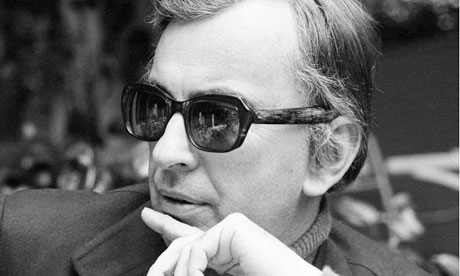
 Gore Vidal during a Los Angeles interview in 1974.


THE HAROLD HERALD BOOK REVIEW

Ambition as a Historical Catalyst:
Burr, Lincoln, 1876, Empire, Hollywood, and Washington D.C.
by Gore Vidal.
Ballantine Press, $5.95 ea.

By all rights, Aaron Burr should have been the third president of the United States. If not the third, then certainly the fourth. When he and Thomas Jefferson secured the identical number of electoral votes following the election of 1800, Burr stood aside, accepted the vice presidency, and bided his time. The presidency would certainly be his eventually. Hadn’t John Adams set the executive precedent by accepting the second spot, then ascending in due course? Hadn’t Jefferson promised his support when the time came? But Jefferson would prove unfailingly vague when it came to political commitments. He was wary of Burr and isolated the vice president within his Cabinet. Jefferson wouldn’t allow Burr to resign with honor — until, that is, Burr hadn’t the time to organize a credible campaign for 1804. Jefferson then framed Burr for treason, tried him and while he couldn’t prove the trumped-up charges, the president had by then effectively obliterated Burr’s political viability, thus securing his own and, by naming James Madison vice president, a Virginian ascension.

At least, that’s Burr’s version of events.

Or rather, that’s the version laid out by Gore Vidal’s title character in “Burr,” the first of six historical novels comprising the author’s American Chronicle, which I started in August and have finally finished. By tracking Aaron Burr and his descendants through the nation’s first 150 years, Vidal illustrates how ambition and decidedly unenlightened political scheming shaped and sustained the world’s first modern democracy. At the same time Vidal weaves an enormously intricate, believable tapestry where historic figures full of life mingle with the fascinating Burr and his equally engaging but fictional offspring. Vidal has clearly done a vast amount of homework. Yet while his narrative has an authority born of journals, letters and historical canon, Vidal’s real characters — like Jefferson and William Seward, Lincoln’s ambitious secretary of state — are unfailingly funny, sullen, outrageous, randy, paranoid and sometimes insane. In a word, human. Indeed, they take on the qualities of fictional characters because they’re depicted with such depth, wit and humanity. On scholarly grounds, historians wouldn’t dare recreate dialogue as Vidal has done. Besides, most historians couldn’t do it; they haven’t his skills as a novelist. Vidal can convincingly mimic Henry Adams and Mrs. John Jacob Astor, with equal parts style and integrity, because he’s a novelist with a supreme command of the subject matter.

When Vidal intersperses these historical figures with fictional characters (believably placed in the maelstrom of actual events), it’s hard to remember who’s real and who’s not. The author does his level best to remove any distinction.

Young Charles Schermerhorn Schuyler, a fictional law clerk and budding journalist, tells the story of “Burr”. Schuyler works for the title character and convinces the old man to dictate his fascinating memoir. This Burr does, in part. The bits and pieces of his amazing life — the raid on Quebec with Benedict Arnold, candid Burr-centric portrayals of all the founding fathers, his aborted conquest of Mexico, his many wives, his mysterious relationship with Martin van Buren, rumored to be Burr’s bastard son — are never published as memoir, per se, only as flashbacks set against Burr and Schuyler’s “contemporary” story, set in the 1830s. The young protégé is mesmerized by this window on the nation’s founding moments and men, but he is fairly well knocked to the floor when, upon the old man’s death, Schuyler learns that he, too, is Burr’s illegitimate son.

In “Lincoln,” volume II in the series, Schuyler disappears and Vidal centers the novel around two historical figures: the president and his young secretary, John Hay, who narrates. Schuyler reappears very late in “Lincoln” before resuming his narrative in the third volume, “1876.” Here Schuyler and his daughter hitch their political wagons to the shoo-in presidential candidate, Samuel Tilden, and their social fortunes to New York’s budding Astor-based society. At the beginning of “Empire,” Hay, now President McKinley’s secretary of state, returns as one of Vidal’s central characters, alongside Schuyler’s two grandchildren, Caroline and Blaise Sanford. Secretary Hay becomes Teddy Roosevelt’s vice president upon McKinley’s assassination. Blaise becomes William Randolph Hearst’s dilettante protégé, while sister Caroline — a former schoolmate of Eleanor Roosevelt in England — buys the fictional Washington Tribune, where she out-tabloids both Hearst and her jealous brother. “Hollywood” follows Caroline to California, where she helps pioneer the movie industry (with Hearst). Blaise buys the Tribune and remains in D.C. to savage President Wilson — and back the serenely dim, Republican hopeful, Warren Harding. In the closing novel, “Washington, D.C.,” Blaise is an aging, would-be kingmaker frustrated by FDR’s stranglehold on the body politic. The nation’s capital — a malaria-ravaged swampland in “Burr”; a provincial seat of government in “1876”; now, in 1945, nerve center of the world’s first superpower — has changed, but it still provides a fascinating backdrop for Vidal’s horde of schemers and climbers; all the folks who have made this country what it is today.

Imbued, as I am, with the arrogant notion that scholarly history is interesting enough (blame the Wesleyan history department), I’ve never been a fan of historical novels. Though I’ve always liked Mary Renault (“The Persian Boy”, “Mask of Apollo”), the genre allows too many liberties. Basically, it’s cheating.

But Vidal changed my mind. Well, he didn’t change it… Vidal proves it can be done well, even raised to high art. But good luck finding another author so capable.


Ed. So, I found this piece in an online issue of the Harold Herald, the proto-blog I published via Pagemaker, a Xerox MFM and the U.S. Postal Service in 1994. Disappointed I can’t find the ancient “print” version, as I recall spending a lot of time laying it out to make it look exactly like a NYTimes Book Review page. In any case, it remains an odd mix of fascination and dread to read oneself from 20 years ago, especially as I happen to be rereading “1876” right now. I back most everything I wrote here, save the last bit. I have, in the ensuing decades, found several historical novelists the equal of Vidal, but only in certain respects. Bernard Cornwell — he of the Sharpe’s Rifles series, set in Napoleonic times; an Arthurian trilogy of the highest quality; and several more multiple-volume depictions (of England in the of time Alfred, France in the middle ages, and even America during the Civil War) — is a thoroughly trustworthy historian and expert yarn-spinner. But he cannot write like Vidal. Few can. Renault is fabulous, but Vidal’s “Julian”, which I read after tapping out the above review, beats Mary in her own classical backyard. Hilary Mantel’s 21st Century series starring Thomas Cromwell and Henry VIII (“Wolf Hall” and “Bring up the Bodies” are to be capped by a soon-to-be-released third book) is superb — but she needs a few more under her belt, ideally something from a completely different era, to hang with Vidal.

The best moments in any good historical novel are when the author introduces and puts to lengthy narrative use juicy historical characters — their rendering and their interaction with fictional characters, when done well, can be thrilling. This might happen a half dozen times in any Cornwell novel. In “1876”, it happens every 15 pages: Grant, Mark Twain, Maine’s own James Blaine, James Garfield, an array of New York newspaper editors and publishers, The Astors, Samuel Tilden, even Chester A. Arthur for chrissakes. The density of these non-fictional characters in the narrative is dizzying, and Vidal delights in painting familiar icons in ways that deconstruct our preconceptions while remaining entirely plausible, not to mention historically accurate. This is some of what makes Mantel such a formidable player in the genre: She similarly packs her novels with historical figures, fascinatingly rendered, something her relatively modern subject matter (and our familiarity with many of her non-fiction characters) allows.

The piece de resistance of any historical novel, I’ve learned, is the author’s note at book’s close. Not all of these are handled the same way, but here, typically, the author details the liberties he/she may or may not have taken with historical events and personages. Invariably, they are minimal; it’s in the author’s interest to give that impression, of course. Oftentimes they’ll get into their sourcing, their bibliography, for the same reasons. Either way, it’s clear that extraordinary grounding in a subject is required, alongside and integrated with their abilities as storytellers. I remember when I first read the author’s note for Burr: Vidal basically says, “Everything depicted here is historically accurate; everything the non-fictional characters are quoted to have said was taken directly from primary sources, i.e. their letters, correspondence and memoirs.” I just skipped ahead last night to the Author’s Note for “1876”. It’s similarly brief. Vidal was obliged to move up Twain’s publication of “Huckleberry Finn” so it might be discussed during the author’s dinner at Delmonico’s with Schuyler in June 1876. Similarly, the massacre at Little Bighorn happened in July, but word of it didn’t reach back East for several weeks. Vidal wanted it in the air at the Republican convention in July, so he took that liberty. But that’s it. Everything else fits together like a sprawling Roman floor mosaic, the sweep of history accented here and there by bits of fictional color.

 What I didn’t know in 1994 was that Vidal wrote these books out of order, as it were. “Washington D.C” came first (published in 1967), followed by “Burr”, “1876”, “Lincoln”, “Empire” and “Hollywood”. What I couldn’t have known back then was that he would add a seventh volume, “The Golden Age”, that chronicles America during the Cold War. In this coda, Vidal takes us right up to the year 2000 (the year it was published), by which time the original thesis laid out in the very first book and supported throughout the series — that America’s republic, always built on the not particularly reliable or durable foundations of corruption, ambition and privilege, had, with the close of WWII, finally given way to outright empire — had indeed come to pass. “The Golden Age” features the broad cast of historical characters any reader of the Chronicle might expect, plus one that comes as a mind-bending but pleasant surprise: Gore Vidal himself. 

 Vidal never cottoned to calling this series his American Chronicle. That came from the publisher apparently. He preferred Narratives of Empire, and one can see why.


Recalling, Replicating Scenes from the Parking Lot at Ponkapoag
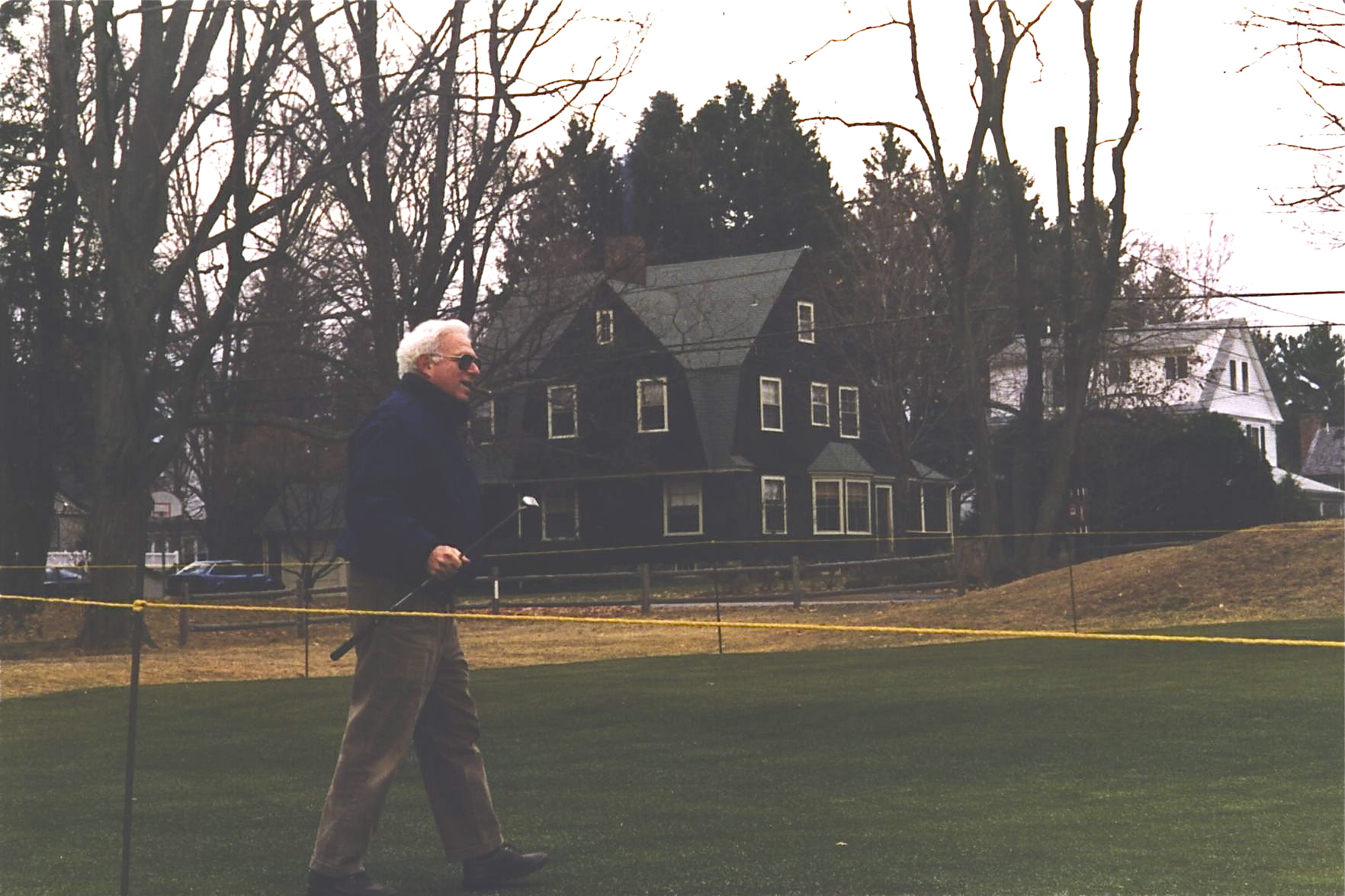
My dad on the 8th green at Nehoiden, right across the street from the house where grew up. It's late November; the greens have been staked for fencing at the first snow. We sprinkled his ashes here, and there's a memorial bench for him just right of this frame, on the 9th tee. There is no headstone in any cemetery for him. This is his spot, for all eternity.

Recalling, Replicating Scenes from the Parking Lot at Ponkapoag

H9

My dad with his dad, the original Harold Gardner Phillips.

I try to write each August about my dad, Harold Gardner Phillips, Jr., as he passed away (all too soon) at the end of this month back in 2011. This exercise is equal parts homage and memory aid as I suppose one fears these recollections, now perfectly strong, will somehow fade with time. This year the jog happened naturally, as today I stand poised at the fulcrum of a generational see-saw: My son Silas goes off to college tomorrow, and so the memories rush back re. the day my dad saw me off, out of the nest and into the world.

As is the case with so many stories I’ve shared about my dad, golf plays an intersectional role. This one’s even more fitting because it centers on Ponkapoag Golf Course in Canton, Mass., a municipal track we played dozens of times growing up. One used to be able to see it from Route 128, the frenetic inner ring road that circles Greater Boston, though methinks ever-maturing trees now obscure that view. Today there are only 27 holes at “Ponky”, but there used to be 36. The course one used to see from the highway was nothing special. The other 18, however, was a Donald Ross design from the 1930s that, despite the rigors of time, high traffic and miniscule maintenance budgeting remained damned sublime.

My dad and I played Ponky together on a several occasions, but this was mainly a place where he, my mom and various other parental figures dropped my friends and me for an entire day of golfing adventure. It also served as venue to a pair of tournaments: The CYO (that’s “Catholic Youth Organization” for those who may not have grown up in Boston, where the Church held such wide-ranging cultural sway) and the New England Junior Championship.

That day I left for college, a cloudy late August morning in 1982, I was scheduled to play a quarterfinal match at the New England Juniors, as I had qualified earlier that week for what stood to be a potentially anti-climactic match-play portion. I had packed our Dodge Omni that morning with all my stuff. Win or lose, I would decamp for Wesleyan University in Middletown, Conn., some 100 miles southwest, directly from the golf course.

As it happened, I won the match, bettering a kid from Rhode Island named Fred, 3 & 1. I signed my card, informed a quite delighted Fred that I would be withdrawing, told the officials, and walked off to the parking lot.

There to my surprise I found my dad, who had just rolled up.

As a kid, my competitive golfing career would never prove particularly extensive. Indeed, this tournament and the New England Juniors the year before were the only two events I had ever played, to that point. Golf was a fall sport at my high school, as was soccer, which took clear precedence. In other words, while my dad had played hundreds of rounds of golf with me over the years, and we maintained a spirited, running match for decades, he had never seen me play a proper tournament match against anyone else.

One time, in college, he showed up at Pleasant Valley Country Club near Worcester to see me play a collegiate match featuring Wesleyan, Springfield College (I think) and Assumption. I know the latter to be true, for certain, because I ended up facing a guy from Assumption that day named Frank Vana, who would go on to win multiple Massachusetts Amateur crowns. My dad worked near PVCC and he showed up on the 9th or 10th hole, at which point my game imploded. He scurried off after we finished 13, not wanting to cause/witness any more carnage.

For many years, I was never sure what exactly he meant to “do” that day — in the parking lot at Ponky. We had said our goodbyes that morning, and it wasn’t as though I was going off to war. But today, I can see he probably wanted one last moment with his boy, who would soon leave and return in some way, shape or form, a man.

I’ve been trying to remember what exactly my dad and I talked about during that moment in the parking lot. I surely went over the match with him, and the curious aspect of my winning but withdrawing. I don’t remember that we got into anything particularly deep. I remember being touched that he had shown up, but there were no tears. I’m pretty sure we shook hands.

See here a relevant excerpt from the eulogy I delivered for him in 2011:

My dad was not a particularly emotive man, not for most of the 40 odd years I had a clear picture of him. I remember one time I came home from college and was determined, in the sure and committed way of college students, to simply start hugging him and telling him that I loved him. I had seen other dads do this and had been impressed — that a father and son could be so open and physical in their affection for one another. I wanted that for my dad and me, to be honest. So I started out with hugs and, well… the man never really got comfortable with it. It just wasn’t his way. I remember telling him during this same period that I loved him, and noting that, to some extent, one is obliged to let people know that this is so, to verbalize it, to say it plain. He said that wasn’t his way, that he instead showed people he loved them. I remember thinking, at the time, that this was something of a cop-out.

But the man knew himself. As I grew older, I better recognized the ways he expressed intimacy and let you know how he felt. There are no rules or universalities for these things, I’ve learned, as I myself have grown as old and, in some ways, as wise as he. The more I observed this, over time, I can report that my dad did practice this sort of behavior consistently, with all sorts of people.

I think one of the keys to understanding and appreciating my dad is this: If he enjoyed something, his greatest joy was to share that enjoyment with you. If there was a piece of music that he found thrilling — and the man enjoyed a notably wide musical taste — he wanted you to listen to it and, ideally, derive the same thrill, too. If there was something he had seen on PBS or C-span, he wanted you to see it, too. If there was food item he had acquired or my mom had made, he wanted you to consume it. Right then. His enthusiasm for this sharing was really quite intimate, almost childlike in its enthusiasm. You might walk into my parents’ home, having not seen him for weeks, and his most deeply held desire was to have you sit down and watch an interview with the historian Gordon Wood, right then, so soon as you put your bag down.

And there was another aspect to this: He wanted you to listen or watch or taste or, to the extent possible, read this stuff WITH you. He wanted to sit right next to you while we watched the Gordon Wood interview, together — so he could pause the recording and discuss it. He wanted you to put the earphones on while he would stand right there beside you, grinning giddily, as you listened to some choral piece by Arvo Part. He would call just to see how far you were in a book he had recommended, to get updates on your progress…

I loved my dad but I, like many sons, have fashioned a great deal of my life in response to his. When Silas heads off tomorrow morning, there will be hugs. There will be tears. That said, I expect that whatever I’m feeling at that moment, is the same thing my dad felt that day, some 32 years ago, in the parking lot at Ponkapoag.

Silas is flying to Montana tomorrow morning, with his mom. I suppose that if I could practically meet them in Chicago for one last goodbye, I’d do it.

Silver Tribute Ends 23 Years of Jazz-Search Futility

Silver Tribute Ends 23 Years of Jazz-Search Futility

7020935053_94b0a8f169_z

Bald Hill played the Peace Fair on Brunswick Green Saturday. Our mando player, Ben, arranged the gig: His mother is a German war bride and longtime social justice activist. She administers this event, which annually draws a healthy cross-section of southern Maine’s aged hippie population. This year, for these unreconstructed lefties, we performed a Pete Seeger tribute/sing-along. The crowd was big (for a peace fair, in August) and the weather held off. But the noteworthy development arrived before I had played a note. Ben’s brother Matt, a gifted pianist, was up for the event and brought along a fellow Nutmegger native on sax. They started our set (we followed a five-piece that featured two steel drums) with a four-piece tribute to the recently departed Horace Silver (above), a jazz name I sorta knew but not really. Altogether appropriately, the song they chose was “Peace”, and it quickly transported me.

During the early 1990s, I worked as the news editor at a couple of daily newspapers in Massachusetts. The life was somewhat nocturnal: I’d arrive at 5 p.m., put the paper on the press at 2 a.m., and go home — unless the paper crowd had gathered for very late-night revelry. We were somewhat obliged to socialize together because who else was awake? Even a ridiculous schedule like this can become routine: I’d arrive in the newsroom and flip on NPR via WGBH in Boston. The first two hours of the work “day” were a mix of gay banter, serious story planning, photo assessment (from what had been shot that day) and assignment (to be shot that night), and front page/section layout. All this took place with All Things Considered airing in the background, as soundtrack.

At 7 p.m., things got more down to business. Reporters headed off to meetings or returned from accidents/crime scenes/sporting events to begin filing stories — stories that I would read and edit before sending the final layout to the paste-up/press operation a few towns over.

But nothing seriously got done, not at my desk anyway, until 7:04. WGBH aired a jazz program starting each night at 19:00 called “Eric in the Evening”. The show theme was this beautiful piece of jazz that dripped from the transistor radio each night, all on its own, starting at exactly 7 p.m. The routine of its play provided the perfect respite and regathering moment before the radio got turned off and we all transitioned to the mania of another evening on deadline.

I’m not a huge jazz guy. I like a massive cross-section of the genre, though when I pin myself down, I can see how the influence of Charlie Brown and Vince Guaraldi shaped this particular aspect of my musical taste. Dave Brubeck. Bill Evans. That’s the stuff I’m drawn to apparently: white guys from the late ‘50s and early 60s. Very uncool, I’m afraid. Just the way it is.

I left the Marlboro Enterprise and Hudson Daily Sun in 1992. I never did get the name of that theme music to “Eric in the Evening”. Every couple years it would jump into my brain — not because I’d heard it, but because I’d remember just how resonant and important it was to me, at one time, in my work life. I googled “Eric in the Evening theme” one time, with no luck. For a long time, apparently, Eric Jackson still hosted a jazz show on WGBH radio, but at some point he’d eschewed the regular-theme music thing, opting instead for excerpted bits from that night’s guest or spotlight artist.

Well, I can report without question that “Peace”, was in fact Eric’s old show theme. I knew it from the moment I heard the opening two measures at the 2013 Peace Fair. Only took me 23 years… And now Eric Jackson has passed away, at 72.

Here is Silver’s original version, from 1959. Here is the Tommy Flanagan version that specifically served as the “Eric in the Evening” theme. Peace out, Mr. Jackson.

Of Hillsborough, Heysel & Stamford Bridge: Backstories amplify documentary of tragedy

Of Hillsborough, Heysel & Stamford Bridge: Backstories amplify documentary of tragedy

Hillsborough1_2880476b

This post was excerpted and adapted from, Generation Zero: Founding Fathers, Hidden Histories & The Making of Soccer in America (Dickinson-Moses Press, 2022).

In joining the wide chorus of praise for director Daniel Gordon’s superb “30 for 30” documentary on the Hillsborough soccer disaster, we should be reminded of two things: First, the state of British football fandom in the mid- to late-1980s was legitimately menacing and pervasive; and second, the 1985 Heysel Stadium disaster, where 39 died in a similar crush of humanity, should hang over the Hillsborough proceedings with a pall all its own.

That Gordon never found space in his film for Heysel, nor Britain’s genuine and warranted cultural worry over hooliganism (and Liverpool’s connection thereto) is somewhat startling.

Gordon was clearly at pains to accentuate the unfair and, some would argue, criminal treatment that Liverpool fans received in the wake of Hillsborough. It’s a fair and important point, and the facts here have been too long obscured. However, the context Gordon seeks — namely, that Liverpool’s reputation for hooligan behavior contributed to the way the disaster was investigated — surely cannot be summoned without a discussion of Heysel, which colored everything that came afterward and certainly fixed uncomfortable attention on a club and fan base that played central roles in both tragedies.

Liverpool FC was indeed front and center on May 29, 1985, when the Reds met Juventus of Turin in the European Cup Final, forebear to today’s Champions League Final. Thirty-nine predominantly Italian fans perished that night in Brussels, where Liverpool fans stormed a purportedly neutral area inside the gates but outside the stadium itself. Juventus supporters fled the threat, into the stadium, toward a concrete retaining wall. Fans already seated there were crushed by the onslaught of humanity — then the wall collapsed.

Unlike the Hillsborough narrative, very little of the above account is disputed, by Liverpool supporters or anyone else. Six hundred more were injured at Heysel that night and, as a result, English clubs were banned from all European competitions for five years. Liverpool was banned for 10, but was allowed back after 7 years served.

Gordon makes the important point that, rightly or wrongly, the fear of untoward supporter behavior tragically influenced police actions before, during and after the tragic 1989 FA Cup semifinal. The presumption that drunken fan violence had played a role ultimately moved the English Football Association (FA) to an appalling continuum of cynical posturing. That same presumption influenced media coverage of the event for years to come.

As such, it’s vital to understand the climate in which that semifinal, and so many other matches were routinely played during this period.

The police, the FA and the media behaved abominably post-Hillsborough. Full stop.

However, they were not behaving in a vacuum. The mid- to late-1980s were rife with soccer hooliganism. I was there, in London, for most of 1984-85 season. No one should require my eyewitness accounts, gathered from four separate city grounds, but serious alcohol consumption routinely played a role in the violence.

And yet Gordon touches on this broader cultural phenomenon very little.

Hey, it’s a big subject — probably too big to address fully/fairly in a 120-minute documentary on Hillsborough. But again, methinks Gordon soft-pedaled it because undo context here would tend to explain, if not justify, the behavior/presumptions of police, the FA and media in relation to Hillsborough.

Gordon does make it clear that police, the FA and England’s tabloid culture took this fear of hooliganism — born of Heysel and myriad other incidents involving dozens of clubs — and manipulated it in disgraceful fashion. However, menacing fan behavior was no figment of the FA’s nor Rupert Murdoch’s imagination.

It was all too real and totally out of control in many cases, as I witnessed first hand.

•••

It can be argued that the spring of 1985 represented the nadir of British football hooliganism, as Heysel had not yet gone down and English supporters still traveled to away grounds, foreign and domestic, with impunity. As it happened, this low point coincided with the semester I spent at the University of London, on loan, as it were, from my American college. I traveled all over the city that winter and spring, taking in a dozen matches at three separate grounds.

My maiden voyage, however, would prove the ultimate eye-opener.

I had two English roommates at the Westfield College, University of London; both were rugby fans and sarcastically dismissed football as a meaningless diversion for working class oiks. Accordingly, when Barry — a fellow American and Sheffield Wednesday fan (thanks to several summers spent in South Yorkshire with his cousins) — suggested we and I take in the Chelsea-Wednesday match one early February night at Stamford Bridge, I didn’t even mention it to my roommates. Off Barry and I went.

The word “hooligan” has always been loaded with questionable motivation, but there is no doubt that English soccer in the mid-1980s was then developing, in earnest, its notorious reputation for what has since become known, in a blanket fashion, as “hooliganism”, whereby traveling supporters of certain clubs would clash with home-standing counterparts before, during and after matches in miniature manifestations of England’s particular brand of xenophobia. People always harp upon English hatred of the French, and they do hate them (who wouldn’t). But in truth, the English aren’t particularly fond of anyone in Europe. Indeed, people from the South of England belittle people from the North, and vice versa; residents of Shropshire deride their neighbors in Worcestershire, and vice versa; even neighboring towns have managed to work up healthy mutual hatreds over the course of centuries.

As a consequence, “support” for football clubs routinely takes on a tribal, fever pitch (to borrow a phrase) the likes of which we really cannot imagine here in the States. There is no cultural equivalent that even begins to fit.

The year before, after Liverpool had defeated Roma in the 1984 European Cup Final, bands of Italian toughs on scooters had apparently attacked celebrating British fans as they danced in the Eternal City’s many fountains. Hit and run, or hit and scoot, apparently. This sort of behavior didn’t sit well with the English, as it probably wouldn’t with anyone. A year later, at Heysel, it was payback time.

Yet fan violence wasn’t reserved for internationals. English fans — not all fans, but relatively small subgroups of young toughs — routinely practiced their sordid craft at domestic matches, where rivalries were arguably more heated. Familiarity and contempt, don’t you know. This was the backdrop, only a few months pre-Heysel, as Barry and I left Westfield College, in the north London borough of Hampstead, for south London.

The tableau in and around Stamford Bridge that night was truly surreal. We came up and out of the Fulham Broadway Tube station and immediately walked past a pub that had been thoroughly gutted, all its windows shattered following a punch-up late that afternoon apparently; police and angry masses milled about everywhere.

Picture the scene from Apocalypse Now where Martin Sheen and the boys reach that bridge, the one a few clicks beyond which lies Cambodia and certain peril, the one eerily bejeweled with hanging lights and flairs, where a night-time firefight rages and chaos reigns. I love that scene, and that’s what it was like in and around Stamford Bridge that night, minus (ironically) the illuminated bridge. It was an atmosphere only enhanced by the fact that the river of supporters streaming toward the ground was continually fed by tributaries emanating from local pubs. Plus, I’d gotten well and duly stoned before leaving Hampstead. I was effectively channeling Timothy Bottom’s surfer dude character, Lance, who was transfixed but not effectively warned by the spectacle.

Following Barry’s lead we entered the stadium through a portal reserved for visiting fans alongside a gaggle of Wednesday supporters. The terrace (no seats) set aside for visitors at Stamford Bridge was located behind the North goal. To our left there was nothing — just a sunken access road, well below us, that led to the field. Indeed, 30 feet of open space separated us from the main stand along the touchline.

To our right was an unoccupied terrace guarded on either side by 15-foot, wrought-iron fencing punctuated at foot-long intervals by sharp spikes. Beyond that was the remainder of Stamford Bridge’s North Terrace, occupied by thousands of Chelsea fans, clearly hammered and beside themselves with venom, all of it aimed at — us.

I had been utterly naïve about this excursion. I would soon learn what I should have known beforehand — what my roommates would have readily told me — namely, that Chelsea supporters, back then anyway, were among the “hardest” and most hostile in London, rivaled only by Millwall’s and West Ham’s. Put the money of Russian oligarch ownership out of your mind. This was not the posh club it is today. Chelsea was a hardscrabble, working class club in 1985, with fans to match.

Today, as home to one of the world football’s richest clubs, Stamford Bridge is a jewel (I’ve heard some older fans deride it as a bleedin’ galleria). In 1985, it was no such thing. Picture a dingy, no-frills ground very much like the Hillsborough we see in Gordon’s documentary.

•••

Inside the ground, the Wednesday fans (along with at least one woefully underprepared, somewhat stoned Yank), occupied a pen current observers might also recognize from the “Hillsborough” documentary. No seats. Completely enclosed. But that February evening in 1985, we were but a few hundred traveling supporters from Sheffield. There was no crush of fans clamoring to enter all at once. There was plenty of room to move about freely, though we instead huddled together — to guard against the cold and various projectiles.

From the outset and this considerable distance — the full width of the open terrace, maybe 25 yards — the Chelsea faithful pelted us with AAA batteries and pound coins. However, to be honest, it wasn’t all that threatening. It was a bit of a laugh at that stage. What a good and practical idea, I remember thinking, to leave that section open, as a buffer.

The game? Well, at times it seemed almost secondary to our homestanding neighbors a section removed. Chelsea scored first, through Kerry Dixon, and Sheffield managed to equalize just before halftime.

About then, to our horror, the empty section that separated the home crowd from ours was opened up, practical caution apparently giving way to the reality of ticket sales.

What ensued was a jailbreak. There’s no other way to describe it, and it lends insight to the rush/crush of fans that took place at Heysel and Hillsborough. The Chelsea throng poured over (!) and around this huge, spear-tipped fence like a horde of rabid 11th century Danes, and made a beeline for the lone wrought-iron barrier now separating us. Soon they were pressed up against it, screaming obscenities and taunting us, their arms reaching through the fence like desperate, famished prisoners. We all instinctively moved away from the fence, gathering at the far edge of the terrace and pulling our jackets up around our heads so as not to take a AAA in the ear. Let me tell you: It was fucking scary. I remember turning to Barry and saying, “I should NOT have gotten stoned.”

This was not some frenzied spasm of menace that faded with time. The Chelsea fans were on us the whole time, the entire second half, bombarding us with all manner of pocket-sized ammo. Thank god no human could spit that far.

There was no police presence in the terrace, only a smattering along the access/egress concourse that ran along the back of all three sections, behind the north goal. While the Chelsea horde had scaled one wrought-iron fence, an identical fence continued to separate them from us. The only thing stopping them from invading our space was, well… I don’t know. The fact that police were watching from above and perhaps an obscure, deep-seated tenet of British restraint?

Fortunately Chelsea scored in the final 10 minutes to secure a 2-1 victory. I don’t want to think about how things might have played out if Wednesday leveled things, or managed to win the game. As a player myself (at the time), I remember considering the prospect later that night: Did the Wednesday players, for example, recognize what victory might mean for the 800 or so supporters who’ve traveled down from Sheffield? Can one try to win with all the same commitment, knowing that a goal or victory — or perhaps a goal celebration taken a bit too far — might well bring a battery down on someone’s head, to say nothing of what might happen afterwards, outside the stadium?

Today, in the more refined Premiership era, visiting players score and make beelines to visiting fan sections, where much fist pumping and bellowing is enjoyed by the merry bands of traveling supporters. English football comportment was generally far less exhibitionist during the 1980s (so few of the games were televised). But visiting goal celebrations were relatively muted, in part, so as not to put traveling supporters in unnecessary danger inside and outside the ground.

As it was, when the final whistle blew and the referee pointed to the spot, the home supporters spent a few minutes hugging each other and chanting before they turned back to us and emptied their pockets one last time.

The trip out of the stadium was more frightening still. We Wednesday supporters exited first — and now there were several dozen policemen to help us execute this delicate task. The entire stadium was sealed but for our Bobby-lined egress route, which, of course, passed right behind our neighboring terrace, where the horde reached out to us one last time through the fence. They let us have it again, but I didn’t see any of this spectacle. I had my coat up over my head.

Outside the stadium there were two long lines of police on horseback; we walked between them the three city blocks back to the Tube station, where a special train was waiting for us. We piled on, the doors closed, and, as we slowly pulled away, a group of Chelsea fans burst down onto the platform, half of them singing “We love you Chelsea/Oh yes we do-oo…”, while the other half reiterated the epithets to which we had become accustomed inside the Bridge.

The context is important: Wednesday was and remains no particular rival of Chelsea’s. This was a run-of-the-mill, February match between a pair of mid-table sides, with nothing special to play for. And yet the atmosphere between the two sets of supporters was dire — and routine. That everyday menace like this, and incidents like Heysel, did nothing to move the FA toward meaningful institutional reform and stadium renovation, is a bit mystifying 30 years on. That it took Hillsborough to make that happen, finally, is tragic.

Back at Westfield, just off the Finchley Road, I found my roommates at home and started to regale them with tales of my nerve-rattling introduction to top-flight English football. Yet I’d hardly begun when Trevor interrupted. “Hang on, mate. You sat with the away supporters?” As indicated, Trev was no football fan back then, but he knew enough to throw a disbelieving glance at Adrian, before turning back to me. “That was fucking stupid.”

How MadMen Should Finale, Ultimately

How MadMen Should Finale, Ultimately

vertigo_5_o_clock

It doesn’t honestly matter where Matthew Weiner & Co. picked up the seventh and final season of MadMen. Some might have insisted on 1969, to keep the 1960s ethos in tact — though the series actually started in the late ‘50s. Others 1974, thereby neatly bookending the Dick Nixon Era. But it doesn’t truly matter, because halfway through Thursday’s 2-hour finale , the show should have leapt foward from a chronological ’70something tableau to a recognizably modern day. Maybe the suit jackets might have seemed  a bit oversized. In keeping with the way other MM seasons have begun, it’s not exactly clear what year it is.

What is clear, in this alternate finale, is this: Sterling Cooper & Partners has survived and thrived, perhaps added a name or two, and the agency has taken up residence in chic modern offices high in a glittering Manhattan tower of glass and steel. For 50 minutes of this final hour, in the course of a normal business day, we learn what’s happened to most all the characters who matter, i.e. who remains at the firm, how the hierarchical machinations have shaken out, who’s moved over to or formed competitors, who no longer remains on this mortal coil, who has divorced and remarried whom, who’s aged well and who hasn’t… The pacing is pointedly brisk, recalling the Season 3 episode “Shut the Door. Have a Seat,” when our gang reboots the firm. This pacing is important because frankly there’s a lot of ground to cover (for the viewer, absent all these years) and we want to make clear the agency’s ongoing vitality.

Clues re. the time period dribble out via scene details and workaday conversations at SC&P. For example, the Justice Dept. has just announced it would no longer seek to break-up Microsoft — a fact germane to SC&P because the firm is courting Netscape, which is jittery because a company called Google has just been awarded US Patent 6,259,999 for the PageRank algorithm used in its search engine. The codgers at Sterling Cooper aren’t at all sure, charmingly, what a search engine is.

Bobby Draper has grown up to be a political operative. We see him on TV as chief of staff to Congressman Gary Condit, steadfastly defending a man who would appear to be dying a slow political death while denying an affair with 24-year-old Chandra Levy, now missing for 133 days.

All this catch-up takes place on a single day, a Monday.

The next morning, standing in his Upper East Side apartment, an appropriately aged Don Draper reads the paper in his stylish breakfast nook while a radio plays in the background: Ahmed Shah Massoud, leader of the Afghan Northern Alliance, has been assassinated in Takhar Province. Draper’s young wife frankly doesn’t know who that is. She’s the spitting image of Betty Draper. Or, maybe it’s another brunette…

What we all accept without debate: It’s a late-summer day of rare clarity, made real under a bright, blue, cloudless sky. Don gets out of a cab and bumps into a colleague (Peggy? Roger? Dawn?) outside their NYC office tower. They’ve all got a conference call at 9 a.m. They’re running late. As they hustle inside, the camera pans back from the monolithic revolving doors and reveals, for the first time, that the Sterling Cooper offices are now housed inside the World Trade Center.

Cut immediately to the Sterling Cooper offices burning out of control. Don is knocked out but slowly coing to beside his own desk, lying amid the debris (which includes a bottle of bourbon, a tumbler and a slide carousel). The only real sounds are low-licking flames and the eerie, reedy hum of steady winds, as several ceiling-to-floor windowpanes have been shattered/knocked out by the impact and subsequent blasts of jet fuel. The whole scene is staged and blocked to recall MadMen’s seminal Korean War flashbacks.

Don ultimately does come to. Things are suddenly moving really fast again. MM characters dart in and out, to see if Don’s alive, to express ignorance or disagreement as to what has actually happened, to tell him so-and-so is dead, to inform him they can no longer stay put, to always exude the massive, sincere reverence they have for this man in particular, whom they’re looking to, beside whom they might well die. A group has decided to ignore the “stay put” advice of emergency personnel on the ground — they’re leaving, and they’re taking the stairs. Draper says he’ll be right there.

Alone now, he grabs the bourbon, pours himself a drink and downs it. As he takes one last look around the wreckage that was his office/firm/life, the episode-ending music begins (“Be My Baby,” by Ronnie Spector and the Ronnettes). Don walks past the camera toward what we assume is the door. Instead, he walks to the open window and calmly steps out.

No need to show the trag-iconic footage of that businessman falling from the World Trade Center on 9/11. It is immediately recalled — and provides new meaning to the animated version of that footage we’ve seen at the start of this and every other MadMen episode, including the final one.

FootGolf? Yes, FootGolf. Where Do I Sign…

FootGolf? Yes, FootGolf. Where Do I Sign…


Here’s all I have to say about the advent of FootGolf: “It’s about freakin’ time.” Anything that essentially combines my two favorite participatory sports — and knee-high argyle socks — has my full attention and support.

I knew there was something out there like this, but until I read this piece, I had no idea it was so well developed, and so intrinsically awesome. As a devotee of disc golf, I embrace the game in all its alternative forms. But this one takes it to a new level. There’s even a rule book, to be consulted in the event one’s approach hits the pin and ricochets backward into a lake. (Of course, if that should happen, the ball would be floating on the surface and could presumably be retrieved, prior to a legal drop).

Soccer and golf have a long and distinguished history together. There’s the dreaded foot wedge, of course. And there was that time Alan Shearer played through our group at Gleneagles. I’d love to see him hole out with a proper foot wedge and run the length of the hole with his signature hand held high.

Check out more information here. There’s apparently a FootGolf facility in Las Vegas, but that’s awfully far away. If anyone out there knows where this activity can be pursued here in New England, I’m all ears. After all, there was a FootGolf World Cup held in Hungary in 2012. I now have my sights set on 2016.

Hot Mess and The Insidious Power of New-Burger Mania

Hot Mess and The Insidious Power of New-Burger Mania

Raised to be aggressively “skeptical of consumerism in general and advertising in particular,” I have, throughout my adult years, embraced this credo and further developed it. I dutifully change channels during commercial breaks and flip right past magazine ads, for example. I diligently disable any and all online pop-ups. I watch on television virtually nothing that hasn’t already been DVR’d, allowing me to buzz right through any and all consumer appeals. When I am obliged to confront an advertisement, I delight in letting loose upon it all my powers of sarcasm and mockery. In fact, I’m hard pressed to think of a single instance where I was moved to purchase anything on the basis of its formal advertisement.

Anything, that is, except special edition burgers mongered by fast food giants.

Much as I’m loath to admit it, I am quite helpless in the face of fast-food burger innovators and their army of propagandists.

I recognize this is for the major character flaw it is. Perhaps by writing about this phenomenon, this innermost shame, I hope to overcome it. Until that time, I am putty in the hands of Burger King each and every time it trots out a special-edition Whopper.

The King and his competitors are a sophisticated bunch and it’s not merely the power of their marketing. They spend years in secret labs researching and building into their products the neuroscientific triggers designed to elicit in unsuspecting consumers, like me, the desired Pavlovian response. When it comes to new burgers, I am essentially their Munchurian Candidate.

Ads for existing burger products don’t have the same effect. You could pimp Big Macs to me all day long and I wouldn’t be moved. I know from Big Macs, and I’m over them.

However, when the burger establishment pitches me a new, highly accoutered beefy morsel, I MUST TRY IT.

Intimates of mine may well read this and say, “Well, Hal is famously enthusiastic about all things edible.” And this is true. The same parents who so well prepped me to resist consumerism also imparted to me, by nature and nurture, an overdeveloped appreciation of worthy foodstuffs. But while I’m saddled with an unnatural love of pizza, for example, I don’t see an ad for some new Domino’s product and feel I must rush out to buy it. I don’t notice a fancy new offering at my local pizzeria and feel any immediate urge to sample it. Introduction of a new chicken-based sandwich anywhere leaves me essentially unmoved.

The burger situation, however, is anomalous and insidious. Something about cow flesh reaches my involuntary subconscious on a primal, unsettling level.

I recently ran across the above ad — for something Jack in the Box is calling the Hot Mess. Am I the only one intrigued by the mere name of this thing? We don’t even have Jack in the Box in Maine, or anywhere in New England, so far as I know. Still, I am plotting my next trip to the West Coast where I can cram a Hot Mess down my pie-hole forthwith.

Methinks it’s the special edition aspect that truly breaks down my fragile defenses. Homer Simpson proved famously spellbound by the Ribwich, a McRib-like concoction whose periodic availability (“for a limited time only!”) he met with unbridled enthusiasm. Indeed, Homer ultimately followed the Ribwich around the country, from city to city, like a Grateful Dead fan.

Thankfully, I don’t have the need to eat these things over and over, but I must try them. When Dairy Queen unleashed its Flamethrower burger — hot sauce, jalapenos, pepper jack and bacon — I naturally went out and sampled one straightaway. Okay, several.

I get over such things in due course, but it’s the initial curiosity that gets to me. If they’re equipped with bacon and/or jalapenos? Well, it’s “Katy bar the door…”

I’m a Burger King guy, because I like underdogs and their fries have always been superior, but mainly because their menus have routinely featured more bacon-bedecked items than McDonalds’, or any other competitor’s. Naturally, it didn’t take me long to sample their new “Angry” Whopper, so called because of the jalapenos, complemented by bacon and onion rings. Formidable!

Wendy’s Baconator combined the same time-honored lure of cured meats with another clever name. Of course I’m gonna try me one of those. If they ever figure out a way to work a fried egg in there, I’ll be among the first in line.

The value proposition is another trigger. Much has been written about the obesity of underprivileged Americans due to the remarkable affordability of fast food. A clear connection there, in my view. For the pure delivery of calories (worthless calories, but calories nonetheless), $7 goes a very long way. No, I don’t need a second Whopper — but if you’re offering me one for a dollar? I’m likely to be persuaded by that, even if I’m not hungry. Two Egg McMuffins for $3? Only a fool would pass that up.

I’m already over the recently unveiled Angry Whopper. Been there, done that. But this Hot Mess thing… It’s in my head. I’m headed to California in April. I’m intrigued enough that I may well bypass the SoCal delights of In ‘n Out Burger.

The regional nature of some chains does figure prominently in this equation, so far as I’m concerned anyway. I’m participate in an NBA fantasy league, so I watch a lot of NBA TV, where they merely co-opt regional cable feeds from, say, Sacramento, and share it with the nation. The commercials there naturally feature West Coast brands like Carl’s Jr. or Jack in the Box — that’s how I discovered the Hot Mess. When I first started traveling in Florida, I had an uncontrollable urge to investigate what Checkers had to offer. In North Carolina, how can one travel around the state and not drive-thru at Biscuitville?

In Kalamazoo, Mich., from whence my wife hails, I was, for a time, fascinated by something called Hot ‘n Now, a local chain that serves only drive-thru patrons from small, purple, A-framed establishments in mall parking lots. “Oooh… What’s that?” I cooed to her the first time we passed one.

“Ugh. They’re disgusting,” she reported.

“Well, yeah. Naturally. But we’re going to need to turn around.”