Category Archives

85 Articles
Glass Slipper & Carl Spackler Be Damned: Golf Actually Hates a Cinderella Story

Glass Slipper & Carl Spackler Be Damned: Golf Actually Hates a Cinderella Story

FORT LAUDERDALE, Fla (June 14, 2017) — Keith Mitchell won last week’s Honda Classic, besting Brooks Koepka and Ricky Fowler with birdie on the 72nd hole. See above. The headline writers at the Palm Beach Post were less than impressed. Behold, more evidence that golf sorta hates a Cinderella story. Mitchell’s win in actually the latest case study in golf’s curious-but-pervasive Cinderella Complex.

That giant sucking sound you hear? That’s the disappointment of U.S. golf fans and sports writers made manifest. Yet another “nobody” had made off with a PGA Tour title that should have gone to one of our major champion darlings.

Intellectually, golf fans recognize that the lowliest shit-kicking tour pro can beat two-time defending U.S. Open champion Brooks Koepka on any given day — as Mitchell did so bravely and cannily here at last week’s Honda Classic. It happens all the time. It’s part of what makes tournament golf so interesting.

What’s less clear is why such a result leaves so many golf observers so very cold. Why are golf’s surprise winners Humpty Dumpty, not Cinderella? We quote Carl Spackler often enough. When an actual underdog comes out of nowhere, why do we root against him?

This phenomenon has been eating away at me for decades. Perhaps, like me, you’ve wondered aloud why golf fans rooted for Tiger Woods so ardently all those years, while rooting against the likes of Bob May, Y.E. Yang and Trip Kuehne.

There will always be a minority who root against Tiger or Phil or Justin, I suppose. But it is a distinct, vanishingly small minority in golf, especially compared to our rooting habits in other sports. Why?

Given a choice, we prefer to live in singular times. It’s one reason why we can’t take our eyes off Tiger, or Dustin, or Rory — and continually compare them to Nicklaus, Palmer and Trevino. They are the best of our time, and something inside us craves the inevitable comparison with previous “all timers”. This urge to confirm that our stay on Earth spans momentous periods in history is why Grampa still natters on about the severity of snowstorms in the 1940s, why he prefers ballplayers from the 1950s. It’s why we have something called The Greatest Generation.

Cinderella Story: Resisting the Irresistable

But we also root for underdogs because their stories are irresistible, right? Only a neutral cad (or a Patriots fan) could have rooted against the Rams in the most recent Super Bowl. Who but a Yankees fan doesn’t routinely back anyone who might face them in post season? When UCLA won those 88 games in a row under John Wooden, who didn’t root for someone to knock them off?

But golf, or some reason, is different.

It’s long been my feeling that we golf fans, we golf media harbor a most peculiar Cinderella Complex — an Underdog Aversion, if you will. When confronted with the prospect of a title going to Keith Mitchell, or (more to the point) a major title going to Todd Hamilton, Ben Curtis, Mike Donald, Rich Beem or Charl Schwartzel, a good many of us reflexively bridle. We root against them.

Think back to 2004, when Hamilton’s tentative 2-iron faded into the right rough on the 72nd hole at Royal Troon. This is where I first recognized this counter-intuitive emotional tug — in myself. Surely this is where the wheels come off, I thought, when Hamilton’s tee shot went astray. The steely, tactical golf he’d displayed through 71 holes of the Open Championship had been admirable and courageous on so many levels. But clearly, this was the first of several lug nuts to be loosened in the glow of Els’ consecutive birdies at 16 and 17.

And here is the truly dark and twisted part: The emotion we golf observers experienced at Hamilton’s apparent collapse wasn’t disappointment. It was relief. Deep down, something inside us wanted this to happen. Somehow we all felt it would be more satisfying to have a “name” victor. But honestly, why would I root against Todd Hamilton? Why would anyone?

Underdog as Interloper

We had the same feeling the year before when Ben Curtis, playing several groups ahead of the leaders, slowly emerged as the unlikely favorite at Royal St. George’s. As the no-name Ohioan waited in the clubhouse (he finished early and watched the leaders all fall away, you’ll recall), an anxiety permeated golf’s fandom and media horde. Surely, we reasoned, Tiger or Thomas Bjorn or Vijay Singh would do what their pedigrees demanded of them — what we demanded of them — and claim the Claret Jug from this… interloper! 

I felt it, and it wasn’t a new sensation. I had the same feeling when Tiger and Bob May dueled at Valhalla in 2000. Great tournament. Great playoff. Great major victory. But would golf fans and media have thought so if May had prevailed instead? I don’t think we would. Why are golf fans so underdog averse?

The simple answer, though not the most flattering assessment, is that golf fans and golf media are flagrant front-runners. We want champions to win again and again, and we are curiously galled when someone like Curtis or Rich Beem or Orville Moody or Tommy Aaron wins/absconds with a major. Indeed, we find ourselves rooting against them as the tournament plays out. Looking back, we contort ourselves in order to explain them away. We even blame certain courses (Olympic) for not producing proper major champions.

I went back and checked the TV ratings from the 2004 British Open. Sunday’s telecast pulled a 4.6 — a solid number considering Hamilton, this relative unknown, came out of nowhere to hold off one of the sport’s biggest stars (Phil Mickelson) and nip another (Ernie Els) in a playoff. Compare that number to the record 6.4 share achieved on Sunday in 2002. That British Open, at St. Andrews you’ll recall, was done and dusted by Saturday noon. The entire Sunday broadcast was completely devoid of competitive drama, a simple coronation for Tiger Woods. Yet it was the most watched Open Championship in history.

The record U.S. Open TV rating? It came just a month prior, when Tiger won by 15 strokes at Pebble Beach. What else but overt front-running hero-worship could explain numbers like these?

This goes Deeper than Media Hype

It would be easy to blame the media for this phenomenon, which persists to the present day. With 24/7 capacity, it churns out a stunning amount of analysis and prognostication. Inevitably, all this talk, all these words and imagery ultimately center on known quantities — our stars, our heroes, the odds-on favorites. It’s not unreasonable to assume this would have an effect on our involuntary rooting interests.

However, I think it goes deeper than that and predates the modern media age.

Bobby Jones wasn’t just favored to win every time he teed it up; fans preferred that he win time after time. Ben Hogan had won 8 majors by 1955. Yet when he faced down Jack Fleck in the U.S. Open that June we didn’t root for Fleck. We preferred the Wee Ice Mon win another one.

Sometimes the outcome we staunchly prefer does hold, whereby a sort of anti-Cinderella justice is done (read: Van de Velde at Carnoustie). Other times the impossible happens (say, Fleck slaying Hogan at Olympic in 1955). In either case, we might have enjoyed the rags-to-riches theater through 70 holes, but when push came to shove we wanted the proven quantity to prevail.

The uncharitable way we view these David vs. Goliath duels, in retrospect, is revealing. Fleck, after all, is only a single letter from fluke. Fate clearly intervened on his behalf — and we’re still irked about it. Beat the Great Hogan? How dare he!

Admit it: When Steve Jones nipped Tom Lehman at the 1996 U.S. Open, when Scott Simpson held off Watson at Olympic in ’87, when unfancied Michael Campbell bested Tiger at Pinehurst in 2005, when Zach Johnson slayed Goosen and Woods in the ’07 Masters, when Lucas Glover outlasted Mickelson at Bethpage in 2009, the results were tinged with disappointment. In major championship golf, we want our stars to come through.

Y.A. Yang at the 2009 PGA: Were you rooting for him? I mean, why would you NOT root for the first-ever Asian to win a major. Still, I’m betting that you treated him exactly like you treated Rocco Mediate during the 2008 Open at Torrey Pines — pleased to see him fight so gamely, but ultimately hoping to see Tiger prevail.

I’m sorry. That’s twisted.

Unique to Golf

I don’t see this dynamic as nearly so fully developed in other sports. Yes, there are some who delight in team dynasties — mostly media, as it makes prognostication, the new modus operandi of sports punditry, easier — but no one begrudged the Patriots their miracle Super Bowl victory in 2001. In much of the country, rooting for the Yankees to win yet another World Series is akin to backing the tanks in Tianamen Square. And so we delighted in the Marlins and Diamondbacks having their moments in the sun, in 2003 and 2001, respectively.

Golf is different — but not because it’s an individual sport. Do we not root against Venus Williams, then Serena, now Federer and Nadal once their major victories become so common as to seem preordained? Okay, maybe in the quarters we root for Federer, to set up a killer final vs. Nadal. But in that final, should someone like Robin Soderling gain it, as he did in the recent French Open final, we root for him — the Cinderella story. Track and field history is littered with inspirational tales of underdogs who claimed Olympic gold and, by their unlikely efforts, our hearts.

But golf, for some reason, engenders a different sort of response.

There’s a corollary to this dynamic that pertains to venue. In retrospect, for example, some observers consider Open winners from the Olympic Club in San Francisco — Fleck (over Hogan), Casper (over Palmer), Simpson (over Watson), Janzen (over Stewart) — and conclude the course is somehow diminished because it doesn’t produce “great champions”, whereas a track like Pebble Beach (Nicklaus, Watson, Kite, Woods) does.

This, of course, is a canard of the first order, brimming with conceit. No one doubts the rigor and major-championship fitness of, say, Oakland Hills, even though it served up champions like Andy North and Steve Jones. Indeed, Hogan won there in 1951 and Gary Player in the ’74 PGA.

Conversely, does Tiger’s win at Valhalla peg the layout as “great champion producer”? I think not.

But you’ve heard these arguments. It’s part of golf trying to cover its tracks — those left by glass slippers. If Orville Moody wins the Open, there must be an explanation (Champions Club in Houston: poor venue). Yet behind this sort of prattle we see again the front-running gene seemingly inherent to golf’s rooting interests. When our heroes fall short of the brass ring, we politely applaud the underdog and blame the golf course.

We Overvalue Historical Affirmation

History, so central to golf, plays another role here. We prefer our championships, especially our majors) to be memorable affairs. Major titles are the sticks we use to measure a player’s place in the game’s ongoing epic. We want to believe Nicklaus won 18 majors for a reason. By the same token, we want to believe there’s a tangible reason why Colin Montgomerie and all the other unfortunate souls — from complete unknowns to those who’ve worn the Scarlet BPNTHWAM (“Best player never to have won a major”) — haven’t. The prospect of Mike Reid running away with the 1989 PGA just wouldn’t have satisfied. Thank goodness Payne Stewart eventually reeled him in, eh?

Basically, until you’ve won a major, you’re not even on the radar screen of history. At best you’re an outsider with delusions of grandeur, a bit player on a grand stage with the gall to challenge golf’s natural order. As golfers, we accept as fact that the crucible of major championship play will validate the winner as a “major champion”. Golf fans really, really want to believe that major winners are a breed apart.

It’s commonplace, of course, for lesser-knowns to win from week to week on The PGA Tour — more so nowadays when top 30 players are so rich, they play increasingly abbreviated schedules, thereby diluting fields. But we have different expectations for major championships. We expect them to produce something better. Otherwise, what exactly makes them so “major”?

Since 2002, there have been 64 major championships contested. Of those, “name” players have won all but 15 of them. That means nearly a quarter were claimed by underdogs: Cabrera, Glover, Cink, Yang, Immelman, Johnson, Campbell Hamilton, Weir, Curtis, Micheel, Willett, Schwartzel and Beem (I gave the benefit of the doubt to Geoff Ogilvy, Jim Furyk and David Toms who seemed just too well established to include here). Golf is actually in the midst of a relative Cinderella drought: Only Willett would qualify from any of the last 20 major winners.

Yet this truth remains; While winning a major championship might buttress the reputation of an established star, simply winning one does not validate an underdog as a “great” player. In an ass-backward sort of way, the victor validates the major — and the venue. This, in my view, sits at the heart of golf’s confounding Cinderella Complex. Despite all the drama such a Cinderella story might provide, ultimately we prefer that majors not be tainted by the ambivalence we attach to that sort of victory.

Coats, Ties and Foursomes: UK College Golf in the ’80s was a Breed Apart

Coats, Ties and Foursomes: UK College Golf in the ’80s was a Breed Apart

SUGAR GROVE, Ill. (May 5, 2017) — For all the trans-Atlantic DNA we share with our British cousins, it’s easy and, I daresay, natural to assume that UK college golf is pretty much a comp for the exercise here in the U.S. Not so. Not today, not forty years ago when I played for the University of London.

Today, top players from the U.K. (and mainland Europe) routinely travel stateside to hone their games at American colleges and universities. At scale, this “study abroad” drains the bBritish collegiate game of talent, obviously. Indeed, many of these men, women and their games will be on display here later this month (May 19-31) at Rich Harvest GC, site of the 2017 NCAA Championships.

But why do they make this trip in such appreciable numbers? Because collegiate golf in the U.K. — like all college sports there — is decidedly low-key, even compared to the low-stakes Division III golf I played at Wesleyan University in Middletown, Conn., during the early 1980s.

For my money, however, one can place UK college golf alongside proper ale and period cinema as something the Brits still do better, with more nuance and panache. Yes, our universities turn out more tour professionals, but for the majority of college golfers, in both countries, that’s not the point. It’s about competition and its sensible integration with the game’s social niceties — and no one does that better than the British upper crust.

That posh ethos dominated my university golfing experience abroad: Coats and ties, foursomes in the morning, singles in the afternoon, and no less than two proper English piss-ups sandwiched between them. You can have your vans, your matching shirts and golf bags. To Yanks, collegiate golf in the U.K. may look and feel more like a club sport. Having played both sides of this fence, I’ll go with the Pommies.

UK College Golf: No Vans

At mighty Wesleyan, a perennial golfing doormat, the exercise during the ‘80s remains recognizable: Throw on a pair of khakis and a golf shirt; pile into a van and meet a different college team, or two, at the course venue. We’d play 18 holes of medal, shake hands, tally up the scores, pile back into the van and drive home to campus. Big-time Division I golf schools don’t play many dual or tri-matches like these any more, I understand. More often they play various invitational tournaments whereby dozens of schools show up in one place, seven guys from each team play medal, and the best 5 scores count. We did this, too, though only once or twice a season.

Collegiate golf in England during the mid-1980s, when I played for the University of London, was nothing like this. Nothing. For starters, and perhaps most important, we rarely played other schools. Instead, university teams were hosted by golf clubs themselves, which trotted out their best players for a day of intergenerational match play and assorted reverie. Here’s a typical match-day regimen:

Put on coat and tie, pack some golf clothes in your golf bag and hump it to the nearest Underground station. Yes, we all got ourselves to the golf course, somehow — by bus or subway or some teammate’s car. We played a lot of matches in Greater London, at places like Roehampton and Royal Wimbledon, and I fondly remember riding the Tube with my golf clubs in tow.

Having arrived at the club, we would literally partake of tea, crumpets and scones with our opponents. As with most British golfing clubs back then, coat and tie were mandatory in the clubhouse, hence the need to dress for breakfast. The University of London Golf Team never once faced another school the entire semester I participated. We played the top 7 amateurs at various clubs who had deigned to host us for a day of matches. They were damned good players, as you might imagine, and they took great delight in showing off their home courses and, more often than not, kicking our asses around them.

The 13th at Royal Wimbeldon GC.

Thirty-six holes, Two Outfits

Our first change of address took place in short order, after tea. We’d slip into golf attire and head out for 18 holes of foursomes, or alternate-shot, at match play. This was great fun but very, very difficult. We typically see this format only in the Ryder Cup or President’s Cup contexts. Even then, a world-class professional, if just a bit off his game, can make life truly miserable for his partner. Just imagine teaming with a 7 handicap who’s probably hung-over, hasn’t picked up a club since the last match two weeks prior, and is seeing some course for the very first time.

Ater this first match, we’d change back into coat and tie for lunch. There were matches where we convened for casual buffets “at luncheon,” but more often than not these were grand affairs: four-course meals with elaborate place settings replete with wine, port and various toasts (read: shots of whiskey). If we students had fared well in the morning, the object of our hosts was mainly to get us as drunk as possible in preparation for…

Afternoon singles. Having changed back into golfing attire, we played 18 holes of singles, at match-play, of course. Depending on the luncheon miniseries, these could be quite entertaining affairs.

To complete the golfing day, one more costume chjange — back into coat and tie so as to hang around the clubhouse bar drinking pints of properly pulled ale with our new, middle-aged friends. Sometimes there were “antics”. At Roehampton (or Royal Wimbledon; I can’t remember which), someone suggested a 1-club tournament, whereby we went back out onto the course, at dusk, still dressed like Harry Vardon, pint in hand, to play a short loop of holes using but a single club. Great fun. I recall choosing a persimmon 4-wood. Remember them?

I honestly couldn’t tell you the first thing about whether we won, lost or drew any of these overall matches against the golf club teams. First of all, from a team perspective, I don’t think it mattered to anyone all that much; second, by the end of these marathon golfing days, I was far too drunk to give a fig.

The Semester’s Final Match

Oldest club in England
Royal Blackheath GC

I do remember well my last match before heading home to America, however. It was played at Royal Blackheath, which, if memory serves, is the oldest golf club in England, i.e. south of the Scottish border. We had arranged this match because a fellow on our team has been a member there growing up. He arranged it and, for him, the exercise prove equal parts homecoming, competition and piss-up.

Luncheon had been a complete free-for-all. Some two hours of eating and drinking had finally given way to the singles matches. Our Blackheath alum went out first against one of his oldest friends, while I — because it was my last match before going home, back across the pond — was given the honor of going out last vs. the club captain. He was 50-something fellow who kept offering sips from his flask all along the outward nine. I politely declined; I was plenty buzzed from lunch and wanted to win my swan song. On 12, I went 3 up and we set about finishing his brandy together.

When we arrived at the tee box serving the par-3 15th, our match nearly decided, we came upon the first group. They had decided to park themselves on a bench, wave everyone through, and concentrate on their drinking, reminiscing and needling. In the three years of college golf I played at Wesleyan, the idea that my opponent and I might blow off or otherwise back-burner our match in favor camaraderie like this? Never have occurred to us. Pity, that.

As we gathered in the clubhouse bar that evening, my teammates — in honor of my pending departure — presented me with a formal and quite stylized summary of the day’s results, complete with my skunking during the morning foursomes and my full point (!) from the singles. I’ve just gone and consulted this document in a scrapbook I keep. It was a touching gesture…

The fact that someone like me — an American, but really just a guy who showed up entirely unannounced, for a single semester — could join the golf team, compete in 5 or 6 matches, and be so thoroughly welcomed, then bade such a fond farewell. It speaks both to the informality of the collegiate golf exercise as it existed in England back then and to the oft-maligned English social character. Yes, they can be a bit stand-offish at first but once they let you in, perhaps with the aid of proper lubrication), they are great fun, quite warm and perhaps more prone to overt sentiment than we Yanks.

I don’t honestly remember how I got home from Royal Blackheath that night. My last concrete memory is playing snooker with several guys in the club’s ornate billiard room, a vast mahogany-paneled expanse beneath impossibly high, pressed-tin ceilings. cloud of cigarette and cigar smoke settled over the tables. Every once in a while, people find out I played college golf in England. They often ask, “So, what was that like?”

In a word, exhausting.

Feeding the Faithful: Golfing the East Coast of Scotland, by Rail
The estimable Balgownie Course at Royal Aberdeen GC

Feeding the Faithful: Golfing the East Coast of Scotland, by Rail

WHEN GOLF was first conceived, participants arrived at the course on foot or horseback, or, if the company was honourable enough, by carriage. For this reason, it remained for centuries a parochial, largely Scottish pursuit. In the 18th and 19th centuries, however, all of British culture was transformed by an industrial capacity that among other things launched a transportation revolution.

Trains would change golf forever.

In particular, completion of the Forth Rail Bridge, in 1890, widely exposed the bounty of Scottish links courses for the first time — to the rest of newly mobile Britain and ultimately the world, which still marvels.

The advent of train travel did something else marvelous: It spurred the development of “new” Scottish links built specifically to accommodate the rail-enabled.

Golf may not have been formulated with trains in mind but the idea and practice of “golf by rail” shaped and grew the game during the late 19th century, its first true boom period, an age we now drape with garlands like “ancient”, “timeless” and “classic”. The railway made the game what it was, what it remains today in the minds of many. Without this transformation, the romantic golfing image of golf we so idealize (the one we still travel to Scotland to find) might never have materialized.

Indeed, the very idea of golf travel was born in this time. By 1890, the railways had cozied up to several superb links in the Scottish lowlands. It only made sense: Rail connected population centers, which lay mainly along the coast, close to sea level where terrain was flattest and bed construction easiest. Just a short walk from these new “centre city” train stations lay the common lands, the links where, for example, in East Lothian, clubs like North Berwick, Muirfield and Gullane already resided. Today they remain as practical to play by train as they did in the 19th century — which is to say, perfectly practical for golfers with a sense of history and adventure.

The Forth Rail Bridge, the world’s first steel span, made this travel scenario a practical reality in Fife, revealing the birthplace of golf to the game’s myriad new zealots.

“As the train neared St. Andrews and I noted the gradually increasing numbers of the faithful,” wrote A.W. Tillinghast on his first trip to “that Mecca for golfers”, in 1895, “I marveled that the popularity of the ancient game had continued, unabated throughout the centuries.”

Read More

Baronets & Collieries: Encountering Fowler’s Beautiful, Wild Place

Baronets & Collieries: Encountering Fowler’s Beautiful, Wild Place

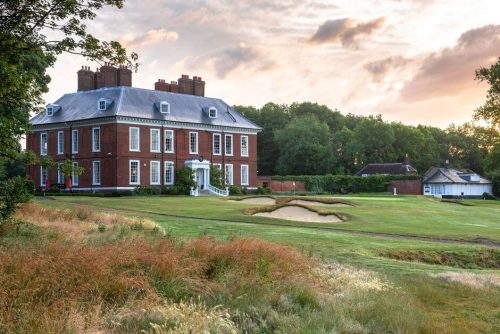
Herbert Fowler is one of those architects whose name, curiously, isn’t readily attached to the many great golf courses he laid out and/or substantially retooled. Cruden Bay? That’s a Fowler. Royal North Devon? Fowler’s fingerprints can be found all over this west country antique. Indeed, his renovation of the Old Tom Morris original (a.k.a. Westward Ho!) fairly well accounts for the course we know today.

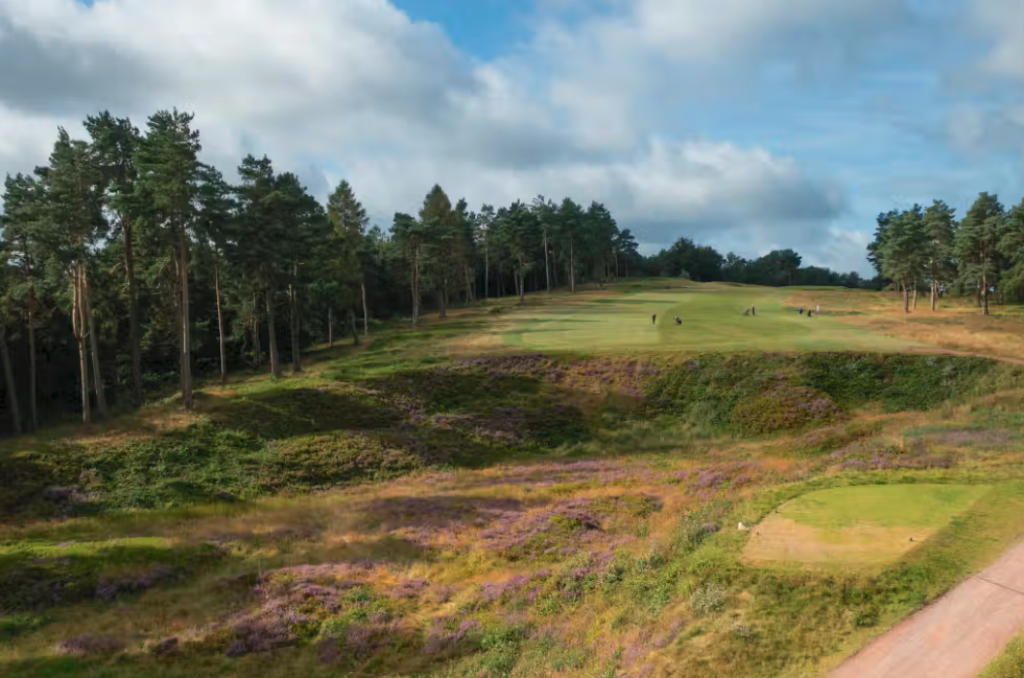
This lack of name recognition begins to explain why a venue like Beau Desert Golf Club, which Fowler designed nearly 100 years ago in the Staffordshire hamlet of Hazel Slade for the Sixth Marquess of Anglesey, rings few bells. Yet a better heathland course golfers are unlikely to come across, as indeed many have not.

Herbert Fowler

For his own part, The Marquess (nee Charles Henry Alexander Paget) recognized immediately that Fowler had created something extraordinary on his Beaudesert estate. When the course was completed, in 1913, Paget whisked Fowler off to the family’s “other” ancestral estate at Plas Newydd on the Welsh island of Anglesey. There the architect laid out a second course for the Marquess, Bull Bay Golf Club, another sterling Fowler product you’ve probably never heard of.

The majority of Fowler’s brilliant work was done in his native England, but he did get around. Fowler was the man who transformed a ho-hum par-4 at Pebble Beach into one of golf’s most heroic, par-5 finishing holes. His Cape Cod design at Eastward Ho! (whose peculiar moniker now makes perfect, book-ending sense) is an old-world delight. Fowler also refurbished the ancient Welsh links at Aberdovey where venerated golf writer Bernard Darwin learned the game and played all his life.

Darwin would complete the Fowler circle by eventually visiting Beau Desert’s 160 acres of elevated, exposed ground some 25 miles north of Birmingham. Afterward he asserted that, “Here might be one of the very best of courses, for the turf is excellent and there is a flavour of Gleneagles about it. It stands high and is pleasanter in hot weather than cold, for the wind can blow there with penetrating shrewdness.”

The Ryder Cup may have been contested nearby, at The Belfry; Little Aston may be the region’s most fashionable golfing address. But the finest course in this part of England is Beau Desert. And yes, Herbert Fowler designed it.

Read More

International Olympic Committee Learning the Hard Truths of PGA Tour Attendance

International Olympic Committee Learning the Hard Truths of PGA Tour Attendance

The life of an elite professional golfer is one of great privilege, born of great skill. And now the International Olympic Committee is learning what organizers of PGA Tour events have known for several years: Getting the elite to schedule your event is like trying to lure multi-millionaires to time-share presentations.

The news that Adam Scott won’t be competing in Rio broke just as the Tour’s traveling road show stops this week in Charlotte for the Wells Fargo Championship, a top-tier event not just on account of its huge purse and quality golf course (Quail Hollow GC), but for the way it has traditionally pampered competitors. This aspect of tour life is seldom discussed outside the most wonky, Tour-obsessed websites and cable channels. However, the last decade has witnessed a startling arms race of perks and incentives, all bestowed with an eye toward delivering “name” players to individual PGA Tour events.

It’s a hard trick to turn, making elite players show up. As the IOC is now learning, top-shelf professionals have no real incentive to show up anywhere outside the Majors and World Golf Championship events, as they set their own schedules and money no longer interests them. Olympic glory? Representing your country? Cementing golf as an Olympic sport after a 112-year hiatus? A familiar 72-hole stroke-play format (as opposed to the team formats first advanced by Olympic organizers)? Today, all these prospects, conceived to excite allure, are likely to be met with indifferent yawns.

And why wouldn’t they yawn? Top players are so well compensated, the incentive to play 25-30 events per year — thus spreading around to many events the Tour’s considerable star power — has largely been removed. The fallback position for event organizers: lavishing of perks and niceties on players and their families.

At The Players Championship, conducted over Pete Dye’s TPC Sawgrass course each May, a purpose-built 77,000-square-foot clubhouse sports a cavernous locker room, a separate champions locker room, and a full-on spa that, during the tournament, dispenses free services (not just massage but manicures, pedicures and hot shaves) to players and their family members. The gourmet vittles served here are also considered the best on Tour.

There was a time when tour events burnished reputations by serving really good milk shakes and providing courtesy cars. Courtesy cars are today de rigeuer for all players, at every tour stop, but Charlotte takes it up a notch. Each golfer there is provided a silver Mercedes-Benz S-300 or S-500 for the week. They are also entitled to police escorts if they happen to encounter something unseemly, like traffic. Free valet parking at Quail Hollow? Of course — even the caddies get that!

Read More

Recalling, Replicating Scenes from the Parking Lot at Ponkapoag
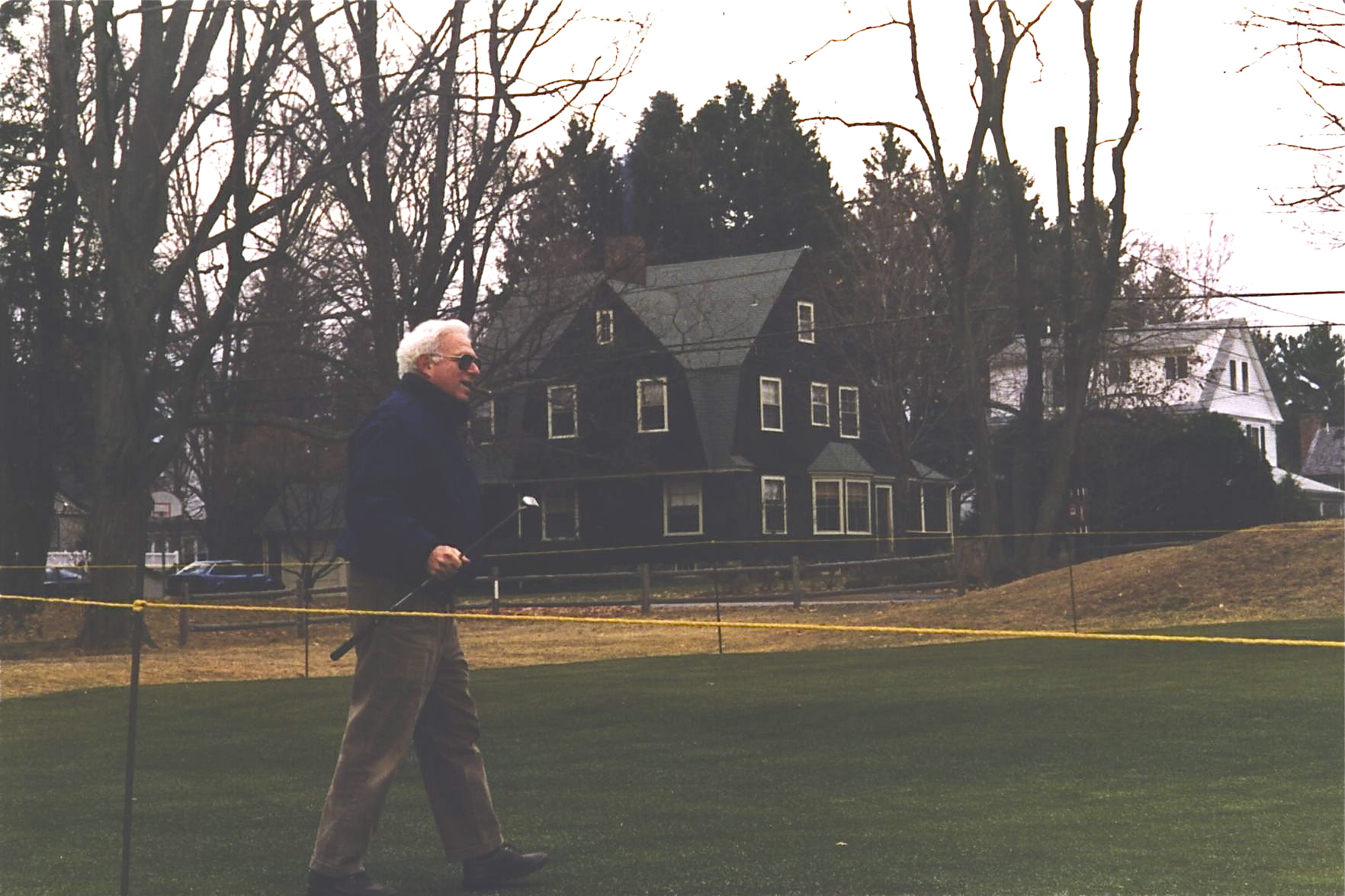
My dad on the 8th green at Nehoiden, right across the street from the house where grew up. It's late November; the greens have been staked for fencing at the first snow. We sprinkled his ashes here, and there's a memorial bench for him just right of this frame, on the 9th tee. There is no headstone in any cemetery for him. This is his spot, for all eternity.

Recalling, Replicating Scenes from the Parking Lot at Ponkapoag

H9

My dad with his dad, the original Harold Gardner Phillips.

I try to write each August about my dad, Harold Gardner Phillips, Jr., as he passed away (all too soon) at the end of this month back in 2011. This exercise is equal parts homage and memory aid as I suppose one fears these recollections, now perfectly strong, will somehow fade with time. This year the jog happened naturally, as today I stand poised at the fulcrum of a generational see-saw: My son Silas goes off to college tomorrow, and so the memories rush back re. the day my dad saw me off, out of the nest and into the world.

As is the case with so many stories I’ve shared about my dad, golf plays an intersectional role. This one’s even more fitting because it centers on Ponkapoag Golf Course in Canton, Mass., a municipal track we played dozens of times growing up. One used to be able to see it from Route 128, the frenetic inner ring road that circles Greater Boston, though methinks ever-maturing trees now obscure that view. Today there are only 27 holes at “Ponky”, but there used to be 36. The course one used to see from the highway was nothing special. The other 18, however, was a Donald Ross design from the 1930s that, despite the rigors of time, high traffic and miniscule maintenance budgeting remained damned sublime.

My dad and I played Ponky together on a several occasions, but this was mainly a place where he, my mom and various other parental figures dropped my friends and me for an entire day of golfing adventure. It also served as venue to a pair of tournaments: The CYO (that’s “Catholic Youth Organization” for those who may not have grown up in Boston, where the Church held such wide-ranging cultural sway) and the New England Junior Championship.

That day I left for college, a cloudy late August morning in 1982, I was scheduled to play a quarterfinal match at the New England Juniors, as I had qualified earlier that week for what stood to be a potentially anti-climactic match-play portion. I had packed our Dodge Omni that morning with all my stuff. Win or lose, I would decamp for Wesleyan University in Middletown, Conn., some 100 miles southwest, directly from the golf course.

As it happened, I won the match, bettering a kid from Rhode Island named Fred, 3 & 1. I signed my card, informed a quite delighted Fred that I would be withdrawing, told the officials, and walked off to the parking lot.

There to my surprise I found my dad, who had just rolled up.

As a kid, my competitive golfing career would never prove particularly extensive. Indeed, this tournament and the New England Juniors the year before were the only two events I had ever played, to that point. Golf was a fall sport at my high school, as was soccer, which took clear precedence. In other words, while my dad had played hundreds of rounds of golf with me over the years, and we maintained a spirited, running match for decades, he had never seen me play a proper tournament match against anyone else.

One time, in college, he showed up at Pleasant Valley Country Club near Worcester to see me play a collegiate match featuring Wesleyan, Springfield College (I think) and Assumption. I know the latter to be true, for certain, because I ended up facing a guy from Assumption that day named Frank Vana, who would go on to win multiple Massachusetts Amateur crowns. My dad worked near PVCC and he showed up on the 9th or 10th hole, at which point my game imploded. He scurried off after we finished 13, not wanting to cause/witness any more carnage.

For many years, I was never sure what exactly he meant to “do” that day — in the parking lot at Ponky. We had said our goodbyes that morning, and it wasn’t as though I was going off to war. But today, I can see he probably wanted one last moment with his boy, who would soon leave and return in some way, shape or form, a man.

I’ve been trying to remember what exactly my dad and I talked about during that moment in the parking lot. I surely went over the match with him, and the curious aspect of my winning but withdrawing. I don’t remember that we got into anything particularly deep. I remember being touched that he had shown up, but there were no tears. I’m pretty sure we shook hands.

See here a relevant excerpt from the eulogy I delivered for him in 2011:

My dad was not a particularly emotive man, not for most of the 40 odd years I had a clear picture of him. I remember one time I came home from college and was determined, in the sure and committed way of college students, to simply start hugging him and telling him that I loved him. I had seen other dads do this and had been impressed — that a father and son could be so open and physical in their affection for one another. I wanted that for my dad and me, to be honest. So I started out with hugs and, well… the man never really got comfortable with it. It just wasn’t his way. I remember telling him during this same period that I loved him, and noting that, to some extent, one is obliged to let people know that this is so, to verbalize it, to say it plain. He said that wasn’t his way, that he instead showed people he loved them. I remember thinking, at the time, that this was something of a cop-out.

But the man knew himself. As I grew older, I better recognized the ways he expressed intimacy and let you know how he felt. There are no rules or universalities for these things, I’ve learned, as I myself have grown as old and, in some ways, as wise as he. The more I observed this, over time, I can report that my dad did practice this sort of behavior consistently, with all sorts of people.

I think one of the keys to understanding and appreciating my dad is this: If he enjoyed something, his greatest joy was to share that enjoyment with you. If there was a piece of music that he found thrilling — and the man enjoyed a notably wide musical taste — he wanted you to listen to it and, ideally, derive the same thrill, too. If there was something he had seen on PBS or C-span, he wanted you to see it, too. If there was food item he had acquired or my mom had made, he wanted you to consume it. Right then. His enthusiasm for this sharing was really quite intimate, almost childlike in its enthusiasm. You might walk into my parents’ home, having not seen him for weeks, and his most deeply held desire was to have you sit down and watch an interview with the historian Gordon Wood, right then, so soon as you put your bag down.

And there was another aspect to this: He wanted you to listen or watch or taste or, to the extent possible, read this stuff WITH you. He wanted to sit right next to you while we watched the Gordon Wood interview, together — so he could pause the recording and discuss it. He wanted you to put the earphones on while he would stand right there beside you, grinning giddily, as you listened to some choral piece by Arvo Part. He would call just to see how far you were in a book he had recommended, to get updates on your progress…

I loved my dad but I, like many sons, have fashioned a great deal of my life in response to his. When Silas heads off tomorrow morning, there will be hugs. There will be tears. That said, I expect that whatever I’m feeling at that moment, is the same thing my dad felt that day, some 32 years ago, in the parking lot at Ponkapoag.

Silas is flying to Montana tomorrow morning, with his mom. I suppose that if I could practically meet them in Chicago for one last goodbye, I’d do it.

New US Soccer Jersey Fitting — For Quick 18

New US Soccer Jersey Fitting — For Quick 18

US soccer jersey 2014

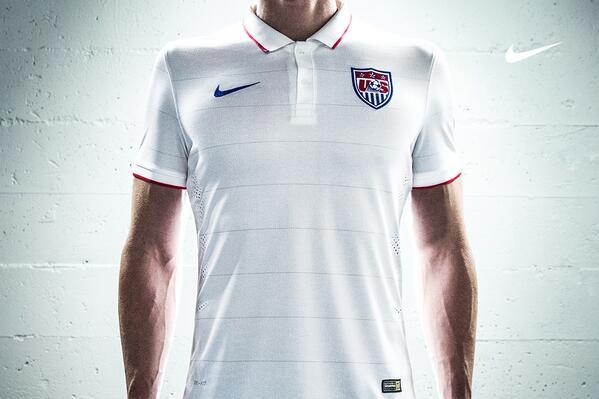
As there is little media crossover between the golf and soccer worlds, allow me to relate one such news nugget re. the sartorial tempest now brewing over what the U.S. soccer team will be wearing when they take the field at June’s World Cup, in Brazil.

See above. Apparently this is the new U.S. Men’s National Team home jersey for the upcoming tournament, soccer’s quadrennial world championship. Notice anything familiar about it? Yep, it looks remarkably like a golf shirt — and early returns from soccernistas the world over have not been positive. See here some of the chatter the new shirt has generated online.

One could reasonably argue as to why anyone should care. But considering the blockbuster sales opportunities represented by futbol jerseys, here and abroad, it was an odd choice by U.S. Soccer and its official outfitter, Nike. There are undeniable similarities between traditional soccer jerseys and modern day golf shirts, namely the collar and button-style placket. But it’s odd that U.S. Soccer and Nike would appear to have missed the mark by two years — this looks like something Tiger Woods or Phil Mickelson would wear to Brazil in 2016, when golf makes it return as a bona fide Olympic event.

Maybe you’re like me, in that you’re a bit sensitive about golf’s less-than-stellar track record in the duds department. We’ve made some admirable progress in this regard, I think, as it wasn’t that long ago that outsiders considered golf a game for rich white guys in bad pants. It’s unfortunate enough that a) the good folks at Loud Mouth are trying to bring back utterly ridiculous trousers; and b) white belts have successfully wheedled their way back into the golf couture (somewhere, Greg Brady is laughing).

Now we have soccer fans ragging golf, indirectly, for the plain-vanilla, markedly uncool nature of golf shirts, which, thanks to clothiers like Nike, have actually come a long way.

The whole thing is a bit mystifying, and it’s hard to see how golf gains . Nike is known for pushing the envelope with its golf stylings. What could possibly have moved them to put forward something so lacking in flash? If this was an attempt at something retro, I, as a soccer fan, don’t see the reference point. I think it’s safe to say that if one can plausibly wear a soccer shirt for a round at dad’s club, and it doesn’t look out of place beneath a blue blazer, the youth market will not be impressed.


10 Questions for Guan Tianlang

10 Questions for Guan Tianlang

Guan Tianlang web

How many 14-year-olds do you know who warm up for a star turn with Tiger Woods and Rory McIlroy by defending the most coveted amateur title in Asia, in hopes of re-punching his ticket to The Masters? That is the quite extraordinary story of Guan Tianlang, who, as we speak, is teeing it up at the Asia-Pacific Amateur Championship (AAC) in China’s Shandong province, at Nanshan International GC. The AAC runs Thursday to Sunday — winning it means a Masters invite (Augusta National GC is a tournament organizer) but also a final qualifying slot for the 2014 British Open. So soon as his AAC has concluded, Mr. Guan (surnames first for the Chinese, of course), flies south to Hainan island, where he will participate in a morning Skills Challenge with Messrs. Woods and McIlroy, at Mission Hills Resort Haikou (that afternoon, the two pros will contest The Match at Mission Hills to be held over the resort’s Blackstone Course). Guan, of course, made Masters history earlier this year — competing as a 14 year old and making the cut on golf’s biggest stage. I recently had the chance to sit down with Guan to discuss the state of his game, his travels, his history with Tiger and Rory, and his relationship to Mission Hills, where he’s been a fixture at junior tournaments since 2008 (he’s a native of nearby Guangzhou). Oh, and for the record, all this talk about being a precocious 14 year old goes away this week. Guan turns 15 on Friday, Oct. 25.


Q: You are quite famous, internationally, following your performance at the Masters in April 2013. Tell us what you’ve been doing since that time.

Guan Tianlang: The Masters did make me better known than before. I played several PGA Tour events after The Masters, including the Zurich Classic, HP Byron Nelson Championship, The Memorial, and FedEx St. Jude Classic — before taking the whole summer off for fitness training and catching up with school work. I played one Japan Tour event, the Vana H Cup KBC Augusta, after coming back from the States. Now I am going to school as a normal student and getting ready for the Asia-Pacific Amateur Championship in late October.

Q: The slow-play penalty you incurred during the second round at The Masters gained a lot of attention, as well. How do you view that episode now? Do you play faster, or do you think the penalty was perhaps unfairly applied?

GTL: As I said back then, I respect the decision and I accept it completely.  It was a tough day. The weather was bad and it took more time to make the right decision, and you know, it’s The Masters! I have a good routine and I haven’t changed much because of the penalty. But yes, I do pay more attention to my pace and I think I have been doing well on that part. Overall, it was a very valuable experience.

Q: Describe your history with Mission Hills. You have worked on your game there? Competed in tournaments here?

GTL: I have participated in more than 10 junior golf tournaments hosted by Mission Hills, since I was seven. And I won several championships there. The courses are beautiful and challenging. Actually the second time I met Tiger Woods was at Mission Hills Shenzhen. A great memory.

Q: There are many courses at Mission Hills — 12 in Shenzhen and 10 on Hainan Island. Which is your favorite course?

GTL: My favorite one must be the Mission Hills Norman Course. But I haven’t been to the Haikou Mission Hills. I hear it is amazing and can’t wait to play there!

Q: You will appear at a junior clinic and skills challenge prior to Tiger Woods’ and Rory McIlroy’s Match at Mission Hills on Oct. 28. You already have a history with both players.

GTL: Yes, I’ve met both of them before. I met Tiger at the HSBC Championship when I was 12, and we played a par-3 hole together. Met him the second time at Mission Hills Shenzhen and received a trophy from him. And, of course, I got to play with him for 9 holes at Augusta National on the Tuesday of the Masters; it was a dream come true, as everyone knows he is my idol. I haven’t played with Rory before but we had a nice chat at the Masters. He was very supportive and said he wasn’t as good as me when he was 14. He is humble and a very sweet guy. A great player as well!

Q: Have you attended similar junior clinics as a spectator? If so, what did you take away from the experience?

GTL: I have attended some junior golf clinics, when I was younger. The one hosted by Mission Hills with Tiger Wood was one. I can’t say how much in terms of golfing skills I have learned from the instructor, but I shall say the whole experience did inspire and motivate me to practice harder and become a better golfer.

Q: Was Tiger Woods always role model for you? Are you old enough to have the same thoughts about Rory McIlroy?

GTL: Tiger Wood has always been my idol. I believe he is the role model as a golfer for many, many people out there. Look at him: He won 5 PGA Tour events in one year and he is now the world No.1. He is the greatest player of his time and perhaps will become the greatest of all time soon. Rory is such a mature and great player. I can see how much more I need work on myself — to grow into a player like him. Both of them are the players I look up to. I’m very excited to get the chance to challenge them.

Q: What advice did Tiger give you during that Masters practice round — anything that helped you during the tournament, or with your golf going forward?

GL: Yes, it was a great experience and probably the most nervous 9 holes in my life. He is my idol, after all. We did chat a bit during the practice round and also off the course. Lots of advice. But the one piece, as other great golfers also offered to me, is enjoying your game and embracing your experience at The Masters. It was my first Masters journey, and I hope there will be many more coming.

Q: You turn 15 on Oct. 25, just before The Match at Mission Hills. You remain a young man, but do you feel as if golf is more popular today, in China, than it was five years ago? If so, how can you tell?

GTL: I believe so, absolutely.  First of all, you can see more and more media are paying attention to the sport. Second, more and more juniors start to pick up the game, which makes the future of golf in China very promising.  The golf community in China is expanding with its addition to the 2016 Olympic. Golf will become more and more popular here for sure. It is a great sport, why not?

Q: When will American golf fans see you again? Does your tournament schedule bring you to North America in 2014?

GTL: I hope everyone who supports me will watch me and root for me when I play other events outside the U.S., such as Asia-Pacific Amateur Championship. Augusta National is an organizer [winning this event last year earned Guan his Masters place in 2013] and it is the best amateur event in the region. I am going back to defend my title and I hope they will be watching. I haven’t planned any tournaments in North American next year. Hopefully I will win my ticket back to 2014 Masters.


FootGolf? Yes, FootGolf. Where Do I Sign…

FootGolf? Yes, FootGolf. Where Do I Sign…


Here’s all I have to say about the advent of FootGolf: “It’s about freakin’ time.” Anything that essentially combines my two favorite participatory sports — and knee-high argyle socks — has my full attention and support.

I knew there was something out there like this, but until I read this piece, I had no idea it was so well developed, and so intrinsically awesome. As a devotee of disc golf, I embrace the game in all its alternative forms. But this one takes it to a new level. There’s even a rule book, to be consulted in the event one’s approach hits the pin and ricochets backward into a lake. (Of course, if that should happen, the ball would be floating on the surface and could presumably be retrieved, prior to a legal drop).

Soccer and golf have a long and distinguished history together. There’s the dreaded foot wedge, of course. And there was that time Alan Shearer played through our group at Gleneagles. I’d love to see him hole out with a proper foot wedge and run the length of the hole with his signature hand held high.

Check out more information here. There’s apparently a FootGolf facility in Las Vegas, but that’s awfully far away. If anyone out there knows where this activity can be pursued here in New England, I’m all ears. After all, there was a FootGolf World Cup held in Hungary in 2012. I now have my sights set on 2016.

A Few Words (not 1000) on the Power of Golf Imagery

A Few Words (not 1000) on the Power of Golf Imagery


In my work, I gather and view killer golf photography all the time. Those of us in the trade often refer to these beauty shots as “golf porn”. This particular photo — the back tee on the 16th at Cape Kidnappers GC in Hawkes Bay, on the east coast of New Zealand’s North Island — has always intrigued me for what it lacks and what it delivers (full disclosure: This course is a client of my firm, Mandarin Media). My job is to get magazines and website to print or post an image like this, but I don’t know that many have done so. It’s a funny shot, captured by Chris Mclennan. Maybe editors choose others from Cape because while the 16th is a magnificent, incredibly photogenic par-5, this image doesn’t give any indication of that. It attaches the viewer’s eye to no golf hole whatever, not that we can see or even vaguely discern. On the other hand, any golfer looking at this photo could and should think to himself, “How bad could this hole possibly be?” I was traveling with some fellow golf writers earlier this month and the subject of Cape Kidnappers came up. One tried to argue that while Cape is a magnificent course (Top 50 in the world according to all the trusted rankings), and among the 10 most photogenic courses on Earth, it’s not that scenic for the golfer actually playing the course.  I beg to differ, and I imagine that anyone standing on 16 tee — a thousand feet above the South Pacific, looking back at five holes with similarly perched vantage points — would beg to differ, as well.