Category Archives

84 Articles
My Long and Winding Road to Built-to-Spill Fandom
Built to Spill, rockin' The State Theater in Portland, Maine on Aug. 30, 2012

My Long and Winding Road to Built-to-Spill Fandom

Built to Spill, rockin’ The State Theater in Portland, Maine on Aug. 30, 2012

The path I followed from first discovering Built to Spill, back in 2002, to my place front and center at Portland’s State Theater last Thursday night is nothing if not post modern. The way we find and consume musical media today seems hilariously random to this late 40something, raised and educated in such matters on 45s and LPs, college radio, live shows, mixed tapes and the ever-vital personal loaning of vinyl.

Here’s how I went from Built to Spill ignoramus to devoted fan: Early in the millennium I dabbled in Limewire, a web-based, Napster-like file-sharing community where one could search band and song names for download. The first thing I did, upon appreciating the enormity of what Limewire enabled, was reacquire most every 45 I had possessed in the 1970s (this effort yielded some real gems: It never rains in California, by Albert Hammond; Brand New Key, by Melanie; Rubber Band Man, by the Spinners).

The next phase moved me to sift through contemporary artists I knew way too little about, folks like Ben Folds, Weakerthans, Fountains of Wayne and Dressy Bessy. Soon it became clear that individual treasure troves from all manner of music fans — meaning those thousands who had digitized their vinyl, all their live bootlegged tapes, and transferred all their CDs and random mp3s to the computer — were available, too, via Limewire file-sharing.

This meant older bands and tracks were fair game.

Now, I came of age musically in the 1980s, or, I should say I came into my own at that time. College, an all-vinyl and mixed-tape experience, ended for me in the spring of 1986, when I moved to Boston and there luxuriated in the Hub’s potent alt/indie scene. There were several bands we followed in earnest, taking in live shows at TT the Bears, The Rat, Club III, The Channel and Nightstage, among others. One band, Big Dipper, came and went all too quickly, and so, 15 years later, I was eager to see what live performances and otherwise obscure files I might procure via Limewire, to augment or otherwise fill out my own digital library.

Yet every time I searched Big Dipper, I got nothing. Nothing, that is, but a song entitled Big Dipper, by this band called Built to Spill, about which I knew nothing. This happened a couple separate times — because it was worth Limewiring intermittently on the same subject; one never knew who might be online to share files at any particular time — before curiosity finally overcame me. I downloaded the BTS version of this song Big Dipper. Listen to that fateful tune here.

Well. These guys were awesome. More specific searches and downloads revealed just the sort of alternative rock I like best, a mix of Dinosaur Jr.’s driving garage sound, Pavement’s unpredictable song structures, the Pixies’ rumbling melodies, and Neil Young’s wistful lyric style and guitar godliness (a goodly portion of all that thanks to BTS front man supreme Doug Martsch, who gives an interesting interview here). I reveled in this totally new band and the dozens of songs I had come into, each one as interesting as the last.

The weird thing was, this band had pretty much come and gone by 2004! Or so I thought. They’d enjoyed their heyday in the ‘90s and appeared broken up, diverted into side projects or put on permanent hold due to solo efforts from Martsch. Or so I learned by reading up on them online.

Built to Spill remained a self-contained obsession. My son Silas adopted them whole-heartedly but hardly anyone else I knew had heard of them or cared much to get on board. I desperately wanted to see them live but figured I was 5 years late to the party.

But then, as happens almost continuously nowadays, the band reformed and started touring again. I saw them at Citi on Landsdowne Street in Boston circa 2006, then again in 2010 at the Paradise. When they scheduled Portland earlier this year, I snapped up two tickets for Silas and myself. Last April, in Seattle, we visited the Experience Music Project museum at the base of the Space Needle. Great freakin’ museum. Spent three hours in there and greatly enjoyed the super-expansive, highly-interactive exhibit on grunge, which included a particular exhibit on the regional scenes across the Northwest — including Boise, from whence BTS hails. Did you know Martsch was also in Treepeople? Probably not.

The Aug. 30 show at The State was predictably thrilling and the less-than-full-capacity crowd, while it might preclude a return engagement, enabled great viewing from a small riser, center stage, just 25 feet from Doug. We stood next to a guy who could not have been 30 years of age, so I asked him how he got into this band from the ‘90s. He was a metal guy. Someone had recommended Built to Spill, and he YouTubed them. The rest was history.

YouTube didn’t exist in 2002, of course. Had it, I might have come by Big Dipper and ultimately BTS with more alacrity. But as they say, better late than never.

The HGP II Scorecard Series: A Final Accounting
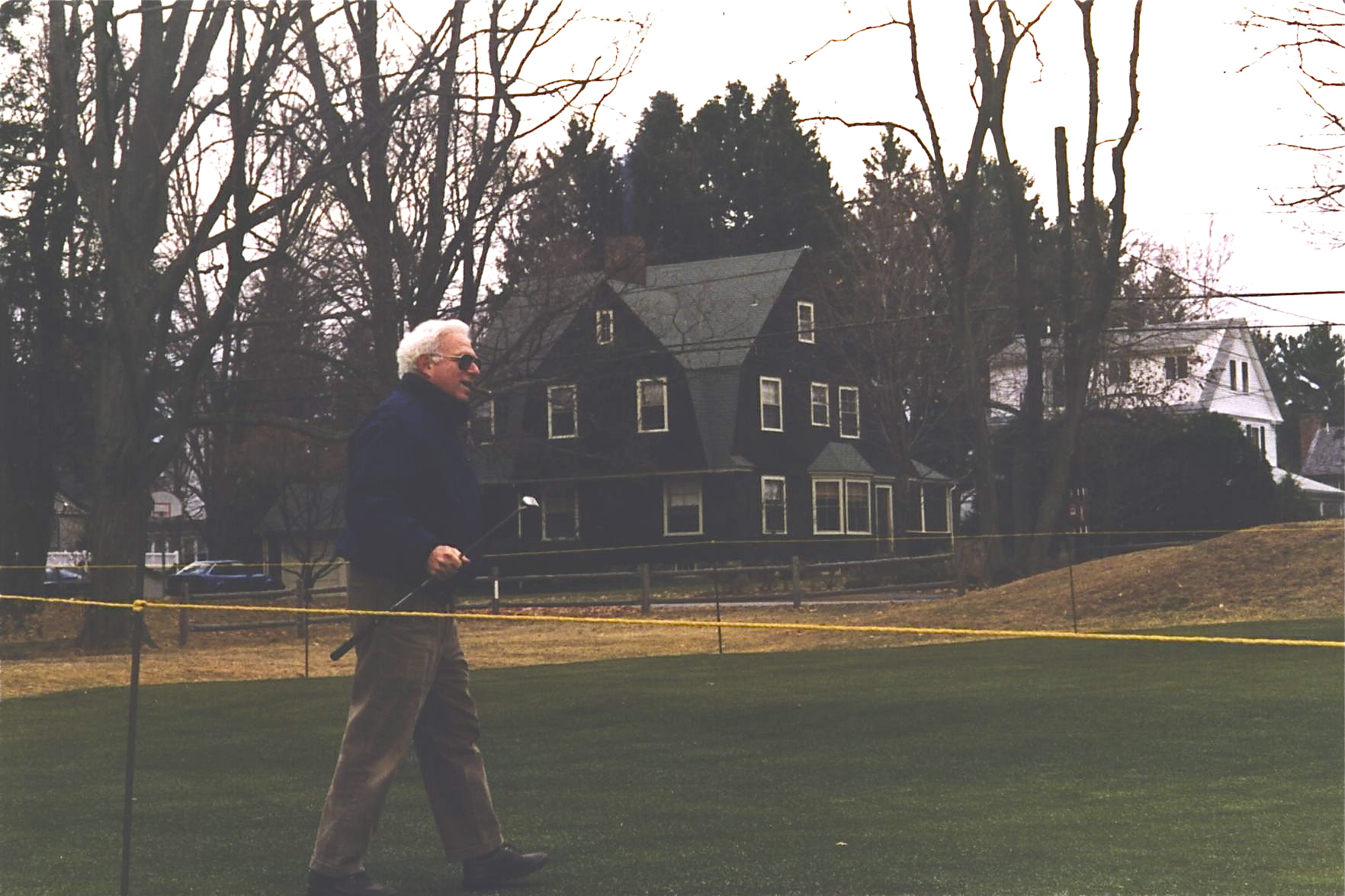
My dad on the 8th green at Nehoiden, right across the street from the house where grew up. It's late November; the greens have been staked for fencing at the first snow. We sprinkled his ashes here, and there's a memorial bench for him just right of this frame, on the 9th tee. There is no headstone in any cemetery for him. This is his spot, for all eternity.

The HGP II Scorecard Series: A Final Accounting

I’ve been picking through a few scorecards left behind, in a shoebox, by my father, Harold Gardner Phillips, Jr., who passed away a year ago this week. They didn’t surface until a month or two after his death. It’s taken till now for me to really engage with them. Haven’t avoided it exactly. It’s been an eventful year, the proof being just how quickly it’s flown by. But I’m glad I waited. A little distance allowed me to revel again in my memories of him. I won’t bore you with a comprehensive accounting of all their lovely time-capsule qualities. See below a third and  final installment in The HGP Scorecard Series, as it’s time write and remember more about him than his golf game. See previous posting on this subject here and here.… A word on the photo above: That’s my dad on the 8th green at Nehoiden GC, in Wellesley, Mass., his home club the last 30 years of his golfing life. Across the street is the home we made those 30 years. It’s late November in this image; the greens have been staked for fencing come the first snow. We sprinkled his ashes here. His memorial bench sits just right of  frame, on the 9th tee. There is no headstone in any cemetery for the man, at his request. This was his chosen spot and will be for all eternity.

The Niagara Falls Country Club, Lewiston Heights, N.Y., circa 1950: My dad was probably 13 or 14 and playing with his dad when this round was recorded. Pop was a jewelry salesman and traveled all over the Northeast visiting clients and playing golf with them. I’d heard tell that he’d take my dad on some of these trips, and here’s the evidence (there’s another card from Hershey CC that details the same sort of round). My dad and I were so different temperamentally. If I played badly, it could get real ugly, especially when I was this age. Whereas Poppy and his son were both incredibly even tempered. I’m sure my dad never embarrassed Pop with any histrionics on this day, despite shooting 92. And who knows: Maybe this was 1948 and a 12-year-old Harold Gardner Phillips Jr. was well pleased with 92, which appeared to best the group. This round is also notable for the fact that there were three Harolds in the group. Filling out the troika was Harold Osw. [sic], probably short for Oswald or something. Some poor boring bastard named Bob was the fourth (!). The card is quite ornate and well designed in an old-fashioned way. There’s a special column for “Side matches”, a table detailing “85% Handicap allowances”, four perforated/detachable tags for the submission of tournament scoring, another long table (opposite the tags) showing what your handicap should be based on “Your Ten Best Scores Total”; and an admonition to “Please have caddies rake traps and replace divots.” I don’t think I’ve ever seen that written on a scorecard, in quite that way, ever in my life. They don’t make cards like they used to.

Fort Monmouth GC, Fort Monmouth, N.J., May 12, 1954: I’ve heard the brief tale and read the brief press clippings re. this game. This was the 73 he shot in some high school match against another dude named Bob, who shot 78 and got smoked. It remained his best round ever in competition, if I’m not mistaken. FMGC is now known as Sun Eagle’s Golf Course at Fort Monmouth. It’s reputed to be a Tillinghast design, built in 1940, or maybe A.W. merely stopped to walk the place and a tap out his pipe here one day — the next thing you know it’s “a Tillinghast”. Couldn’t tell you if it had the markings; never played it, and my dad never had much of anything to say about the course. It was 6,417 from the tips in 1954, so it wasn’t any Mickey Mouse layout for the persimmon era. Military officers formed a big part of the membership here and the high school team played there, which is indicative of 1) good communitarian spirit; and 2) Fort Monmouth probably not being the most prestigious club in the area. But 73 in competition is 73 in competition (he bogeyed the first and played the rest at par). His personal best for the next 25 years. No trouble understanding why he kept this card.

Saddle Hill Country Club, Hopkinton, Mass., circa 1981: It’s obvious why some of these cards were kept in the shoebox, while other keepers are more cryptic. I don’t really keep cards, but if I shot 73 in a high school match, I might have considered it! My best in competition was 75. Somewhere I may have stashed the card recording the day I finally beat my dad, a spring Saturday at Nehoiden that just happened to be same day I first broke 80. So I can’t blame him for keeping the Saddle Hill scorecard, which is from just this time period, when I had finally caught the guy. I could  beat him now, which I think that gave him a great deal of joy (I don’t think there’s another word for that broad emotion I attribute to him in this context: pride, empathy, large amounts of credit probably apply, too). By the same token, it now meant something — something more — to beat me, which he did this day at SHCC, 78-81. This was a big game in another way: We both played quite well, and it may have been the first time that really did happen. You can play years with a guy, and you know his game, you see him play well, he sees the same from you. But it’s actually quite rare for two longtime playing partners, amateurs, to both post really good rounds on the same day. So a round like this is something both parties remember… Saddle Hill was and remains an interesting place. We played many times at Juniper Hill CC just down the road in Northborough, but Saddle Hill always struck us as a fun and finer golf course. There’s a middle portion, holes 8-12 or something like that, where a bunch of par-4s all run back and forth, down into a valley and back up to a green; these were weaker juice, as they also suffered from their sameness. But the rest of the routing was solid and engaging. It was taken private a few years back, renamed Hopkinton Country Club, and redesigned by Canada-based Welshman Ian Andrew. I thought I had read that he’d reversed a bunch of holes — where a redesign literally turns greens into tees and vice versa — but more recently I read or got the impression he had just switched the nines. I’ve gotta get back there and play it because I’m  curious now, especially the idea of reversing some holes I know so intimately, or did. Won’t be nearly as fun going back there without my dad though.

Hollywood GC, Deal, N.J., circa 1951: This was a find. I don’t think my dad remembered, later in life, that he had played here. We talked about it and I didn’t get that impression. Indeed, I had talked about taking him to play there along with sorta-nearby Saucon Valley, where he played his collegiate golf. But we sadly never got around to it. I can say pretty safely there weren’t many of these trips never taken. We did the Scotland and Ireland things, together with my brother Matthew, and we hit a good many plums here in the States. But that Mid-Atlantic romp would have been a great stroll down memory lane for him, and both venues are reputed to be top notch … My dad played Hollywood  this day with his mother, father and some dude identified here as “The Sheep.” I’d like to know who that was, but I doubt that information is available anymore. Pop had been a member here a decade or so earlier, but they were definitely not members at this time. They belonged to Old Orchard CC in Long Branch. Hollywood is and was, to my understanding, the truly fashionable Jewish club on the Shore, with a Walter Travis design, updated by Dick Wilson (much later Rees Jones redid it again). I can’t be sure but I think this card was kept not for what my dad had done there but for what his mom, my Gram, had done. She shot 41 on the front and 45 on the back to shoot 86, tied with my dad. (Pop self-immolated, posting 97). I think shooting 86 and halving my dad, at medal, was probably a superb day for her — and she just happened to have made 9 on the par-5 10th and 7 on the par-4 11th before closing extremely well. I just reckoned the card at match play and she beat her 15-year-old son 2 & 1, straight up, with no handicaps taken into account. I only ever played with Gram as a much older woman, naturally, so I can’t say whether this was a typical round for her, but that’s pretty good golf for a 50-year-old tennis player. She was a handsome woman who, if pictures are any indication, was doing a creditable Joan Crawford thing during this time. I’d like to have seen it. I’d like to have played Hollywood, and maybe I will some day.

There was a Saucon Valley CC card in the shoebox. It’s clearly from the mid-50s, as my dad played collegiate golf there, as a freshman, and enjoyed other rounds at SVCC during his time at Lehigh (’53-58). My dad revered this place. I can date the card pretty well because it lists a third loop (the “New Nine”), built in 1953. This would become known as the Grace Course, designed by William Gordon. Herbert Strong had done the Old Course; Gordon did a lot of renovations there, too. In any case, this card must have been gathered during my dad’s college days, before the Grace was made whole, with the fourth nine, in 1958… As indicated above, we didn’t leave too many stones unturned. When I was young, he got me on all sorts of great courses. In my late 20s, when I started in the golf business, I returned the favor. But I greatly regret never taking him back to Saucon Valley. Arranging a game for us there would not have been too much trouble, but I never made it happen. Fittingly, the SVCC card he kept is empty. No scores. It’s a pure keepsake of the place, of the time. I’ll keep it myself, as a reminder to play it. Maybe with my son, Silas.

Of Kilties and Stymies: A Long Golfing Life Re-examined

Of Kilties and Stymies: A Long Golfing Life Re-examined

My dad passed away almost exactly one year ago this week, so I’m marking the anniversary with a sampling of the scorecards he saved over the years. They were handed down posthumously, in a shoebox, along with other golfing trinkets and memorabilia. The cards form a useful trail of crumbs, which, if followed and elaborated upon, inform us re. the man and his seven decades in the game. The first post can be found here.

• Pinehurst No. 2, Pinehurst, N.C., circa 1974: I’m dating this round by the vintage of Sansabelt slacks modeled on the front of this scorecard. This most decorated of the Pinehurst courses has just undergone a thorough retrofitting from Ben Crenshaw and Bill Coore, who endeavored (as most course renovators do) to restore the “original vision” of Donald Ross (read: lots of exposed sand and scrub). This picture shows the 1970s incarnation and it couldn’t have been further from that purported vision: bright green, overseeded fairways flanked everywhere by wall-to-wall dormant Bermuda. Glad the Old Man got to play and brag about playing No. 2, even at its likely design nadir. News Flash: He shot 83, as he did by default nearly everywhere he played for the first time. A maddeningly steady player, he was… If the course had featured more sand when he played there, my dad would have made frequent use of The Meat Hook, the club he deployed for years as his sand wedge. There was nothing written on this unique club, no markings at all. It was notably heavy, antiquated and rust-colored (this was real oxidation mind you, as it was rendered long before coppery wedges became fashionable). There was something faintly menacing and mysterious about it — a Stealth Wedge, if you will. My dad exploded with a full swing nearly every sand shot around the greens, and he was pretty good at it. He never picked the ball with a smaller, steeper swing imparting serious spin, which is a limiting strategy, of course. He was apparently beguiled by the act of blasting balls from bunkers via the power of The Meat Hook, which he never played  from anywhere but a bunker, which, again, was limiting. He opened his pitching wedge when he wanted to flop something. It was old school, but there’s just no comparing what one can do with a proper sand wedge, with a heel, as I told him many times as a precocious teen and for decades afterward. My dad was nevertheless highly competent around the greens. His misses were never that bad, and he could routinely get up and down from green side with a bumped 5- or 6-iron. In a sense, his short game was what you’d expect from a 12-14 handicap, whereas he was a 7-8 tee to green. His putting followed this form: a decent lag putter but didn’t make a lot of putts, it seemed to me. He wore a glove and never removed it to putt, as many folks do. I think that removal routine seemed to him an affectation — like the kilties he routinely removed from his golf shoes, long before they went out of style completely. My dad was no fashion plate, far from it. But here we must give him credit for being ahead of the curve.

Old Orchard CC, Long Branch, N.J., circa 1950: I wish he’d have dated this one, because he shot 75 (bogeying the par-5s that opened and closed the round; the only sixes on the card) and this was his home course. Was it the first time he broke 80? Or did he keep it because this was his career best here? Was it merely the first time he ever went really low? He couldn’t have been more than 15, as this card would appear older — in its wear and more Spartan post-war design — compared to those he saved from roughly the same period. When did the stymie go out? A key question as this card features a stymie measure across the top! It’s my understanding the USGA abolished this arcane rule in 1950, so my dad could have been well younger than 14 when this score was posted. He played with someone identified as E, and the kid shot a big number. There’s little else to work with in terms of historical detail/clues, but he must have kept it for some reason as he played hundreds of rounds at OOCC. Old Orchard wasn’t a fancy place. My dad claimed to have routinely caddied there for local mobsters and found at least one gun in the bag. But my grandparents socialized and played bridge  there, too, so I don’t think there was anything inherently untoward about the place. (Wise guys need a place to play golf, too.) He never held the course up as anything special and it wasn’t. But he was sentimental about it, and this was the only Old Orchard card in the shoebox… There was, however, another card in the box and it’s a curious one. It says “Long Branch Country Club, Eatontown, New Jersey”, which is a village just west of Long Branch, or so Google Maps informs me. But there’s a logo top left that clearly says “Old Orchard Country Club”. I’ve compared the cards and while the yardages do not always match up exactly, it would appear to be the same golf course. My dad and I played Old Orchard together in the late 1980s — maybe the club toyed with a new name at some point? Indeed, The Architects of Golf, the definitive reference guide to all courses built prior to about 1995, lists Long Branch CC, but not Old Orchard (today the club is again known as Old Orchard). This odd Long Branch CC card would appear to be from the 1980s; someone shot 78 but this is the sole score line and the player is not identified (though the writing for all the world looks like mine). I’m thinking this was indeed the round I played with my dad at Old Orchard and an explanation re. the scoring  is likely mundane — probably an in-the-car recounting of the round, by me, because the original card had been left behind.

HGP II: Following the Crumb Trail of a Golfing Life
Harold Gardner Phillips, Jr., 1936-2011

HGP II: Following the Crumb Trail of a Golfing Life

Harold Gardner Phillips, Jr., 1936-2011

So my dad, who died almost exactly one year ago, was a pretty serious pack rat. He didn’t really save things with any kind of direction. It was more or less an involuntary urge he had (and one I happen to share). Some of us simply cannot countenance the idea of parting with something that, at one time, meant something to him or provided her lasting joy, or insight. At some point my mother threw away a pair of sweatpants my dad had worn in college. This was the source of playful recriminations for years to come. Books were something never to be discarded and while he quite avidly lent them out, he wanted them back. The man passed from this Earth with at least 40 programs on his TiVo, all of which he’d seen but for some reason felt the need to archive.

I suppose that assembling these things, even as a sort of random catalogue (and holding them over time), does indicate direction. He would run across them randomly, on his own, and enjoy the memories. His wife and children might run across them, too, and their reports or remarks would bring it all rushing back to him yet another time.

My father was the first of our immediate family core to go, and so this is the first time our little unit has dealt with one of the five being permanently absent. Accordingly, there has been an active gathering and parsing of these trinkets, these literal souvenirs he left behind. We’ve paid special attention to these things, interpreting them in the context of this fellow we all knew so intimately.

Dad was a big golfer. The U.S. Amateur concluded last week and it was just the sort of televised sporting event he would have adored (see my account here). I’ve written about the golfing life my dad enjoyed, the subtext being that I wouldn’t have much of a golfing life without exposure and direction from his.

But it was ultimately his golfing life, not mine, just as the tiny, sleek, leather-detailed lighter — the one that sat unused in his top-left bureau drawer for decades — was his memento, reminiscent of a time he apparently wished to bank and recall. And maybe the lighter and all this other stuff had been meant for me or my brother, sister or mother to remember him by. During his last year, he passed to me the Johnny Hopp model baseball bat and first-baseman’s mitt he’d owned since he was a kid. Why else would he do something like that?

Among other things, there were several shoeboxes of stuff left behind when my dad, a firm atheist, left this mortal coil. There were big, substantial things, too, things the family reverently went through, remembering him and feeling sad about it, then dividing up so we might all have a healthy supply of these bits going forward.

But the smaller stuff fit into a few shoeboxes, and one was full of scorecards and other golf paraphernalia. Some of these items I had seen but very few of the scorecards were familiar. Here and in a few posts to come is a select accounting, because in the thousands of rounds he logged over seven decades, he only saw fit it to save these dozen or so. They must have meant something to him, and it seems fitting to pore over them and try to discern that something — along with other historical tidbits from his golfing life — on the first anniversary of his death.

This shot of my dad as a young high schooler was taken some time contemporaneous with the round at Jumping Brook.

• Jumping Brook CC, Neptune, N.J., circa 1953: No date on this one. My dad seemed to date only the scores worth dating, and he shot another 84 here with a fellow named Jack Sax (which could be a shortened version of the guy’s full name; my dad refers to himself as Hal Phill; it’s definitely his writing). In 1953 my dad would have been 17 and you gotta figure he played this match as a member of the Red Bank High School golf team in the spring of 1953, before he went off to Lehigh as a freshman. I can pinpoint the date because Johnny Alberti is listed as the pro and he’s also mentioned in passing as being the pro at Jumping Brook in an October 1953 issue of Golfdom, the forebear of all golf trade journals. I edited one of its progeny, Golf Course News, in the ‘90s, and it was fascinating to read this compilation of golf news from all over the country, published as one continuous column for 20 pages! Every new pro and retired superintendent and new course rumor is granted a paragraph. At GCN, we’d have broken all this into 40 stories with their own headlines to make a new section, which probably would have gone on for 20 pages (!). The more things change… My dad was a Jersey guy. Raised on the shore in Little Silver, Long Branch and Red Bank; he and his family would ultimately make house in Montclair and Haddonfield, before moving more or less permanently to Massachusetts. My paternal grandparents were both keen golfers, members of the post-war, hyper assimilated Jewish middle class. When you’re aping WASPs, you play golf and they did honestly love it. They were members of Old Orchard Country Club, where my dad grew up playing and caddying, but they ventured out to places like Jumping Brook, Fort Monmouth and Canoe Brook. My grandfather, Poppy, was a member of Hollywood GC in nearby Deal sometime in the 1930s. He was a lefty and was, at times, a single-digit player himself, according to my dad. My Gram was a good athlete, a tennis player really but picked up golf to be more like Clare Booth Luce or maybe Martha Gellhorn. They arranged lesson for my dad with George Sullivan, the pro at Old Orchard, and off he went. He and another good player, Ronnie Choquette, actually formed the golf team at Red Bank High, if I’m not mistaken. I’m sorta hoping this was merely a casual round because poor Jack Sax shot 102. But the first three holes would seem to indicate a match underway, as there’s a +1, a +2, and +3 listed two rows below the scores. Upon examination, the card shows my dad winning the first 12 holes before halving the 13th, but it would appear he didn’t see the point in writing any of that down. I’ll do it, dad: You beat him 10 & 8.

• TPC Sawgrass, Ponte Vedra, Fla., circa 1983: I have no idea who these guys were my dad played with that day in north Florida: Emil, Pete (a 7 handicap apparently) and Dave. But I was certainly made aware of this round. “Hal” shot 82 from the blues and claimed 12 skins, though he and Dave lost the team match. My dad was playing off 12, or so says the card (this was probably some tournament connected to a convention held nearby; the scorecard is kept quite formally, in a way maybe an event administrator had requested; my dad certainly never scored in this sort of detail). This is a typical round from my dad when he was playing some pretty good, middle-aged golf. He sandbagged this a bit because he carried for years a steady 7-10 handicap at his home course, Nehoiden GC, across the street from our house in Wellesley, Mass., which was and remains a low-slope job, antique and tight, but a place you should score. But then my dad was, in a way, a true 12. He went to the TPC, site unseen, and shot 82. He could shoot 83-84 pretty much anywhere, which is a fairly rare gift… Like a lot of golfers in 1983, he was pretty gob-smacked by the golf course, Pete Dye’s breakthrough design in the flamboyant, post-modern, stadium-mounded links category. My dad was never a course-design freak, though he got into it more as I got into it more. [I presented him at one point, years later, a signed first edition of Tom Doak’s “Confidential Guide”, wherein the architect — long before he became the It Boy of Minimalist Design — lavishes praise and shits upon, by turn, a laudably wide-ranging assemblage of the courses he’s played. It’s some of the best bathroom reading ever devised, and I mean that as an unalloyed compliment. These editions are rare and sought after these days, though my dad never really grasped the import of having one. Now I’ve got his copy back. Then both burned in a 2016 barn/office fire.] The TPC Sawgrass clearly made an impression on him, and I think that (and the course’s subsequent notoriety) moved him to keep this scorecard. When my dad played a golf course that, for good or ill, either confused or radically challenged his expectations, he wasn’t always eloquent in explaining his views. He would assess it as “sorta kooky” or “a little weird”, then close the thought with a mildly exasperated cackle.

James Connects Unlikely Dots Between Dewey, Pitt & my Wife

James Connects Unlikely Dots Between Dewey, Pitt & my Wife

Out of the blue Thursday night the wife suggested we order, On Demand, one of the movies nominated for Academy Awards. It came down to Tree of Life, Midnight in Paris or Moneyball. We went with Moneyball and both found it extremely enjoyable.

Some 12 hours later, I happened upon an all-too-rare but typically brilliant article from Bill James, the godfather of modern statistical analysis as it relates to sports, baseball in particular. I’ve been a fan of James for more than 20 years (his Historical Baseball Abstract is perhaps the finest bathroom reading ever devised by man), but in the last 24 hours I’ve been jolted anew by the power of his thinking.

Without James, I would never have considered Dwight Evans Hall of Fame material, despite watching him patrol right field for the Red Sox for 17 years. Further, without James there would have been no Moneyball, neither book nor feature film.

For a woman who likes baseball well enough (my wife once resided in the Chicago neighborhood of Wrigleyville) and lives in New England (surrounded by “die-hahd” Red Sox fans), there was a lot in the film for her to like and/or relate to: Brad Pitt, naturally, but also a triumph- and pathos-packed story and myriad Sox references. Still, I was surprised by the extent to which she was engaged by the statistical analysis on which the story is based — the idea that ballplayers can be cannily appraised with such statistical breadth, and that a modest organization like the Oakland A’s could use that edge to compete with richer teams. It was handled beautifully in the context of the movie. I had assumed Hollywood would find ways to soft-peddle it, and they did — building up around it other storylines (Pitt’s single fatherhood, the magical rise of one-time journeyman and former Sox catcher Scott Hatteburg) to defray the essential wonkiness of the stat theme.

But the stat stuff was interesting to her. I hope she reads the James story linked here because what Moneyball author Michael Lewis and the makers of this film (Bennett Miller directed) have done is attach broader meaning and appeal to the gob-smacking insights James pioneered. Maybe she won’t care enough about Dewey Evans to read all the way through, but I would never have dreamed to share such a story with her before we watched Moneyball together.

HH Flashback: Nixon & Dave Remembered

[The Harold Herald, the blog prototype I launched in the early 1990s, was nothing if not political, though the coverage wasn’t always traditional, nor was it my own.  Mark Sullivan, a fellow alum/refugee from the Enterprise-Sun newsroom, was a frequent contributor. Today he’s a skilled and prolific blogger in his own right. His HH essay below, marking the passing of Richard Nixon, was always a favorite of mine.]

By MARK SULLIVAN

Dave was in a triumphant mood when he stopped by my dorm room one night early in the fall of my sophomore year at Boston University. He was quaffing mightily from his favorite mug, a prep-school tankard emblazoned with a Pegasus-like winged beaver, and was pickled to his sizable gills.

I have a picture in my mind’s eye of Dave as he looked that night: The jumbo build, characteristically clothed in club tie and seersucker that gave him the look of giant Ivy League Good Humor man, but this night wrapped in a too-small blue dressing gown; the large head, topped by an outsized Boys’ Regular haircut — part Kemp, part Koppel, crowned by an ungovernable cowlick; the Mr. Limpet-like fish-lips and spectacles, the latter worn for chronic nearsightedness and leading him a resemblance to Piggy, the precocious but doomed overweight boy in the film, Lord of the Flies.

Dave had brought his transcript of President Richard Nixon’s resignation speech, which he proceeded to read in his best Milhousian timbre. When he came to the end of a page, Dave would toss it with a flourish over his shoulder, the sheets fluttering through the air and landing between my bed frame and the wall.

As he approached the end, he summoned all the stage poignancy he could muster: “Uhh, this is, ehr, not goodbye,” he read in choked, Checkers-speech tones, building to the farewell line in fractured Nixonian French: “This is, uhh, ehr, au-rev-oyeur.”

There were tears in his eyes.

I thought of Dave recently when news came of Richard Nixon’s death. David idolized Nixon, or, as he called him, “the, euhr, Pray-sident.” In conversation, Dave would often lapse into his Nixon voice, which was similar to the Nixon impersonation Dan Ackroyd did on Saturday Night Live. The Nixon voice was always preceded and intermittently punctuated by a distinctive low “euhrr” from the back of the throat, as in, “Euhrr, get down on you knees and, euhr, pray with me, Henry.” The delivery was always accompanied by a dismissive, two-digit wave of his index and middle fingers.

Dave Kept about him trappings of his hero. On the large Papal flag that hung on his dorm-room wall were pinned various “Nixon’s The One” campaign buttons. He liked to compose memos, which he would initial “RN.” Opposed to the Kennedys on principle, he liked to play a 1960s novelty recording of the Troggs’ Wild Thing sung by a comic impersonating Bobby Kennedy.

Dave had Praetorian Guard leanings: He once assigned himself the job of advance man to a student-union candidate, preceding his man into the auditorium and giving the audience the “Up, up” gesture, proclaiming, “All rise! All rise for the Pray-sident!”

As a character, Dave was, in a word, preposterous.

He came from a Pennsylvania industrial town on Lake Erie where his family was in the tire business, and from which Dave, given his predilections, had happily escaped none too soon. He endured a checkered career in private school and ended up at Avon Old Farms, in Connecticut, which had been the prep school of last resort.

He weighed in at a good 250 and was given to blazers and oxford-cloth buttondowns of commodious cut, wide-wale corduroys, Norwegian fisherman sweaters, L.L. Bean duck loungers, which were tested by his wide, almost Flintstonian feet. In appearance, he suggested a cross between convicted Nixon aide Chuck Colson and Tweedledee.

Dave disliked the light and kept the shades in his room perpetually drawn, leaving his complexion continually pasty. He was ticklish and did not like to be touched. He chain smoked non-filtered Camels, several packs a day. The butts in his unemptied ashtrays were piled like Mayan pyramids, and his fingers were dyed yellow from the nicotine. He would rise some mornings at 6:30 and immediately begin drinking straight sloe-gin from his 28-ounce Avon Old Farms mug, the flying beaver on which was named Amy.

Dave’s romantic orientation was a matter of conjecture. Some thought him to be asexual. He became obsessed with one friend, John, an easy-going preppie from Wisconsin who sailed boats. Dave referred to John as “the Pray-sident” and kept an hour-by-hour itinerary of John’s classes, which Dave carried about in a case he called “the political football.” John and his roommates gave Dave a key to their dorm suite, which Dave would clean and vacuum.

Read More

Spanish Avant-Garde Cinema Informs Travel Hell

Spanish Avant-Garde Cinema Informs Travel Hell

About 25 years ago, as part of an avant-garde film series at college, I saw this great Louis Brunuel movie called The Exterminating Angel. Well, it wasn’t exactly “great”, now that I think back on it, but it was surreal enough to have made a lasting impression. In it some 12 to 15 members of Franco’s upper crust gather in a stylish Castilian villa. The first 40 minutes or so depict these men and women seated around a well appointed table, exchanging witty repartée on various existential topics. The movie basically goes nowhere during these early stages and I remember thinking — sitting there in the same lecture hall where I endured Psych 101 — that here was yet another obtuse, hyper-intellectual, dialectical drama of the mind that explores, in excruciating detail (and in Spanish), Iberian class struggles circa 1962. Sorta like My Dinner with Andre meets The Discreet Charm of the Bourgeoisie.

Just about the time my roommates and I were getting restless, wondering what better things we might be doing with our youth, the guests do a funny thing: Instead of going home, they all crash in the music room. Next morning, a military fellow in the film calls attention to himself with great ceremony and indicates that, sadly, he must take his leave. But his friends won’t have it; they talk him out of it… Before long a couple stands and makes a gracious but unmistakable move to depart. When the group protests, they look at each other and decide to stay… More high-blown conversation ensues before another guy excuses himself, thanks his hosts, dons his coat and gets as far as the door jam. Those assembled seem prepared to let the man go, but for reasons he doesn’t seem to understand, he turns around and resignedly re-takes his place on the couch.

It becomes clear that no one, for reasons they’re unable to articulate or comprehend, can leave the room.

Eventually the situation becomes dire. Even the servants have fled the premises for reasons they themselves cannot explain. Yet the guests are trapped, by what they don’t know. Hours pass. The police show up outside and attempt to coax them out with bull-horned pleas and instructions. Nothing works. It’s become a veritable hostage situation and eventually the guests eat all the leftovers and dicker themselves into a state of desperate exhaustion. Days pass, farm animals materialize in house (!) and one by one the guests collapse from a lack of food and water.

I can’t remember how the movie ends but my family and I are traveling over the impending holiday. Here’s hoping that life doesn’t mimic art exactly.

Like Brunuel’s dinner guests, we’ve all of us found ourselves stuck inside the some airport’s secure gate area, the bewildered prisoners of grim circumstances beyond our comprehension. Over and over again we try to leave, but for a variety of reasons — some practical, some damned surreal, all of them out of our control — we cannot.

Hour upon hour of travel impotence inevitably leads to contemplation, some of it darned existential. Surely Brunuel must have been an experienced air traveler. I looked into it, and found this telling quote re. The Exterminating Angel: “Basically,” the filmmaker explained, “I simply see a group of people who couldn’t do what they want to… That kind of dilemma, the impossibility of satisfying a simple desire, often occurs in my movies. From the standpoint of reason, there is no reason for this film.”

Godspeed to all of us this holiday season, everyone.


McShane Deserves a Bust in Rogue’s Gallery

McShane Deserves a Bust in Rogue’s Gallery

For reasons I’ve never quite understood, I’ve maintained an odd recollection of and attachment to the 1969 film, If it’s Tuesday, This Must be Belgium. It was on TV when I was a kid but no more frequently than any other junkie films that populated the late-night film archives of local Boston affiliates. Why would I so fixate this film? For a while I assumed it was the presence of a youngish, sneaky hot Suzanne Pleshette, and maybe that’s it. But maybe, just maybe, it was the fact that her love interest was played by Ian McShane.

I keep running into this guy. I just plowed through three seasons of Deadwood, in which he hit it out of the park as iconic Gem Saloon owner Al Swearengen. Now I’m onto a British mini-series production of Ken Follett’s Pillars of the Fall, where McShane presides as the conniving Bishop Waleran. This son of Blackburn, Lancashire has been around forever but it wasn’t till the other day that I realized what a long screen relationship I’ve had with him.

His big screen credits frankly leave a bit to be desired. I wouldn’t call them four thousand holes in the resume, but several decades of nothing films have been followed, of late, by a series of grey-eminence roles (Coraline, The Golden Compass) and bit parts in animated features (Shrek the Third, Kung Fu Panda). He may be the only British actor who failed to land a sinecure via the Harry Potter franchise. Sexy Beast was a fine film, though his solid portrayal of Teddy Bass was overshadowed (along with everything else in this 2000 feature) by the sublime, astonishingly evil Ben Kingsley character (yeah, he’s got range but who knew Ben had that in him?). McShane’s Blackbeard in the latest installment of Pirates of the Caribbean, On Stranger Tides, was probably a nice payday but it ain’t gonna win him any Best Supporting Actor nominations.

On TV, however, McShane has turned in a hall-of-fame-caliber roster of work, on both sides of the pond. God praise Wikipedia for logging it all for posterity. This guy is a mini-series maestro — Roots, Disraeli, Pillars — and has starred and/or appeared in a laundry list of fine or otherwise noteworthy series: Space 1999, Magnum P.I., Miami Vice, Dallas, The West WingDeadwood’s well earned praise, and his centrality to the show, now overshadow what had been the jewels in his crown: eight years as the unabashedly mulletted, somewhat slimy antique dealer, Lovejoy, and a recurring role in the equally laudable (and British) series Minder.

I’m not trying to make any monumental cultural point here. Only that no one does rogues of ambiguous motivation like Ian McShane.

Postponing the Deadwood Finale, Because I Can…

Postponing the Deadwood Finale, Because I Can…


It is possible, Virginia, to keep oneself in suspense. When playing 7-card stud, for example, and the dealer delivers the final card, down and dirty. It’s far more fun to hide it awhile behind the two existing down cards before slowly “squeezing” the last one into view, effectively teasing oneself with visual clues: Be round, baby. Be round!

In the age of TiVo, DVDs and DVRs, it’s perhaps even an easier and more common practice. I almost never watch a sporting event live on television these days; far better to DVR that sucker, skip the ads and condense a 3.5-hour Patriots game into a single 70-minute experience. What’s that? Dinner’s ready and Tom Brady’s driving New England toward winning 4th quarter touchdown? Simply pause it and mull the possibilities over a relaxing Sunday repast.

The television series on DVD offers the opportunity to raise this dynamic to high art, and I’m purposely poised at the precipice as I write you this evening. In September, I secured all three seasons of HBO’s acclaimed series, Deadwood. I brought them home from Asia (read: I bought a pirated version for a song). There are 36 shows in all. I have watched 35 and I’m savoring the possible denouements awhile before I break down and watch the final episode.

I don’t want it to end. So, for now, I’m withholding climax.

Deadwood came to this viewer with an extraordinary amount of fawning advanced billing, even from those I would judge to be hard cases and otherwise culturally snobbish. I don’t subscribe to HBO, never have. So it was going to require a DVD purchase to get a look. I managed to put that off for a long while, or otherwise blanked when rummaging through the bins of pirated DVD material during earlier visits to the side-street vendors of Saigon, Bangkok and Beijing.

Then there was the matter of having finally purchased Deadwood as part of September’s larger, stellar haul of video fodder. I also came home with Inception, Friends with Benefits, Winter’s Bone and the entire Game of Thrones series, another HBO-produced tour de force. My son and I have dipped into that one (which the Vietnamese pirate-packager endearingly labeled Game of Thorns).

One downside to HBO programming (and there aren’t many) is the interminable opening-credit sequences. I’ve not timed them, but the intro to each episode of Game of Thrones and Deadwood, for example, must run a full minute. Doesn’t sound like much, and the opening to Game of Thrones is actually quite well done — a sweeping, 3-D, helicopter-view tour of the mythical kingdoms over which rival factions fight in this absorbing epic. But it feels interminable after the first couple viewings, and here again we just fast-forward through it now.

[Digression: I heard a Fresh Air interview with Seth McFarlane the other day. He’s the force behind Family Guy, a show that has its moments but isn’t really my cup of tea. Too scatological for its own good, though the show’s opening is a clever take on the ditty Edith and Archie sang to start each episode of All in the Family. McFarlane noted that the trend today on commercial TV runs toward much shorter show openings, enabling network philistines to pack ever more advertising into a 30- or 60-minute slot.]

Okay, back on message. Having saved the best for last, I can report that Deadwood is really, really good. I’m dreading the idea that once I desist with the self-imposed suspense and watch the finale, it’ll all be over. One doesn’t get that same sense of dread when catching up on Mad Men or other worthy series still in production, where new material’s in the offing. The whiff of disappointment at finishing the final disc is tempered by the fact that there’s more to come. But it’s far worse contemplating the close of Deadwood, which, for reasons I mean to explore once I’m finished (so as not to ruin the ending), simply pulled the plug after Season III.

I’ll write more on the series itself when I’ve taken it all in. Until then, I’ll leave you in suspense.


Whitbread Headlines Intriguing TV Saturday for US Soccer Nuts

Whitbread Headlines Intriguing TV Saturday for US Soccer Nuts

Keep your DVRs at the ready. The U.S. Men’s National Soccer campaign is done for 2011, but that doesn’t mean we can’t check on the progress and form of key individual squad members, as they toil for European clubs and, in some cases, strive to catch the eye of American coach Jurgen Klinsmann. Indeed, Saturday, Nov. 26 provides us three televised games on the trot, all featuring Yanks abroad worth watching.

The most interesting game, the one I’ll be watching closest, is the 10 a.m. EST tilt featuring Norwich City and Queens Park Rangers on Fox Soccer Channel. Not the most compelling or glamorous match on its face, but it’s hoped here that City’s Zak Whitbread, the central defender and Houston native, will earn a start in the Canary back four. Whitbread is not a household name. He’s bounced around England’s lower divisions for some time. He’s no spring chicken, either: 27 years old, meaning he’d be 30 by the time Brazil 2014 rolls around and, so, hardly a more youthful alternative to either Carlos Bocanegra and Clarence Goodson. Klinsmann’s current top choices at center defense have not wowed anyone with their pace nor their ability to play the ball confidently and creatively out of the back. I’ve no idea whether Whitbread is a serious alternative to either one, but how may other Americans are playing central defense for EPL teams nowadays. Who is this guy? Whitbread spent most of his life in England and Singapore (his father, Barry Whitbread, was the coach of the Singapore national football team in the late 1990s). He matriculated via Liverpool’s respected youth academy but never caught on with the senior club. He played at Millwall and now he’s at Norwich. I can’t say that I have any real familiarity with this guy’s game. I’ll be looking to change that  Saturday.

Equally enticing is the 2:30 p.m. EST Serie A match on Fox Soccer Channel pitting Chievo against AC Milan. Michael Bradley showed everyone he deserves a place in the U.S. team with a fine performance in Slovenia last week. I think the hubbub re. whether Klinsi was somehow dissing Bradley in wake of his father being ousted as U.S. coach, in August, was way overplayed. All this fall, Bradley the Younger had been fighting for a place with his new Italian club, and Klinsi would have done him no favors by pulling him out of training for a friendly v. Honduras. Again, we don’t get to see a lot of Chievo on American television, and so we’ll see for ourselves Saturday what sort of place Bradley has fashioned for himself — against top-flight competition in Milan.

I think we know all we need to know about Clint Dempsey at this stage. He’s America’s top talent, can play anywhere in any attacking formation, and does so for both the USMNT and his EPL club, Fulham. Sandwiched between the two games noted above, The Cottagers travel to Arsenal in a 12:30 p.m. EST start on FSC. The Gunners have found their form of late, while plucky Fulham have exhibited difficulty scoring home and away. Here’s hoping FFC scores first in this London Derby, on a Dempsey goal, thereby averting what I fear could be a route.