By HAL PHILLIPS
PINEHURST, N.C. (June 1, 2005) — There’s a famous black & white photo taken at the inaugural meeting of the American Society of Golf Course Architects. Design nerds have surely seen it: Ten founding members, all lined up in front of the clubhouse at Pinehurst, standing rather stiffly in their tweedy, post-war vestments. Not exactly the stuff of Annie Leibowitz, but the image still resonates — for it was here, back 1946, that the modern idea of ‘golf course architect’ was born. Third from left stands a handsome fellow named William Langford.
Midwest-born but Ivy-educated, Langford served as president of ASGCA in 1951 and again in 1963. Yet it was much earlier, over the first half of the 20th Century, that he earned his rightful place beside Ross, Jones, Thompson and Bell. During this heyday, William Boice Langford was perhaps the most prolific course designer in the Midwest, laying out 250 courses and, at one point, employing 80 men to do so.
Several Langford layouts rank right there with the Golden Age greats. Lawsonia Links in Green Hill, Wis., is perhaps the best known, but there are myriad others: Riverside, Butterfield and Ridgemoor country clubs in Greater Chicago; Minnehaha in South Dakota; the original 18 at Greenville CC in South Carolina; and the much-praised old nine at Harrison Hills in Attica, Ind. His renovations of Skokie in Chicago and Wakonda in Des Moines are credited with transforming these courses into the classics we revere today.
At all these venues, Langford displayed a masterful understanding of approach angles. He also deployed a dramatic, steep-sloped bunker philosophy highly reminiscent of Seth Raynor’s work, but it’s not clear that Langford ever played or studied the work of C.B. Macdonald’s famous protégé. Regardless, his style rubbed off on dozens of young midwestern designers, an unwitting Pete Dye among them, and resulted in some of golf’s most striking, strategic green settings.
“Langford’s designs were excellent. I’ve tried to copy him as much as I could,” says 91-year-old Larry Packard, the Chicago-based architect who got his start under Robert Bruce Harris — another Pinehurst attendee — but moonlighted for Langford in the 1950s. “I’ve always felt that Langford did a first-class job, better than the guy I worked for. At that time, [Langford] was beginning to slow down a bit and needed someone to assist him with all the drawing. I used to come over, at night, and I’d help him. When we got tired, we’d go out in the yard and play croquet.
“The thing about Langford was, you could tell he was an excellent player. He knew more closely about where someone would hit a ball than Harris did. After Harris got a layout, he’d just put sand traps in like raisins in a plum pudding. Langford knew exactly how far and where a guy would hit a ball, and which angles would make good players think.”
William Langford: Thrice an NCAA Champion
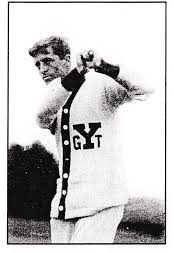
Golfing acumen isn’t necessarily a precondition for course architects, but it clearly benefited Langford who suffered from polio as a child and took up the game as part of his rehabilitation. It worked wonders. In New Haven, where his undergraduate studies predated the Macdonald/Raynor design at Yale GC, he played on three consecutive NCAA championship teams (1906-08) and remained a superb amateur player all his life. For the record, the Bulldogs played matches at New Haven GC, then Race Brook CC before moving over to YGC, in 1926.
After earning a master’s degree in mining engineering from Columbia — a discipline that would eventually serve him, and the field of golf course design, extremely well — Langford stayed in New York City and, according to Packard, prepared to take over his father’s sheepskin business. But the tug of golf never dimmed and eventually he went to work laying out courses for Chicago-based American Park Builders.
In 1918 he had formed his own firm, a partnership with fellow engineer Theodore J. Moreau. By the onset of World War II, the two partners had authored hundreds of golf course projects from the Dakotas to Florida and most places in between.
It’s difficult to ascribe a “style” to any course designer who works so long, on so many different projects, in so many different physical environments. But Langford — who did most of the design work, while Moreau mainly supervised construction — did have a distinct predilection for raised greens with very sharp edges that fell off precipitously into flat-bottomed, remarkably deep bunkers.