New US Soccer Jersey Fitting — For Quick 18

New US Soccer Jersey Fitting — For Quick 18

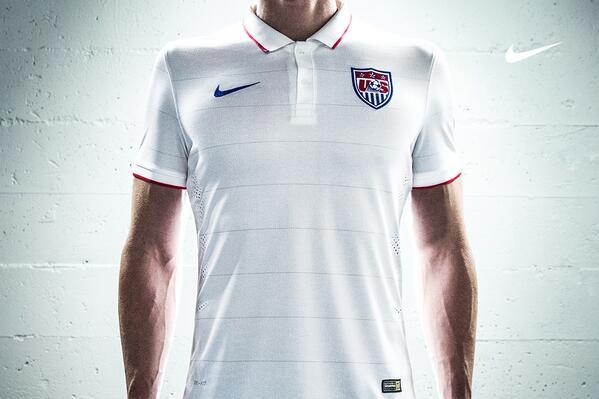
US soccer jersey 2014

As there is little media crossover between the golf and soccer worlds, allow me to relate one such news nugget re. the sartorial tempest now brewing over what the U.S. soccer team will be wearing when they take the field at June’s World Cup, in Brazil.

See above. Apparently this is the new U.S. Men’s National Team home jersey for the upcoming tournament, soccer’s quadrennial world championship. Notice anything familiar about it? Yep, it looks remarkably like a golf shirt — and early returns from soccernistas the world over have not been positive. See here some of the chatter the new shirt has generated online.

One could reasonably argue as to why anyone should care. But considering the blockbuster sales opportunities represented by futbol jerseys, here and abroad, it was an odd choice by U.S. Soccer and its official outfitter, Nike. There are undeniable similarities between traditional soccer jerseys and modern day golf shirts, namely the collar and button-style placket. But it’s odd that U.S. Soccer and Nike would appear to have missed the mark by two years — this looks like something Tiger Woods or Phil Mickelson would wear to Brazil in 2016, when golf makes it return as a bona fide Olympic event.

Maybe you’re like me, in that you’re a bit sensitive about golf’s less-than-stellar track record in the duds department. We’ve made some admirable progress in this regard, I think, as it wasn’t that long ago that outsiders considered golf a game for rich white guys in bad pants. It’s unfortunate enough that a) the good folks at Loud Mouth are trying to bring back utterly ridiculous trousers; and b) white belts have successfully wheedled their way back into the golf couture (somewhere, Greg Brady is laughing).

Now we have soccer fans ragging golf, indirectly, for the plain-vanilla, markedly uncool nature of golf shirts, which, thanks to clothiers like Nike, have actually come a long way.

The whole thing is a bit mystifying, and it’s hard to see how golf gains . Nike is known for pushing the envelope with its golf stylings. What could possibly have moved them to put forward something so lacking in flash? If this was an attempt at something retro, I, as a soccer fan, don’t see the reference point. I think it’s safe to say that if one can plausibly wear a soccer shirt for a round at dad’s club, and it doesn’t look out of place beneath a blue blazer, the youth market will not be impressed.


King James Can Restore Vitality to Dunk Contest — By Entering and Losing

King James Can Restore Vitality to Dunk Contest — By Entering and Losing

James

LeBron James can do basketball an honorable and valued service by entering the 2015 NBA dunk contest, not to win necessarily, but to eradicate the stigma of losing.

Today we can agree that All-Star dunk festivities — once the highlight of the NBA’s mid-season bacchanal — have lost nearly all their luster. The big names don’t participate because (and let’s be honest here) they have relatively little to gain, should they win, and much to lose if they cannot better the likes of young, live-legged, would-be journeymen such as Terrance Ross and Ben McLemore.

In an acknowledgement of this misplaced luster, the NBA has basically given an out even to those who will participate this year: Three players from each conference will team up, with the trio that wins being crowned  joint champions. There will be a top prize awarded to the individual winner, but he will be dubbed “Dunker of the Night.”

Whatever. This is nearly as bad as Team Figure Skating.

It’s not clear why this dunk-risk-aversion dynamic persists. The league’s best shooters do not appear unwilling to participating in the 3-point competition. There is no loss of face for Stephan Curry should he lose out to some young gun like Damian Lillard, or any of the league’s noted long-distance marksmen (among them this years, Kevin Love, Bradley Beal, Marco Bellinelli and defending champ Kyrie Erving). When Larry Bird won it, he relished the chance to win it again.

The Dunk Contest is different. In the beginning, all the big names did indeed participate. The very first one, at the 1976 ABA All-Star Game, featured this luminary lineup: Julius Erving, David Thompson, Artis Gilmore, George Gervin and Larry Kenon. The NBA revived the circus in 1984 and thereafter Michael Jordan and Dominique Wilkins didn’t just win, they showed up to defend. The stars started begging off in the ‘90s, though a young Kobe Bryant won in 1997. As recently as 2008, Dwight Howard lent some star power, as did champ Blake Griffin 2011 — but the Clippers big man chose not to defend.

LeBron has for 10 years been notoriously cagey about the Dunk Contest, steadfastly refusing  to enter, claiming that he’s an “in-game dunker”, but nevertheless strategically allowing media to see his chops once a year, normally just prior to the All-Star break.

LeBron is so clearly the game’s best player, and its most dominant personality, he can simultaneously restore the profile of Dunk Contest — without winning it. In fact, he should huddle with the judges beforehand and say, “Don’t let me win.” By taking part next year, thereby enhancing the showcase and honorably congratulating a worthy winner, he can show other stars that competing in the Dunk Contest is nothing of a gamble in terms of cred, brand or machismo.

I’ve got nothing against Paul George, Harrison Barnes, Ben McLemore, Terrance Ross and John Wall, all of whom are scheduled to do rim-rattling battle Saturday night. There are several legitimate up-and-coming stars in that field, an you gotta love anyone who attempts the rare 3-point/jam double (Lillard). But I would love to see LeBron compete against these guys, mano-a-mano, along with Josh Smith or maybe a healthy Russell Westbrook. If LeBron commits, other stars will follow — if only to compete against the King, and each other.


Mexico-NZ Presents Complicated Rooting Interests for US Soccer Fans

Mexico-NZ Presents Complicated Rooting Interests for US Soccer Fans

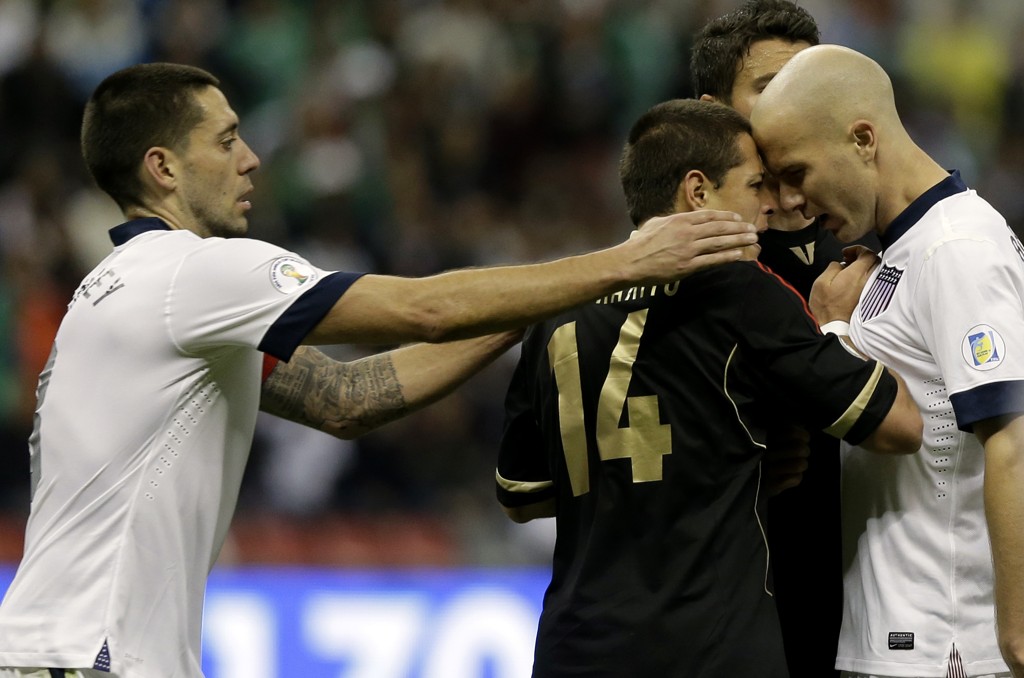
usa-mexico

An American friend will be seated in Azteca today when the Mexicans face New Zealand in the first leg of a home-and-home World Cup qualifier. Earlier this week, he and I exchanged the obligatory musings about bringing along some rain gear, or at least a wide-brimmed hat, to guard against flying bags of urine — especially once he revealed that he’d be rooting for the Kiwis. All well and good to be so declaratively brave in a Facebook exchange; we’ll see how overtly manifest his support will be when the whistle blows.

There are, of course, myriad dramas swirling around the Mexican capital today, as El Tri desperately attempt to punch their tickets to Brazil and quell a national anxiety that has raged for months. Our neighbors to the south stumbled badly throughout CONCACAF’s Hexagonal qualifiers. The security blanket of Stadio Azteca — a place where Mexicans had, until this summer, lost only one time in World Cup qualifying history — has been shredded. They’ve gone through three coaches in three months. Mexicans view World Cup qualification as a birthright, but were it not for the Americans’ last minute victory over Panama in the final qualifier, El Tri would have already been eliminated.

But my friend’s decision to go south and root for the Kiwis begs a more nuanced, decidedly North American question: Should U.S. soccer fans be rooting for the Mexicans today, and next week, when the second leg is played in Auckland?

Yes, the Mexicans are our most bitter regional rivals. But they also represent our confederation, and their failure to qualify would diminish CONCACAF, perhaps diminish the region’s automatic qualifying places for the 2018 World Cup, and certainly diminish this summer’s tournament.

It’s hard not to admire the Kiwis and their grit: They were the only undefeated team in South Africa 2010, grinding out three desultory draws. But the Mexicans — with their hordes of traveling fans, attractive style, outsized national expectations, and seeming inability to play for desultory, low-scoring results — would be the clear choice of neutrals the world over.

But are we, as U.S. soccer supporters, neutrals? Just what are our obligations here?

These questions cannot be soberly addressed without first considering how Mexican fans might react were the roles reversed, for they are anything but neutral on the subject of U.S. soccer.

Let’s boil it down: They hate us.

There is indeed no nuance here for the Mexicans. For 24 hours, perhaps they appreciated the fact that our win in Panama — actually, a tie would have done it — saved their bacon, enabling this last-ditch qualifying opportunity vs. New Zealand. But they don’t give a damn about the confederation or its reputation: If the roles were reversed, the Mexicans would be rooting for New Zealand.

The U.S.-Mexico rivalry is completely unique in this respect: I can’t think of another example where the vitriol is so one-sided. They don’t see the rise of U.S. soccer these last two decades as a boost for CONCACAF, or a means to better prepare their own teams for World Cup performance — an issue of longstanding for the Mexicans, frankly, coming as they do from such a notoriously weak confederation. They don’t see a true rival here in North America as remotely interesting or worthwhile. They don’t see the positive impact of Mexican-Americans — on U.S. rosters, on our style of play — as an ego-boosting reflection of their own soccer prowess.

Mexicans see the rise of U.S. soccer as an affront.

El Tri have even gotten in the habit of playing friendly internationals in the U.S., where huge numbers of expatriates guarantee a sellout — and max revenue for the Mexican Football Federation. For fans of the national team living in Mexico (which is to say, the entire country), this is viewed as yet another indignity.

Soccer is one of the few things Mexicans have always been able to lord over their rich, voracious, imperialist neighbors to the north: tequila, daytime soaps, proper tortillas and futbol. These are people who still revile Landon Donovan for discreetly taking a pre-game piss on a Guadalajara field — 9 years ago. In a youth tournament! They viewed it, and continue to view it, all these years later, as a willful desecration of Mexican soil.

Mexican fans wish us ill, and this broad, cultural dynamic clearly spills over to the players themselves, who understand they are expected to win against the Yanquis, and win big. Failure to do so will subject them to ongoing, perhaps lifelong harassment from their own fans and media. It might cost a coach his job or a player his place in the national team.

There is no real pressure for the U.S. team to perform against Mexico. There is no day-to-day job security at stake, no broad ramifications. Soccer doesn’t yet mean that much to Americans, culturally. That’s not the case for Mexico. In fact, it’s just the opposite.

Watch the Mexican players the next time they face the Americans. After the national anthems, when they make their way down the line — shaking hands as part of the FIFA-mandated, pre-game ritual — there are no smiles and niceties exchanged, not from the Mexicans. They are stoned faced because their compatriots are watching them, ready to pounce on idle chumminess. Observe them after the game ends. If the Mexicans should lose, many pointedly refuse to shake their opponents’ hands. This is very bad form according to the etiquette of international futbol especially. But they know what’s at stake. They can’t afford to be palzy-walzy with the Yanquis — Mexican fans and media would not stand for it.

In fact, should a Mexican player present an American opponent with a truly cheap shot — like the time Ramon Ramirez kicked Alexi Lalas in the balls, in 1997, or when assistant coach Paco Ramirez bitch-slapped Frankie Hedjuk after the Americans eliminated Mexico from the 2002 World Cup — he is hailed as a kind of hero.

I’m torn on this subject, because the U.S.-Mexico rivalry is littered with this sort of bullshit behavior from the Mexicans. But I understand their emotional response, even if I don’t respect it. They’re toting baggage that I legitimately cannot imagine.

Indeed, I find myself rooting for the Mexicans when they’re not playing the U.S., in the same way I will surely root for the Hondurans this summer in Brazil.  They are North Americans, after all. They carry the banner for soccer in this part of the world. They play with flair, to win. The Mexicans in particular truly do add something to a big tournament, in a way that New Zealand never could.

So, my friend is on his own down there in Mexico City today, as I — and the 100,000 on hand in Stadio Azteca — will be rooting for El Tri over this two-legged qualifier. And part of the reason is, I know this sort of behavior will confound and piss off our Mexicans brothers all the more.

The Long Game: Sox Even Series with Cardinals

The Long Game: Sox Even Series with Cardinals

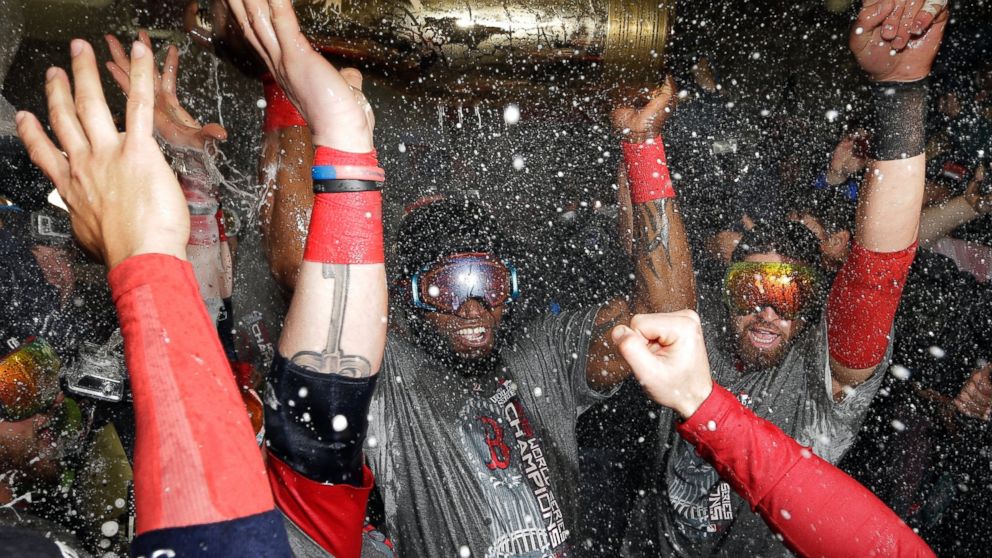
New Gloucester-based video artist Kevin Fowler captures the Red Sox 2013 World Series celebration for WMTW.

I’m not young, but in the long arc of Red Sox fandom, some would argue I’m too young to have bona fide demons.

My family moved to New England in 1972, in time to endure three-plus decades of an 86-year World Series drought. I recall first-hand Luis Aparicio’s stumble around third base, Jim Rice’s broken hand and Joe Morgan’s Series-winning bloop, Bucky Dent’s anomalous three-run homer, Bill Buckner’s unfortunate fielding (Bob Stanley’s equally hair-brained pitching), Roger Clemens’ inability to beat the Bash Brother A’s, and fucking Aaron Boone.

But the Cardinals? Their wins over the Sox in 1967 and 1946 stand as disappointing but amorphous mileposts on a road travelled too long ago. Any Game 7 loss is gut-wrenching, for sure, and here were two of them — each closing the book on efforts to end long title droughts in their own right. But for me, they were just words on a page, disjointed snippets of film.

Even those New Englanders old enough to have experienced the ’67 Series were, it seems to me, happy enough to have simply won a pennant. Save an epic September collapse in 1949, the Sox had not seriously challenged for one in 29 years. Hard to bitch too much when simply contending is pre-emptively dubbed an Impossible Dream.

The 1946 loss to St. Louis is even harder to get worked up about. Yes, Ted Williams hit .200 and apparently Johnny Pesky’s botched relay allowed Enos Slaughter to score the Series-clinching run. At that stage, the Sox had not won a title, nor even played in a World Series, for 28 years. I’m sure it was plenty traumatic, but David Halberstam wrote a book about the epic Sox collapse in 1949, not 1946.

Boston’s World Series wins over the Cardinals in 2004 and now 2013 just don’t feel, to me, like any sort of cosmic payback.

But perhaps they should.

Here is something The Nation should work on: After three titles in 10 seasons, the danger is we might become jaded.

When a century happens to turn, the Sox apparently win like gangbusters. By 1918, they had won five titles and never lost a World Series.

By 2013, the Sox were, again, clearly ascendant: Three titles and The Curse of the Bambino summarily dispatched (actually, this Bambino thing was always a canard; god love him but the true curse kicked in when Ted Williams was born, in 1918, and petered out when he passed away, in 2002). Boston added yet another World Series in 2018.

Cardinal Hate seems to me a worthy emotional exercise. If we can’t muster the venom to keep score with St. Louis, over the course of decades, what sort of Red Sox fans are we really?

A sports grudge is never released.  What, are we supposed to stop hating the Yankees now that they actually suck? Surely not. They had their century. This one’s ours. Come 2101, we’ll count championships over the next hundred years — that will decide things.

And I’ve got news for you: This Cardinals team has a veritable boatload of spectacular young pitching. Martinez, Rosenthal, Kelly, Wacha, Siegrest… Every time I turned around, they were trotting out another kid who throws 97 mph and appears settled beyond his years. The veteran Wainwright is a stud. Their closer from the 2011 World Series-winning team, Jason Motte, is scheduled to return from Tommy John surgery. Consider Edward Mujica, Motte’s replacement till Rosenthal beat him out in August: Mujica was an All-Star this year — and he didn’t get a sniff this series. With this sort of extraordinary pitching depth, the Cardinals can trade for, or simply sign, another bat or two. They will be back.

At which point we’ll sort this Best of 5.

Never forget. Never stop keeping score.

10 Questions for Guan Tianlang

10 Questions for Guan Tianlang

Guan Tianlang web

How many 14-year-olds do you know who warm up for a star turn with Tiger Woods and Rory McIlroy by defending the most coveted amateur title in Asia, in hopes of re-punching his ticket to The Masters? That is the quite extraordinary story of Guan Tianlang, who, as we speak, is teeing it up at the Asia-Pacific Amateur Championship (AAC) in China’s Shandong province, at Nanshan International GC. The AAC runs Thursday to Sunday — winning it means a Masters invite (Augusta National GC is a tournament organizer) but also a final qualifying slot for the 2014 British Open. So soon as his AAC has concluded, Mr. Guan (surnames first for the Chinese, of course), flies south to Hainan island, where he will participate in a morning Skills Challenge with Messrs. Woods and McIlroy, at Mission Hills Resort Haikou (that afternoon, the two pros will contest The Match at Mission Hills to be held over the resort’s Blackstone Course). Guan, of course, made Masters history earlier this year — competing as a 14 year old and making the cut on golf’s biggest stage. I recently had the chance to sit down with Guan to discuss the state of his game, his travels, his history with Tiger and Rory, and his relationship to Mission Hills, where he’s been a fixture at junior tournaments since 2008 (he’s a native of nearby Guangzhou). Oh, and for the record, all this talk about being a precocious 14 year old goes away this week. Guan turns 15 on Friday, Oct. 25.


Q: You are quite famous, internationally, following your performance at the Masters in April 2013. Tell us what you’ve been doing since that time.

Guan Tianlang: The Masters did make me better known than before. I played several PGA Tour events after The Masters, including the Zurich Classic, HP Byron Nelson Championship, The Memorial, and FedEx St. Jude Classic — before taking the whole summer off for fitness training and catching up with school work. I played one Japan Tour event, the Vana H Cup KBC Augusta, after coming back from the States. Now I am going to school as a normal student and getting ready for the Asia-Pacific Amateur Championship in late October.

Q: The slow-play penalty you incurred during the second round at The Masters gained a lot of attention, as well. How do you view that episode now? Do you play faster, or do you think the penalty was perhaps unfairly applied?

GTL: As I said back then, I respect the decision and I accept it completely.  It was a tough day. The weather was bad and it took more time to make the right decision, and you know, it’s The Masters! I have a good routine and I haven’t changed much because of the penalty. But yes, I do pay more attention to my pace and I think I have been doing well on that part. Overall, it was a very valuable experience.

Q: Describe your history with Mission Hills. You have worked on your game there? Competed in tournaments here?

GTL: I have participated in more than 10 junior golf tournaments hosted by Mission Hills, since I was seven. And I won several championships there. The courses are beautiful and challenging. Actually the second time I met Tiger Woods was at Mission Hills Shenzhen. A great memory.

Q: There are many courses at Mission Hills — 12 in Shenzhen and 10 on Hainan Island. Which is your favorite course?

GTL: My favorite one must be the Mission Hills Norman Course. But I haven’t been to the Haikou Mission Hills. I hear it is amazing and can’t wait to play there!

Q: You will appear at a junior clinic and skills challenge prior to Tiger Woods’ and Rory McIlroy’s Match at Mission Hills on Oct. 28. You already have a history with both players.

GTL: Yes, I’ve met both of them before. I met Tiger at the HSBC Championship when I was 12, and we played a par-3 hole together. Met him the second time at Mission Hills Shenzhen and received a trophy from him. And, of course, I got to play with him for 9 holes at Augusta National on the Tuesday of the Masters; it was a dream come true, as everyone knows he is my idol. I haven’t played with Rory before but we had a nice chat at the Masters. He was very supportive and said he wasn’t as good as me when he was 14. He is humble and a very sweet guy. A great player as well!

Q: Have you attended similar junior clinics as a spectator? If so, what did you take away from the experience?

GTL: I have attended some junior golf clinics, when I was younger. The one hosted by Mission Hills with Tiger Wood was one. I can’t say how much in terms of golfing skills I have learned from the instructor, but I shall say the whole experience did inspire and motivate me to practice harder and become a better golfer.

Q: Was Tiger Woods always role model for you? Are you old enough to have the same thoughts about Rory McIlroy?

GTL: Tiger Wood has always been my idol. I believe he is the role model as a golfer for many, many people out there. Look at him: He won 5 PGA Tour events in one year and he is now the world No.1. He is the greatest player of his time and perhaps will become the greatest of all time soon. Rory is such a mature and great player. I can see how much more I need work on myself — to grow into a player like him. Both of them are the players I look up to. I’m very excited to get the chance to challenge them.

Q: What advice did Tiger give you during that Masters practice round — anything that helped you during the tournament, or with your golf going forward?

GL: Yes, it was a great experience and probably the most nervous 9 holes in my life. He is my idol, after all. We did chat a bit during the practice round and also off the course. Lots of advice. But the one piece, as other great golfers also offered to me, is enjoying your game and embracing your experience at The Masters. It was my first Masters journey, and I hope there will be many more coming.

Q: You turn 15 on Oct. 25, just before The Match at Mission Hills. You remain a young man, but do you feel as if golf is more popular today, in China, than it was five years ago? If so, how can you tell?

GTL: I believe so, absolutely.  First of all, you can see more and more media are paying attention to the sport. Second, more and more juniors start to pick up the game, which makes the future of golf in China very promising.  The golf community in China is expanding with its addition to the 2016 Olympic. Golf will become more and more popular here for sure. It is a great sport, why not?

Q: When will American golf fans see you again? Does your tournament schedule bring you to North America in 2014?

GTL: I hope everyone who supports me will watch me and root for me when I play other events outside the U.S., such as Asia-Pacific Amateur Championship. Augusta National is an organizer [winning this event last year earned Guan his Masters place in 2013] and it is the best amateur event in the region. I am going back to defend my title and I hope they will be watching. I haven’t planned any tournaments in North American next year. Hopefully I will win my ticket back to 2014 Masters.


How MadMen Should Finale, Ultimately

How MadMen Should Finale, Ultimately

vertigo_5_o_clock

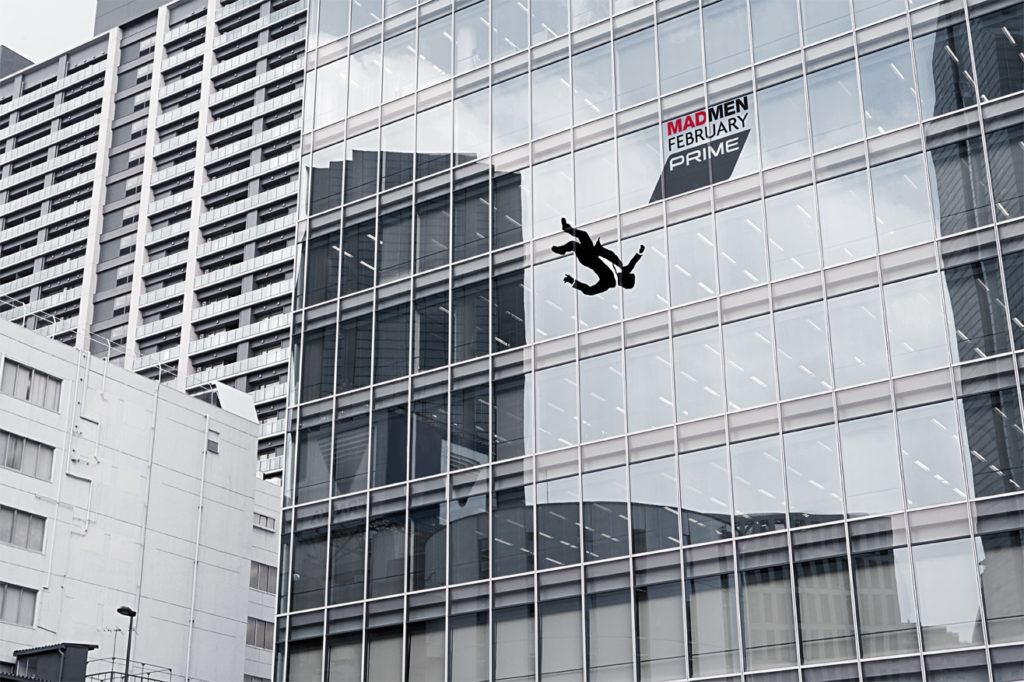
It doesn’t honestly matter where Matthew Weiner & Co. picked up the seventh and final season of MadMen. Some might have insisted on 1969, to keep the 1960s ethos in tact — though the series actually started in the late ‘50s. Others 1974, thereby neatly bookending the Dick Nixon Era. But it doesn’t truly matter, because halfway through Thursday’s 2-hour finale , the show should have leapt foward from a chronological ’70something tableau to a recognizably modern day. Maybe the suit jackets might have seemed  a bit oversized. In keeping with the way other MM seasons have begun, it’s not exactly clear what year it is.

What is clear, in this alternate finale, is this: Sterling Cooper & Partners has survived and thrived, perhaps added a name or two, and the agency has taken up residence in chic modern offices high in a glittering Manhattan tower of glass and steel. For 50 minutes of this final hour, in the course of a normal business day, we learn what’s happened to most all the characters who matter, i.e. who remains at the firm, how the hierarchical machinations have shaken out, who’s moved over to or formed competitors, who no longer remains on this mortal coil, who has divorced and remarried whom, who’s aged well and who hasn’t… The pacing is pointedly brisk, recalling the Season 3 episode “Shut the Door. Have a Seat,” when our gang reboots the firm. This pacing is important because frankly there’s a lot of ground to cover (for the viewer, absent all these years) and we want to make clear the agency’s ongoing vitality.

Clues re. the time period dribble out via scene details and workaday conversations at SC&P. For example, the Justice Dept. has just announced it would no longer seek to break-up Microsoft — a fact germane to SC&P because the firm is courting Netscape, which is jittery because a company called Google has just been awarded US Patent 6,259,999 for the PageRank algorithm used in its search engine. The codgers at Sterling Cooper aren’t at all sure, charmingly, what a search engine is.

Bobby Draper has grown up to be a political operative. We see him on TV as chief of staff to Congressman Gary Condit, steadfastly defending a man who would appear to be dying a slow political death while denying an affair with 24-year-old Chandra Levy, now missing for 133 days.

All this catch-up takes place on a single day, a Monday.

The next morning, standing in his Upper East Side apartment, an appropriately aged Don Draper reads the paper in his stylish breakfast nook while a radio plays in the background: Ahmed Shah Massoud, leader of the Afghan Northern Alliance, has been assassinated in Takhar Province. Draper’s young wife frankly doesn’t know who that is. She’s the spitting image of Betty Draper. Or, maybe it’s another brunette…

What we all accept without debate: It’s a late-summer day of rare clarity, made real under a bright, blue, cloudless sky. Don gets out of a cab and bumps into a colleague (Peggy? Roger? Dawn?) outside their NYC office tower. They’ve all got a conference call at 9 a.m. They’re running late. As they hustle inside, the camera pans back from the monolithic revolving doors and reveals, for the first time, that the Sterling Cooper offices are now housed inside the World Trade Center.

Cut immediately to the Sterling Cooper offices burning out of control. Don is knocked out but slowly coing to beside his own desk, lying amid the debris (which includes a bottle of bourbon, a tumbler and a slide carousel). The only real sounds are low-licking flames and the eerie, reedy hum of steady winds, as several ceiling-to-floor windowpanes have been shattered/knocked out by the impact and subsequent blasts of jet fuel. The whole scene is staged and blocked to recall MadMen’s seminal Korean War flashbacks.

Don ultimately does come to. Things are suddenly moving really fast again. MM characters dart in and out, to see if Don’s alive, to express ignorance or disagreement as to what has actually happened, to tell him so-and-so is dead, to inform him they can no longer stay put, to always exude the massive, sincere reverence they have for this man in particular, whom they’re looking to, beside whom they might well die. A group has decided to ignore the “stay put” advice of emergency personnel on the ground — they’re leaving, and they’re taking the stairs. Draper says he’ll be right there.

Alone now, he grabs the bourbon, pours himself a drink and downs it. As he takes one last look around the wreckage that was his office/firm/life, the episode-ending music begins (“Be My Baby,” by Ronnie Spector and the Ronnettes). Don walks past the camera toward what we assume is the door. Instead, he walks to the open window and calmly steps out.

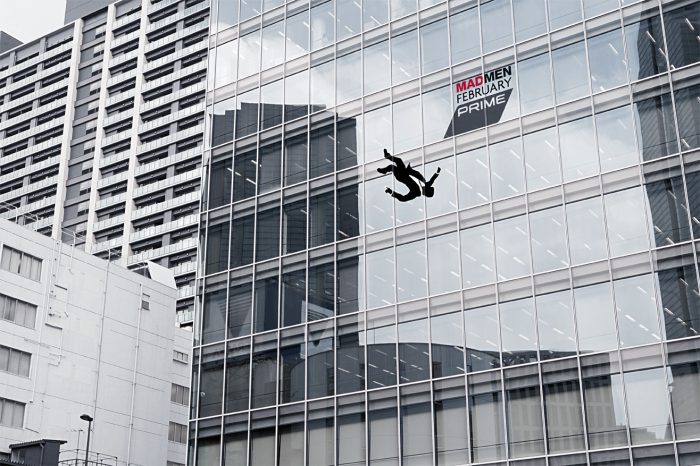
No need to show the trag-iconic footage of that businessman falling from the World Trade Center on 9/11. It is immediately recalled — and provides new meaning to the animated version of that footage we’ve seen at the start of this and every other MadMen episode, including the final one.

The Podbay Door: NHL Down to Four

The Podbay Door: NHL Down to Four

Hello and welcome to The Podbay Door, the audio magazine here at HalPhillips.net. It’s June, and that means the Stanley Cup Playoffs are barreling toward another riveting conclusion. We’re down to four teams and they are arguably the best four, if the regular season is any guide: Pittsburgh vs. Boston in the Eastern Conference Final, and Los Angeles vs. Chicago out West. Of course, the regular season is rarely a trusted guide in NHL matters. Favorites normally have a tough time in the NHL playoffs, which routinely produce a Cinderella, or two. We discuss that trend and this year’s anomaly with hockey sage David DeSmith, whose A Position contributions can be found here. Note that while we recorded this conversation just prior to the start of each Conference Final, technical difficulties kept us from posting until today, with the Bruins and Blackhawks each holding 2-0 series leads. The Bruins’ performance has surely surprised most everyone, Mr. DeSmith especially.

Bruins-Rangers: A Curious Rivalry Renewed

Bruins-Rangers: A Curious Rivalry Renewed

ratelle

The Boston-New York sporting rivalry, one-sided though it often is (Hub fans invariably care more about beating anything NYC than the other way around), has traditionally taken a backseat on ice. Still, it beggars belief that Bruins v. Rangers — a battle of Original Sixers separated by just 200 miles — has become such a non-entity, largely because the two combatants have not played a single playoff series since 1973, despite having always competed together in the Eastern Conference, or some randomly named facsimile thereof.

That streak ends Thursday night with Game 1 of the NHL’s Eastern Semifinals at the TD Banknorth Garden, and perhaps it will light a fire going forward. If nothing else, it will serve as a stirring flashback for hockey fans of my vintage who remember a time when this was a proper rivalry and home teams wore dark uniforms in their own barn — a practice that had long prevailed back in the day, was abandoned by the NHL in the mid-1970s, but has recently been restored.

The Bruins’ blood rivals are, of course, the Canadiens, whose decades-long torture of Boston peaked just as the Rangers rivalry fell away, in the late 1970s. Those Montreal teams were all-timers, star-studded winners of four straight Stanley Cups (1976-79). The B’s, though very good throughout the ‘70s, simply could not slay them. Even in their heyday, when they netted a pair of Cups, in 1970 and ‘72, the Bruins were never obliged to beat the Canadiens in a playoff series.

Montreal had many rivals during that period, and it only stoked Boston passions further that peut-être Les Canadiens didn’t care that much about beating the Bruins. Today, recent form and some incendiary incidents of thuggery have perhaps stirred in Montreal fans a hatred that matches that of Bruins Nation.

[Indeed, much of Canada has every right to loathe the current B’s following their organ-removing defeats of heavily favored Vancouver in the 2011 Stanley Cup Finals, and Monday’s unlikely Game 7 dispatch of Toronto’s Maple Leafs, in overtime — the Bruins had trailed 4-1, with just 10 minutes remaining. No Canada-based club has won the Cup since 1993, a fact that continues to gall hockey purists (read: 90 percent of the population) north of the border. Maybe derision of the current Bruins can be that one elusive thing all of Canada can agree upon…]

The Bruins of the early 1970s were not so villainous. They were Big and Bad, in an admirable way, and the Rangers — more of a finesse team, built on the refined skills of Rod Gilbert, Jean Ratelle, Brad Park and Vic Hadfield — proved compelling foils. Boston beat them to win the Cup in 1972. Their last playoff meeting was a Ranger victory, the 1973 conference semifinals. As a young Bostonian, I vividly remember resenting the Rangers for unseating the defending Cup champions, a loss that kicked off one of the most frustrating runs of near misses in hockey history. (Boston would lose the 1974 Cup final to Philly before dropping a dizzying succession of playoff series to Montreal, each one more gut-wrenching than the last.)

But any resentment of the Rangers didn’t last.

Terry O’Reilly and his crew famously went into the stands at Madison Square Garden to punch up some Rangers fans in December 1979, but the lack of playoff confrontation — who could imagine it would last fully four decades? — effectively defused the rivalry. The 1975 and 1976 trades that shipped Phil Esposito, Ken Hodge and Carol Vadnais to New York, in exchange for Ratelle, Park and “Nifty” Rick Middleton, further blurred the line between bitter enemy and mere foe.

Montreal became the fixation.

It’s funny how that works: The best rivalries become a sort of long-term competitive obsession, to the exclusion of teams that might well be torturing or otherwise beating you in the moment. Boston endured 39 years between titles (1972-2011), and in that seemingly interminable span they were beaten back by several great teams of longstanding: the Islanders of the early 1980s, Gretzky’s Edmonton Oilers… Yet we Bruins Fans never stopped hating on the Canadiens exclusively.

[Another great piece of nostalgia prompted by this year’s playoffs: the return of the Islanders after a long post-season absence. Just seeing their uniforms, admirably unchanged from the glory days, stirred strong memories of Bossy, Gillies, Trottier, Nystrom, Smith and Resch. The Nassau County Coliseum — scene of so many vintage Bruins telecasts delivered via rabbit ears and Channel 38 — remains impossibly small, dark and retro. Their current star, John Taveras, wears no. 91 and, for a brief moment during their first-round loss to the mighty Penguins, I mistook him for Butch Goring…]

The Rangers famously went 54 years without a Stanley Cup before winning one in 1994 (deploying a goodly number of former Oilers, it must be said), and I’ve no idea whether Ranger fans brought with them on that long and painful journey a particular rival, or developed one. Maybe, for a time, it was the Islanders. Maybe it has become the Washington Capitals, whom the Rangers seem to have faced, in the playoffs, every year for the last two decades (though it’s hard to develop a rivalry with a team that has never won anything, ever).

If it’s been the Bruins all along, I feel sorry for them, because we never really noticed.

FootGolf? Yes, FootGolf. Where Do I Sign…

FootGolf? Yes, FootGolf. Where Do I Sign…


Here’s all I have to say about the advent of FootGolf: “It’s about freakin’ time.” Anything that essentially combines my two favorite participatory sports — and knee-high argyle socks — has my full attention and support.

I knew there was something out there like this, but until I read this piece, I had no idea it was so well developed, and so intrinsically awesome. As a devotee of disc golf, I embrace the game in all its alternative forms. But this one takes it to a new level. There’s even a rule book, to be consulted in the event one’s approach hits the pin and ricochets backward into a lake. (Of course, if that should happen, the ball would be floating on the surface and could presumably be retrieved, prior to a legal drop).

Soccer and golf have a long and distinguished history together. There’s the dreaded foot wedge, of course. And there was that time Alan Shearer played through our group at Gleneagles. I’d love to see him hole out with a proper foot wedge and run the length of the hole with his signature hand held high.

Check out more information here. There’s apparently a FootGolf facility in Las Vegas, but that’s awfully far away. If anyone out there knows where this activity can be pursued here in New England, I’m all ears. After all, there was a FootGolf World Cup held in Hungary in 2012. I now have my sights set on 2016.

Jordan Homecoming Recalls Rutgers Hoops Heyday

Jordan Homecoming Recalls Rutgers Hoops Heyday

Interesting confluence of events both personal and national last week when embattled Rutgers University — struggling to salvage its basketball cred prior to moving from Big East to Big “10” in 2014 — hired NBA veteran Eddie Jordan to replace head coach Mike Rice, who was jettisoned after video surfaced early in April showing him crassly berating and physically abusing his “student athletes”.

[We’ll leave aside for the moment the fact that Rutgers knew about Rice’s antics long before the video was made public. That’s just more run-of-the-mill, big-time-college-athletics sleaze, and honestly, what more is there to add?]

What interested me more was the return of Jordan to his alma mater, where he played in the mid-1970s as a cog in one of college basketball’s most unheralded great teams — and the fact that I learned of his homecoming while kipping in the Marin County home of my boyhood friend Tom Wadlington.

That Scarlet Knight team, which went unbeaten in 1975-76 before falling to Michigan, Ricky Green and Phil Hubbard in the national semifinals, was even more visible to me, as a budding, 12-year-old college hoops freak, on account of Tom’s arrival in my hometown just two years prior. Tom had moved to Wellesley, Mass., from New Brunswick, N.J., where his parents, if I’m not mistaken, had both worked at Rutgers. He showed up in my 4th grade class, and on my various soccer teams, spewing all sorts of Rutgers propaganda. Much of it was dismissed for what it was — the meaningless parochialism of some pre-teen interloper.

But then, midway through the ‘75-76 season, it was clear that on the college basketball front, at least, Wad was not talking shit. These guys were really good and would eventually run the table, win the East Regional and go to the Final Four (not yet so branded, I don’t believe). They did so with Jordan at the point, Mike Dabney at shooting guard, super-smooth Phil Sellers at small forward, “Hoppin” Hollis Copeland at the 4, and Boston-bred freshman “Jumpin” James Bailey at center.

I think we all remember Larry Bird’s Indiana State team that went unbeaten before losing to Magic & Michigan State in the 1979 NCAA Final. But the long history of college basketball is not exactly littered with teams that go unbeaten over the course of a regular season, much less progress untarnished all the way to the Final Four. UCLA did it repeatedly in winning so many titles under John Wooden, and Indiana went unbeaten start to finish the same year Rutgers came so close, in 1975-76. Other teams that have won titles while going undefeated include Bill Russell and KC Jones’ USF teams in 1955 and 56, North Carolina a year later, UCLA four times, and Indiana.

But it gets thin when you search for teams that remained unbeaten all the way to the Final Four, only to lose there. Once we account for Rutgers and Indiana State, I recall these:

• Indiana went unbeaten the year before its golden campaign, only to lose in the Midwest Regional final to Kentucky, 92-90, largely because  (Hoosiers will argue) star forward Scott May had broken his arm with 7 minutes to play.

• UNLV was 34-0 when it famously lost to Duke in the 1991 national semifinals.

I encourage anyone to set me straight, but I think that’s it: Seven teams went undefeated and won the title, only two more got to the Final Four unblemished.

Jordan has his work cut out for him in Jersey, to be sure. Maybe joining the Big “10” (I’m not sure how many teams are in that conference anymore, but it ain’t 10) will expand his recruiting territory, but Rice has seriously sullied Rutgers’ reputation and recruiting capability in the short term. And despite being located in the heart of a bountiful talent pool, Rutgers has never been that great or recruited many first-rate sons of Jersey (Roy Hinson tops a short list). The Scarlet Knights weren’t part of the original Big East, of course. They joined in 1995, and it could be argued, it didn’t benefit their basketball program a lick.

As for Tom Wadlington, he ultimately matriculated at Cal Berkeley and has since transferred all his propagandizing efforts (on behalf of collegiate athletics) to the Bears. But he did have this to say upon learning the news of Jordan’s hire: “He should bring Phil Sellers and Mike Dabney as assistants!”