Having weighed in, soberly and professionally, on the “air rage” phenomenon the Mandarin Media blog, I couldn’t leave the subject without relating the more salacious story of my first trip to the French Alps. It wasn’t exactly an instance of “air rage,” but it well illustrates the peculiar holiday-making mindset among some Brits Abroad. Of course, said mindset can and has led to many an airborne incident. In short (I love quoting myself), “There is something to the idea, born of armchair psychology, that Brits generally and the English specifically cut loose on holiday in reaction to leaving what remains a very buttoned-up, class-restrictive culture.”
It was March 1985. My girlfriend and I were studying abroad, in London, and we’d booked a chartered ski package to La Plagne, in France, for mid-semester break. Our short flight from Gatwick to Geneva, almost entirely peopled by English holiday-makers, quickly degenerated into a sort of raucous booze cruise at 30,000 feet. Everyone, it seemed, had broken open their bottles just procured at duty free.
Normally, such characters scatter to the four winds upon landing, but this was a charter. We had all purchased the same ski package. Accordingly, the same rowdy group piled onto a single coach and set out for La Plagne — in a blizzard.
Brits Abroad: In a Blizzard
By this time, my girlfriend and I had traveled a great deal together. This much was clear: If she wasn’t seated directly behind the bus driver, she was dangerously prone to car sickness. So, from the very front of the coach, we could hear the party raging behind us, as we crept our way along ever more windy, mountainous roads. In a blizzard. This was a non-smoking bus; the Brits defiantly smoked like chimneys and brandished their duty-free liquor bottles like groomsmen at a stag party. Then came the songs.
The unfortunate leader of this charter was a mild-mannered American 22-year-old named Chad. His attempts to tamp things down were met with open ridicule. He was a tad chubby, our Chad. Ultimately, he was regaled with a spirited rendition of “Who ate all the pies?”
From our perch behind the driver, we witnessed the trip’s dramatic inflection point: An oncoming Citroen spun out in the snowy conditions and crossed into our lane. The bus driver tried evasive action but these were shoulder-less roads — and it was snowing like a bastard. The car bounced off the driver’s side of the bus, right below us. After skidding to a stop, we found ourselves literally perched precariously at the edge of a steep and snowy hillside.
We sat there for half an hour, crowded onto the left side of the bus — to avoid tipping the bus and our still soused party into oblivion. Finally, a replacement vehicle arrived. When it did, we all exited out the driver-side window.
Any Train-Station Bar in a Storm
This backup bus was not big enough to accommodate all of our luggage, so the entire party was deposited at a nearby train station, which served some small French mountain town whose name I cannot recall. The station had a bar, however. Our new British friends set about drinking again, as if nothing had happened. To be fair, so did we. Having cheated death, we tucked into a couple bottles of wine with two more American friends traveling with us.
Two hours later, we piled onto the second replacement bus, where our moveable booze-fest was now completely out of hand. Chad just hunkered down beside us. This party could not be stopped — or could it…
The up-and-down, side-to-side nature of our alpine journey would result in two initial incidents of vomiting. Each time the bus ascended and descended, the resulting spew sloshed back and forth along the bus floor. The stench had just the wrong sort of effect on others who teetered at the edge of nausea.
Upon arrival in La Plagne, I don’t believe I’ve ever been quite so thankful to disembark from anything. Rule Brittania!
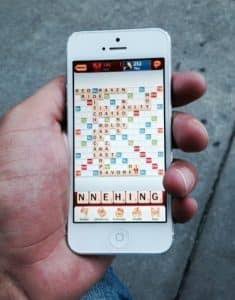
NEW GLOUCESTER, Maine (23 October 2014) — A week into the Great Scrabble Freeze-Out of 2014, I’m left to contemplate my roots in the game. There has always been Scrabble, of course. But smartphone Scrabble, a newly enabled incarnation of the game has stoked my enthusiasm, even as it’s increased my dependence on dependable wifi.
My smartphone Scrabble journey started in the Dominican Republic back in January 2013. Jeff Wallach turned me on to this version of the game during a media junket to Casa de Campo, in the Dominican Republic. I noticed he was playing on his phone, a Facebook incarnation of Scrabble pimped via some Hasbro app. When I inquired, there was a guarded, secret-society “Can you handle the truth?” aspect to Jeff’s responses. In the end, I was deemed worthy. I’ve played some 350 games vs. Jeff and a dozen different opponents since.
We’ve all played Scrabble through the years, perhaps after an introduction from our parents. That’s my story. But this game never proved a rudimentary Candyland-type diversion, or some lame exercise sexed up by three-dimensional playing surfaces (The Game of Life). It never required physical skill (Jenga) any wellsprings of trivial knowledge.
Scrabble was and remains utterly singular and vital: strategic word-smithing in the language soup we’ve all slurped since birth.
Smartphone Scrabble withdrawal
This essay was long time in coming. I write it now because the mobile app that enables smartphone Scrabble has been unable to connect with Facebook for almost a week. Web alerts tell us developers are on the case. Until they solve the problem, short of going on the laptop and playing there (a place I do NOT wish to go), I’m stymied — and so are my half-dozen current opponents. I texted one yesterday: “Life has so little meaning without Scrabble.”
“I feel rudderless,” he responded. Immediately.
In short, I write this today because without phone Scrabble, I’ve got all sorts of bandwidth (if not exactly more time) on my hands. I might spend 15 total minutes tending to five or six Scrabble games in a typical day. But that quarter hour engenders an entire universe of the mind. Alas, that universe has, for a week, been devoid of matter.
My mom, a reader and lifelong classics freak, inculcated the power of Scrabble into all three of her kids. Parcheesi we played as young’uns; after that, it was Scrabble when proper board-gaming was undertaken. It was a banner day when I finally beat her, because our parents never ceded to their children a game of any kind. It was that kind of household. And I’m glad for that in many respects, this one for sure. She still speaks of that fateful day — as if a spell were broken. We played the other day, on an actual board. My brain is honed these days to an estimable Scrabble sharpness. The poor woman didn’t know what hit her.
Scrabble for Bong Hits
I never played at college. Not sure why not. Thereafter my brother Matthew and I shared an apartment with fellow Swellesleyan David Kett. All of us held down jobs that rendered us semi-nocturnal (we’re still surprised Kettle gave up a lucrative career in college-campus security dispatch, for the law). We’d circle back to 60 Columbia St. at some ridiculous hour and play serious, cut-throat Scrabble for bong hits: losers pack.
We kept a running tally of wins, gaudy game scores and notable bingos — the 7-letter, tray-emptying triumphs that can launch true Scrabble lifers on glorious, 36-hour highs. Bingo was also our pet name for bong hits, so there was symmetry. This key word often morphed into “Bingo Bing!” at particularly high-spirited moments.
Bingo Bing also happened to be the name of my mother’s imaginary friend, when she was a kid — something I’m sure she regretted telling us. The dichotomy of this phrase recalling this fanciful figure from her youth, while signaling both the release of pure Scrabble joy and quite possibly a binger, we found hilarious.
I make it sound like I was playing Scrabble all the time as a young man, or a kid. Not the case. There were periods of mania, like the year on Columbia. But I didn’t play the game hardly at all once I moved to Maine in 1992.
Scrabble Respite in the North Country
We have a board here in Maine — a special anniversary deluxe model, in fact, on a swivel, with ridges to hold the tiles in place. I dutifully introduced the game to my kids, but they were never particularly taken with it. We all moved on.
Now that I look back on it, Wallach’s Great Scrabble Reveal, in the Caribbean, was foreshadowed by a brief and shameful dalliance with a knockoff version of the game. Yes, Words With Friends — an execrably named pursuit, for starters, and just plain weird/wrong in a dozen other competitive respects. The board is different. The letter values are different. Scoring is inflated in ways all out of proportion.
Words With Friends developers had to alter these things, I suppose, in order to not get sued. But on account of these degredations, Scrabble’s inherent, elegant symmetry is lost.
I played WWF a bit. It was okay. The novelty of having on the game my smartphone was inviting. It never occurred to me that proper Scrabble could be played in exactly the same way, on my phone. Of course, it was in fact being played, in that special universe of wordplay, gamesmanship, strategy and trash talk that is smartphone Scrabble. It just took a trip to the DR to discover it.
The book review below, written in 1994, first appeared in The Harold Herald, the blog I created in 1992. The original print issue sought to mimic the look of the NYT Book Review. That effort has been abandoned here, in the name of SEO. Some have argued I invented the blog, pre-Internet. Read more about that claim here.
THE HAROLD HERALD BOOK REVIEW
Vidal’s Historical Fiction Pegs Ambition as Historical Catalyst
Burr, Lincoln, 1876, Empire, Hollywood, and Washington D.C. byGore Vidal. Ballantine Press, $5.95 ea.
By all rights, Aaron Burr should have been the third president of the United States. If not the third, then certainly the fourth. When he and Thomas Jefferson secured the identical number of electoral votes following the election of 1800, Burr stood aside. He accepted the vice presidency and bided his time. The presidency would fall to him eventually. Hadn’t John Adams set the executive precedent by accepting the second spot, then ascending in due course? Hadn’t Jefferson promised his support when the time came?
But Jefferson would prove unfailingly vague when it came to political commitments. He was wary of Burr and isolated the vice president within his Cabinet. Jefferson wouldn’t allow Burr to resign with honor — until, that is, Burr hadn’t the time to organize a credible campaign for 1804. Jefferson then framed Burr for treason and the government tried him. The trumped-up charges failed to convince a jury, but Burr’s political viability had been effectively obliterated. Thus Jefferson securing his own and, by naming James Madison vice president, a Virginian ascension.
At least, that’s Burr’s version of events.
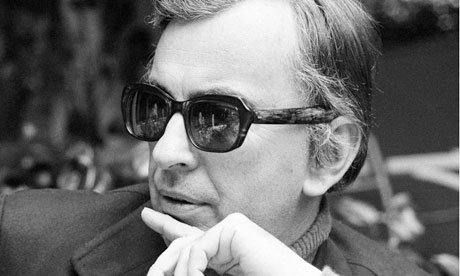
Or rather, that’s the version laid out by Gore Vidal’s title character in “Burr,” the first of six historical novels comprising the author’s so-called American Chronicle. I started this jourjney in August and have finally finished.
By tracking Aaron Burr and his descendants through the nation’s first 150 years, Vidal illustrates how ambition shaped and sustained the world’s first modern democracy. Ambition and naked political scheming. At the same time Vidal weaves an enormously intricate, believable tapestry where historic figures full of life mingle with equally engaging but fictional offspring.
Vidal’s Historical Fiction is Heroically Researched
Vidal has clearly done a vast amount of homework. His is an authority born of journals, letters and historical canon. Yet Vidal’s real characters — like Jefferson and William Seward, Lincoln’s ambitious secretary of state — prove unfailingly funny, sullen, outrageous, randy, paranoid and sometimes insane. In a word, human. Indeed, they take on the qualities of fictional characters because Vidal depicts them with such depth, wit and humanity. On scholarly grounds, historians wouldn’t dare recreate dialogue as Vidal has done. Besides, most historians couldn’t do it; they haven’t his skills as a novelist. Vidal can convincingly mimic Henry Adams and Mrs. John Jacob Astor, with equal parts style and integrity. Because he’s a writer of fiction with supreme command of the subject matter.
When Vidal intersperses these historical figures with fictional characters (believably placed in the maelstrom of actual events), it’s hard to remember who’s real and who’s not. The author does his level best to remove any distinction. The reader cannot put it down.
Young Charles Schermerhorn Schuyler, a fictional law clerk and budding journalist, tells the story of “Burr”. Schuyler works for the title character and convinces the old man to dictate his fascinating memoir. This Burr does, in part. The bits and pieces of his amazing life — the raid on Quebec with Benedict Arnold, candid Burr-centric portrayals of all the founding fathers, his aborted conquest of Mexico, his many wives, his mysterious relationship with Martin van Buren, rumored to be Burr’s bastard son — are never published as memoir, per se. They appear only as flashbacks set against Burr and Schuyler’s “contemporary” story, set in the 1830s. The young protégé provds mesmerized by this window on the nation’s founding moments and men. He is fairly well knocked to the floor when, upon the old man’s death, Schuyler learns that he, too, is Burr’s illegitimate son.
The Interwining of Real & Imaginary Figures
In “Lincoln,” volume II in the series, Schuyler disappears and Vidal centers the novel around two historical figures: the president and his young secretary, John Hay, who narrates. Schuyler reappears very late in “Lincoln” before resuming his own narrative in the third volume, “1876.” Here Schuyler and his daughter hitch their political wagons to the shoo-in presidential candidate, Samuel Tilden, and their social fortunes to New York’s budding Astor-based society.
At the beginning of “Empire,” Hay, now President McKinley’s secretary of state, returns as one of Vidal’s central/narrative characters. He does so alongside the fictional Schuyler’s two equally fictional but compelling grandchildren, Caroline and Blaise Sanford. Secretary Hay becomes Teddy Roosevelt’s vice president upon McKinley’s assassination. Blaise becomes William Randolph Hearst’s dilettante protégé. Sister Caroline — a former schoolmate of Eleanor Roosevelt in England — buys the fictional Washington Tribune, where she out-tabloids both Hearst and her jealous brother.
“Hollywood” follows Caroline to California, where she helps pioneer the movie industry (with Hearst). Blaise buys the Tribune and remains in D.C. to savage President Wilson — and back the serenely dim, Republican hopeful, Warren Harding. In the closing novel, “Washington, D.C.,” Blaise presents as an aging, would-be kingmaker frustrated by FDR’s stranglehold on the body politic. The nation’s capital — a malaria-ravaged swampland in “Burr”; a provincial seat of government in “1876”; now, in 1945, nerve center of the world’s first superpower — has changed. But it remains a fascinating backdrop for Vidal’s horde of schemers and climbers. In other words, all the folks who’ve made this country what it is today.
Imbued, as I am, with the arrogant notion that scholarly history is interesting enough (blame the Wesleyan history department), I’ve never been a fan of historical novels. Though I’ve always liked Mary Renault (“The Persian Boy”, “Mask of Apollo”), the genre allows too many liberties. Basically, it’s cheating.
Vidal changed my mind. Well, he didn’t change it… Vidal proves it can be done well, even raised to high art. But good luck finding another author so capable.
Author’s Note: On Other Capables
Ed. September 2014 — So, I found this piece in an online issue of the HaroldHerald, the proto-blog I published via Pagemaker, a Xerox MFM and the U.S. Postal Service in 1994. Disappointed I can’t find the ancient “print” version, as I recall spending a lot of time laying it out to make it look exactly like a NYTimes Book Review page. In any case, it remains an odd mix of fascination and dread to read oneself from 20 years ago, especially as I happen to be rereading “1876” right now.
I back most everything I wrote here, save the last bit. I have, in the ensuing decades, found several historical novelists the equal of Vidal, but only in certain respects. Bernard Cornwell — he of the Sharpe’s Rifles series, set in Napoleonic times; his Arthurian trilogy; and several more multiple-volume depictions (of England in the of time Alfred, France in the middle ages, and even America during the Civil War) — is a thoroughly trustworthy historian and expert yarn-spinner. But he cannot write like Vidal. Few can.
Renault is fabulous but Vidal’s “Julian”, which I read after tapping out the above review, beats Mary in her own classical backyard. Hilary Mantel’s 21st Century series starring Thomas Cromwell and Henry VIII (“Wolf Hall” and “Bring up the Bodies” are to be capped by a soon-to-be-released third book) is superb. But she needs a few more under her belt, ideally something from a completely different era, to hang with Vidal. Her very first historical novel, A Place of Greater Safety, tracks the men behind the French Revolution. From birth. It’s very good good but not on the level of Wolf Hall.
The best moments in any good historical novel are when the author introduces and puts to lengthy narrative use juicy historical characters. By that I mean rendering them and their interactions with fictional characters. When done well, this exercise can be thrilling. This might happen a half dozen times in any Cornwell novel. In “1876”, it happens every 15 pages: Grant, Mark Twain, Maine’s own James Blaine, James Garfield, an array of New York newspaper editors and publishers, The Astors, Samuel Tilden, even Chester A. Arthur for chrissakes.
The density of Vidal‘s non-fictional characters is dizzying. He delights in painting familiar icons in ways that deconstruct our modern preconceptions while remaining entirely plausible, not to mention historically accurate. This is some of what makes Mantel such a formidable player in the genre. She similarly packs her novels with historical figures, fascinatingly rendered. It’s something her relatively modern subject matter (and our familiarity with many of her non-fiction characters) allows.
The piece de resistance of any historical novel, I’ve learned, is the author’s note at book’s close. Not all of these are handled the same way, but typically the author details all the research they’ve done beside the liberties he/she may or may not have taken with historical events and personages. Invariably, they are minimal; it’s in the author’s interest to give that impression. Oftentimes they’ll get into their sourcing, their bibliography, for the same reasons. Either way, these notes make clear that extraordinary research required, alongside their abilities as storytellers to integrate that data. In the author’s note for Burr, Vidal dazzles in the service of simplicity:“Everything depicted here is historically accurate; everything the non-fictional characters are quoted to have said was taken directly from primary sources, i.e. their letters, correspondence and memoirs.”
I just skipped ahead last night to the Author’s Note for “1876”. It’s similarly brief. History obliged Vidal to move publication of “Huckleberry Finn,” apparently. He wanted this new classic of American literaturediscussed during Twain’s dinner at Delmonico’s with Schuyler in June 1876. Similarly, the massacre at Little Bighorn happened in July, but word of it didn’t reach back East for several weeks. Vidal wanted it in the air at the Republican convention in July, so he took that liberty. But that’s it. Everything else fits together like a sprawling Roman floor mosaic, the sweep of history accented here and there by bits of zhiny, fictional color.
What I didn’t know in 1994 was that Vidal wrote these books out of order, as it were. “Washington D.C” came first (published in 1967), followed by “Burr”, “1876”, “Lincoln”, “Empire” and “Hollywood”. What I could not have known back then was that he would add a seventh volume, “The Golden Age”, that chronicles America during the Cold War. In this coda, Vidal takes us right up to the year 2000 (the year it was published).
Come the millennium, the original thesis laid out in the very first book and supported throughout the series — that America’s republic, always built on the not particularly reliable or durable foundations of corruption, ambition, scheming and privilege, would with the close of WWII, finally give way to outright empire — had indeed come to pass. “The Golden Age” features the broad cast of historical characters any reader of the Chronicle might expect, plus one that comes as a mind-bending but pleasant surprise: Gore Vidal himself.
Vidal never cottoned to calling this series his American Chronicle. That came from the publisher apparently. He preferred Narratives of Empire. Today, one understands why.
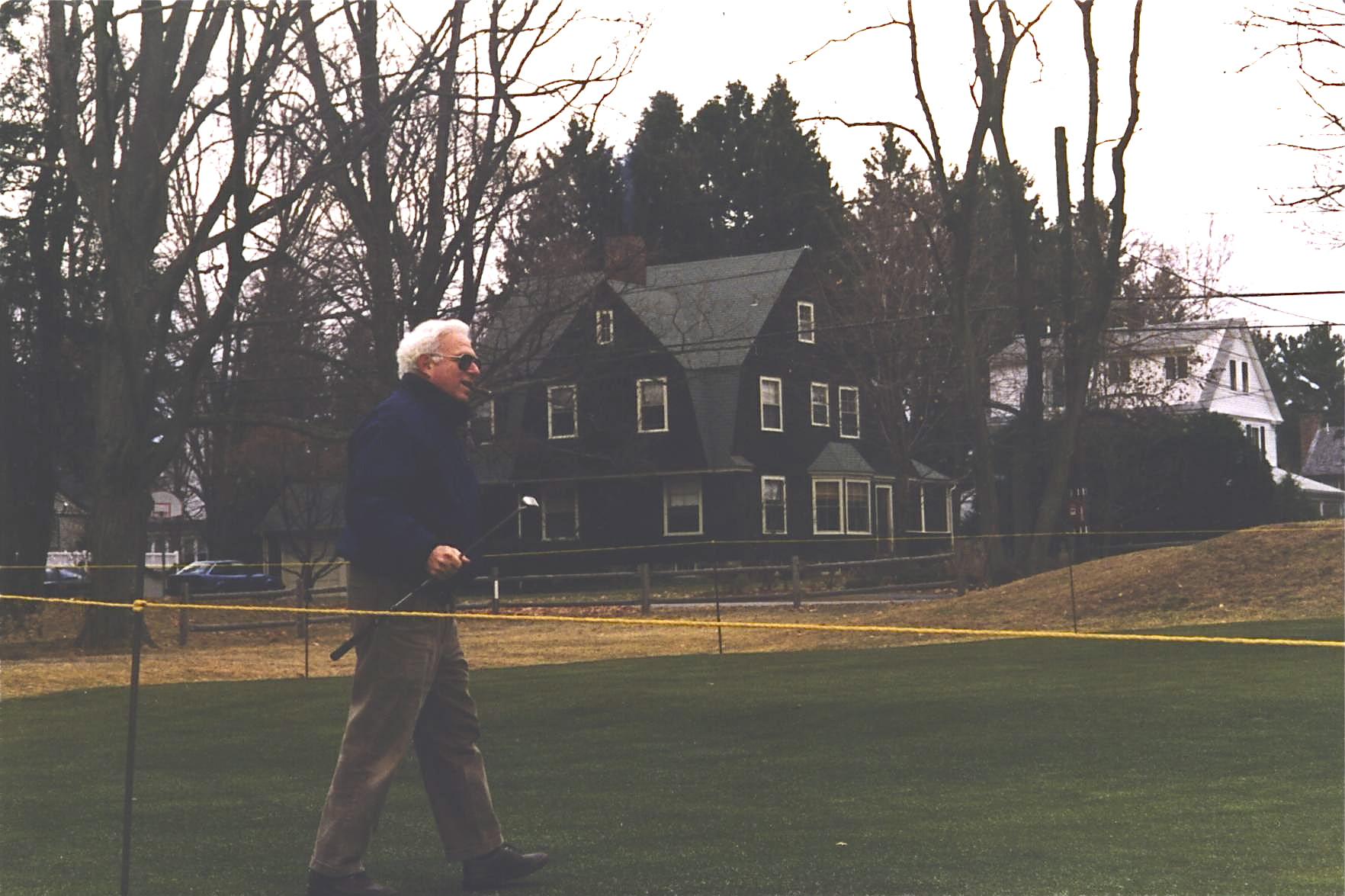
My dad on the 8th green at Nehoiden, right across the street from the house where grew up. It's late November; the greens have been staked for fencing at the first snow. We sprinkled his ashes here, and there's a memorial bench for him just right of this frame, on the 9th tee. There is no headstone in any cemetery for him. This is his spot, for all eternity.
My dad with his dad, the original Harold Gardner Phillips.
NEW GLOUCESTER, Maine (11 August 2014) — I try to write each August about my dad, Harold Gardner Phillips, Jr., as he passed away (all too soon) at the end of this month back in 2011. This exercise is equal parts homage and memory aid, as I suppose one fears these recollections we share as Fathers & Sons, now perfectly strong, will somehow fade with time. This year the jog happened naturally, as today I stand poised at the fulcrum of a generational see-saw: My son Silas goes off to college tomorrow. In turn, the memories rush back re. the day my dad saw me off, out of the nest and into the world.
As is the case with so many stories I’ve shared about my dad, golf plays an intersectional role. This one’s even more fitting because it centers on Ponkapoag Golf Course in Canton, Mass., a municipal track we played dozens of times growing up.
One used to be able to see Ponky from Route 128, the thronging, inner ring road that circles Greater Boston, though methinks ever-maturing trees now obscure that view. Today there are only 27 holes at “Ponky,” but once there were 36 and the course visible from the highway was nothing special. It has been reduce to 9.
The other 18, however, was a Donald Ross design from the 1930s that, despite the rigors of time, high traffic and miniscule maintenance budgeting remained damned sublime.
Fathers & Sons, Drop-offs & Tournaments
My dad and I played Ponky together on a several occasions, but this was mainly a place where he, my mom and other parental figures dropped my friends and me for entire days of golfing adventure. It also served as perennial host to a pair of junior tournaments: The CYO Championship (that’s “Catholic Youth Organization” for those who may not have grown up in Boston, where the Church held such wide-ranging cultural sway) and the New England Junior Championship.
That day I left for college, a cloudy late August morning in 1982, I was scheduled to play a quarterfinal match at the New England Juniors, as I had qualified earlier that week for what stood to be a potentially anti-climactic match-play portion. I had packed our ’78 Dodge Omni that morning with all my stuff. Win or lose, I would decamp for Wesleyan University in Middletown, Conn., some 100 miles to the southwest, directly from the golf course.
As it happened, I won the match, bettering a kid from Rhode Island named Fred, 3 & 1. I signed my card, informed a quite delighted Fred that I would be withdrawing, told the officials, and walked off to the parking lot. There to my surprise I found my dad, who had just rolled up.
As a kid, my competitive golfing career would never prove particularly extensive. Indeed, this tournament and the CYO the year before were the only two official events I had ever played to that point. Golf was a fall sport at my high school, as was soccer, which took clear precedence. In other words, while my dad had played hundreds of rounds of golf with me through the years, and we maintained a spirited, running match for decades, he had never seen me play a proper tournament match against anyone else.
Pleasant Valley Cameo
One time, in college, he showed up at Pleasant Valley Country Club near Worcester to see me play a collegiate tri-match featuring Wesleyan, Springfield College (I think) and Assumption. I know the latter to be true, for certain, because I ended up facing a guy from Assumption that day named Frank Vana, who would go on to win multiple Massachusetts Amateur crowns. My dad worked near PVCC and he showed up on the 9th or 10th hole, at which point my game imploded. He scurried off after we finished 13, not wanting to karmically cause/witness any further carnage.
For many years, I was never sure what exactly my dad meant to “do” that day in the parking lot at Ponky. We had said our goodbyes that morning, and it wasn’t as though I was going off to war. But today, I can see he probably wanted one last moment with his boy, who would soon leave and return in some way, shape or form, more a man.
I’ve been trying to remember what exactly my dad and I talked about during that moment in the parking lot. I surely went over the match with him, and the curious aspect of my winning but withdrawing. If we got into anything particularly deep, I don’t recall it. Clearly I remember being touched that he had shown up, but there were no tears. I’m pretty sure we shook hands.
See here a relevant excerpt from the eulogy I delivered for him in 2011:
Showing, not Telling
My dad was not a particularly emotive man, not for most of the 40 odd years I had a clear picture of him. Ine time I arrived home from college determined, in the sure and committed way of college students, to simply start hugging him and telling him that I loved him. I had seen other dads do this and been impressed — that a father and son could be so open and physical in their affection for one another. I wanted that for my dad and me, to be honest. So I started out with hugs and, well… the man never really got comfortable with it. It just wasn’t his way. I remember telling him during this same period that I loved him. To some extend, I explained, one is obliged to let people know this is so. We need to verbalize it, to say it plain. He said that wasn’t his way either, that he instead showed people he loved them. I remember thinking, at the time, that this was something of a cop-out.
But the man knew himself. As I grew older, I better recognized the ways he expressed intimacy and let you know how he felt. There are no rules or universalities for these things, I’ve learned, as I myself have grown as old and, in some ways, as wise as he. The more I observed this, over time, I can report that my dad did practice this sort of behavior consistently, with all sorts of people.
The Side-by-Side Experience
I think one of the keys to understanding and appreciating my dad is this: If he enjoyed something, his greatest joy was to share that enjoyment with you. If there was a piece of music that he found thrilling — and the man enjoyed a notably wide musical taste — he wanted you to listen to it and, ideally, derive the same thrill, too. Had he seen something compelling on PBS or C-span, he wanted you to see it, too. If there was food item he had acquired or my mom had made, he wanted you to consume it. Right then. His enthusiasm for this sharing was really quite intimate, almost childlike in its enthusiasm. I might walk into my parents’ home, having not seen him for weeks, and his most deeply held desire was to have you sit down and watch an interview with the historian Gordon Wood, right then, so soon as you put your bag down.
And there was another aspect to this: He wanted you to listen or watch or taste or, to the extent possible, read this stuff WITH you. He wanted to sit right next to you while we watched the Gordon Wood interview, together — so he could pause the recording and discuss it. My dad wanted you to put the earphones on while he would stand right there beside you, grinning giddily, as you listened to some choral piece by Arvo Part. The man would call just to see how far I’d read in a book he had recommended…
I loved my dad but I, like many sons, have fashioned a great deal of my life in response to his. When Silas heads off tomorrow morning, there will be hugs. There will be tears. That said, I expect that whatever I’m feeling at that moment, resembles what my dad felt that day, some 32 years ago, in the parking lot at Ponkapoag.
Silas is flying to Montana tomorrow morning, with his mom. I suppose that if I could practically meet them in Chicago for one last goodbye, I’d do it.
BRUNSWICK, Maine (3 August 2014) — Bald Hill played the Peace Fair here on Brunswick Green Saturday. Our mando player, Ben, arranged the gig. His mother is a German war bride and longtime social justice activist. She administers this event, which annually draws a healthy cross-section of southern Maine’s aged hippie population. In other words, not the place the where one might expect to solve a jazz mystery involving Horace Silver.
This year, to entertain these unreconstructed lefties, we performed a Pete Seeger tribute/sing-along. The crowd was big (for a Maine peace fair, in August) and the weather held off. But the noteworthy development arrived before I had played a note.
Ben’s brother Matt, a gifted pianist, was visiting and sat in. He brought with him a fellow Nutmegger native on sax. They started our set (we followed a five-piece that featured two steel drums) with a four-piece tribute to the recently departed Horace Silver, a jazz name I sorta knew but not really. Altogether appropriately, the song they chose was Silver’s most famous composition, “Peace,” and it quickly transported me.
Horace Silver, in the Evening
During the early 1990s, I worked as the news editor at a couple of daily newspapers in Massachusetts. That life was somewhat nocturnal: I’d arrive at 5 p.m., put the paper on the press at 2 a.m., and go home — unless the newsroom crowd had gathered for very late-night revelry. We were somewhat obliged to socialize together because who else was awake?
Yet even a ridiculous schedule like this one can engender routine. I’d arrive in the newsroom and flip on NPR via WGBH in Boston. The first two hours of the work “day” were a mix of gay banter, serious story planning, photo assessment (from what had been shot that day) and assignment (to be shot that night). As news editor, from this activity, I would formulate and layout the front page/section of two dailies. All this took place with All Things Considered airing in the background, as soundtrack.
At 7 p.m., the banter lessened and things got more down to business. Reporters headed off to meetings or returned from accidents/crime scenes/sporting events to begin filing stories. I would read and edit that content before sending the final layout to the paste-up/press operation a few towns over.
But nothing seriously got done, not at my desk anyway, until 7:04. WGBH aired a jazz program starting each night at 19:00 called “Eric in the Evening”. The show theme was this beautiful piece of jazz that dripped from the transistor radio each night, all on its own, starting at exactly 7 p.m. The routine of its play provided the perfect respite, a quigte zen-influenced moment of regathering before the radio got turned off and we all settleed into the mania of another evening on deadline.
Dripping from the Transistor
I wasn’t always a huge jazz guy. I enjoy a pretty massive cross-section of the genre, though I can see how the influence of Charlie Brown and Vince Guaraldi shaped this particular aspect of my musical taste. Dave Brubeck. Bill Evans. That’s the stuff I’m drawn to apparently: white guys from the late ‘50s and early 60s. Very uncool, I’m afraid. Just the way it is.
I left the Marlboro Enterprise and Hudson Daily Sun in 1992. I never did get the name of that theme music to “Eric in the Evening”. Every couple years it would jump into my brain — not because I’d heard it, but because I’d remember just how resonant and important it was to me, at one time, in my working life. I googled “Eric in the Evening theme” one time, with no luck. For a long time, apparently, Eric Jackson still hosted a jazz show on WGBH radio, but at some point he’d eschewed the regular-theme music thing, opting instead for excerpted bits from that night’s guest or spotlight artist.
Well, I can report without question that “Peace”, was t Eric’s old show theme. I knew it from the moment I heard the opening two measures at the 2014 Peace Fair. Only took me 23 years… And now Eric Jackson has passed away, at 72.
Here is Silver’s original version, from 1959. Here is the Tommy Flanagan version that specifically served as the “Eric in the Evening” theme. Peace out, Mr. Jackson.
This comment was published in 2014 during the World Cup in Brazil. Still waiting for this proposal to take the futbol world by storm..
This comment was published in 2014 during the World Cup in Brazil. It’s been updated in spots to better reflect today’s footballing realities.
RIO DE JANEIRO (July 7, 2014) — FIFA should conduct an under-20 World Cup where, as a trial, penalties are taken not from the so-called “spot” but rather from where in the box the foul occurred. Judging from the World Cup now ongoing — from tournament and league play all over the world, for decades now — methinks this first-step in penalty kick reform would eventually improve the standard and style of play close to goal. What’s more, the resulting kicks themselves would produce decidedly intriguing and skill-based free kicks compared to desultory PKs.
In the interest of such progress, allow me to advance this proposal as a thought experiment: Suppose spot kicks in the penalty area were taken from the spot of infraction…
In response, the first thing to say: Just think of the magnificent, mano-a-mano strikes and saves these new-fangled free kicks would immediately produce, without a wall in the way.
As remains the case, all but the shooter and keeper would vacate the box. Yet the resulting action would prove far better entertainment, according to skills we associate with open play. Such scenarios also better align with every other spot kick awarded in the course of 90 minutes. In this way, such a rule adjustment would not represent radical change. How could it? Fouls in the box would be treated like fouls called anywhere else on the field.
Shoulda foul be whistled inside the 6-yard box, it’s logical and practical to place the ball on the traditional spot, 12 yards from goal. Everywhere else in the box, fouls will result in a panoply of fascinating, entertaining, strategic responses.
Penalty Kick Reform: But why?
We undertake these conceptualizations because, as it stands now, the impacts of PKs are sadly outsized and reflective of so little we associate with the logic and joys of open play. Matches routinely hinge on the award of penalties, which are converted at a rate of 75-80 precent. They have always unduly impacted match results — and player behaviors. More to the point, as we’ve seen in this and every World Cup, attacking players have increasingly adopted a perverse preference for going down in the box, trying to draw the ultimate foul — rather than trying to stay on their feet to consummate a legitimate scoring chance.
Again, this trend is so mature as to be unremarkable. Naturally, the 2014 FIFA World Cup in Brazil now ongoing has witnessed its fair share of such episodes: Fred’s questionable tumble during the tournament opener, which drew a deciding penalty kick for the host nation. More notably: Rafa Marquez’ borderline, last-minute foul on Holland’s Arjen Robben, which resulted in a game-winning penalty kick and sent Mexico packing after the Round of 16, again. The Marquez Affair inspired all sorts of back (there was contact; he stepped on Robben’s foot) and forth (the Dutchman clearly “embellished” in contravention of the rules).
However, this much is clear and straightforward: Robben was far more interested in drawing that foul than prosecuting his attempt on goal, despite being so close to goal — despite the presence of a teammates in the box who, upon receiving a pass, might well have scored. That’s a footballing perversity, and this rule change would help address it.
For the record, Marquez did not surgically remove Robben’s spleen, the Dutchman facial contortions, shouts of agony, and collapse to the turf notwithstanding. Reactions like these are another affront to the game. Mitigating the potential reward of penalties in the box would address these con jobs, too.
New Strategies & Demonstrations of Skill
PKs are awarded because an attacking player has presumably been denied a clear goal-scoring opportunity, i.e. the chance to shoot on goal. But how dangerous a position did Robben, for example, actually occupy when Marquez took him down? The foul occurred on the goal line extended, the end line. This rule change suggested here would award Robben his free kick, place the ball at the spot of the foul — close to goal but at a poor angle — and clear the box of everyone but the keeper.
It says here that placing the ball on the spot is no way reflects the opportunity denied to Robben. Placing the ball at the spot of infraction better reflects the opportunity denied. Removing all outfield defenders is the bonus for having been taken down close to goal.
What’s more, Robben’s end-line penalty remains a potent goal-scoring chance. The angle might be poor but the keeper must remain on the line, as per usual; he may not cut down the angle. Clearing the box still gives defenders a strong disincentive to foul in the area. However, that opportunity for conversion, for scoring, would be more in keeping with the actual scoring chance — the one snuffed out by the foul.
The Marquez example is particularly instructive. Imagine the strategy for PKs awarded there on the end line, under this proposed system. Robben can’t reasonably score from the touch line, from such an acute angle — though he might try. Roofing such an attempt, or battering one off the keeper himself might net results. Otherwise, he would be obliged to seek out Dutchmen scattered about the edge of the box, creating chances for these onrushing teammates — much like a penalty corner in field hockey. I realize this movement has been set back some 15 years with that unlikely comparison, but it’s apt.
Most important, these free kicks would be strategic but still flowing, soccer-centric scenarios — unlike penalty kicks which, in fact, are the most static, contrived thing in the game. Typical PK situations — guys standing alone on the spot with no one around him, just shooter and the goalie — almost never happen in the run of play.
The Robben/Marquez example is somewhat extreme. Far more fouls happen at angles where the shooter would have a legitimate go, from reasonable angles, where skillful keepers would nevertheless have the chance to save. Just as they would have, had the attack not been fouled at that same spot.
Far more frequently, “new-generation” penalties would underline actual footballing skills, bravado and drama. With no wall to take away the short-side post, goalies would be sorely tested from many spots and angles, all over the box. These penalties would result in acrobatic saves. There would be brilliant, net-bulging strikes. Yet all of these chances (and half-chances) would be more in keeping and proportion with the scoring chance the foul prevented.
As indicated above, traditional PKs would be awarded only for fouls that take place in the six-yard box. That makes sense, too: Trying to keep a goalie on the line, when the ball is placed 3 yards in front of him, would prove impractical. Further, a hand ball or foul that denies possession or a shot so close to goal should rightly result in a goal 80 percent of the time. Indeed, we may, through this rule change, have finally figured out why that mini-box exists! Purportedly, goal kicks can be taken anywhere inside of that box. But surely this is a waste of space and paint. There must be a more practical, intrinsic purpose, and this might well be it.
Effects on Overall Play
Most interesting and perhaps most important would be the new ruling’s effect on overall play in the box. Right now, each offensive/defensive encounter in the box is all or nothing: Any sort of foul is a PK, almost surely a goal. Defenders are determined to avoid that foul and strikers routinely cheat/simulate in order to draw it.
Under the new system, each offensive/defensive encounter would take on but a gradation of such risk. Defenders would be more aggressive on the goal line and out on the bad-angle peripheries of the penalty area, one imagines. What’s more, referees will certainly call more fouls at the corners of the box more frequently — because the stakes out there would prove lower, and far more entertaining. Traditional PKs are boring faits d’accomplit. I, for one, would like to see more mano-a-mano encounters between keepers and strikers who can really strike a 16-yard bullet — from an assortment of angles against keepers rooted to the goal line.
By the same token, it follows that less aggression would be manifest in the center or the box, in front of goal, where committing a foul would still result a traditional point-blank penalty, or a great angle from 16-18 yards. Imagine the typical corner kick fracas, typically where exactly that contact takes place: between six and 12 yards from goal. Penalties award there would prove even more automatic than traditional PKs.
My argument is this: If this gradation of risk were realized, other aspects of the game would be positively affected. Currently, the amount of clutching and grabbing that takes place on any corner kick is absurd. At least one penalty kick could be called on most every corner, if the referee so chose. However, if referees feel more at liberty to call clutching and grabbing at sharp, shallow angles to goal — because said referee would not be handing one team an 80 percent chance at goal — clutching and grabbing generally, anywhere in front of goal, might subside.
Of course, referees muste be brave enough to call such point-blank penalties. Only then would the deterrent, the appreciation of risk be activated in the minds of defenders.
The Scourge of Embellishment
The other component of today’s penalty equation is the widespread incentive toward diving, or, as FIFA calls it, “embellishment”. We already have the means to snuff this out: Referees calling fouls on attacking players, the divers, and awarding them yellow cards.
For whatever reason, refs have been loath to turn this screw. There is understandable squeamishness on his/her part: getting that call wrong might decide a game unfairly. But games are being unfairly decided right now, and FIFA, in a surprising bit of wisdom, was clever to call it “embellishment,” because, in a way, the foul is irrelevant. The overriding infraction is the attempt to unduly influence and/or fool the referee into calling a penalty kick — and perhaps getting your opponent thrown out of the game.
Trying to deceive the referee is clearly unsportsmanlike conduct. If one has embellished, it doesn’t matter whether he or she was fouled. Name go in book. No penalty. VAR makes this judgment far more practical, it must be said.
The other issue with this proposal is its provenance. I’m a American, and while some portion of the soccer world may be gratified to see us finally taking to world’s game, many international observers do worry the U.S. will eventually use its outsized cultural sway to exert undo, ill-considered influence on it. In another perverse reality, U.S. fans and observers have, through the years, shown a great eagerness to “improve” futbol through assorted rule chnges. I think we’ve all been in bars with some soccer-watching American yahoo who confidently proclaims, “Here’s how they could make this sport a lot better…”
While I have spent the last 30 years patiently defending/explaining soccer’s status quo to small-minded folks like these, I have also been witness some quite radical, quite literal game-changers that had nothing to do with mouthy Yanks. “Even” used to be offside; today even is onside. Goalkeepers used to be able to handle any back pass from a teammate; now they cannot (unless it’s headed); extra time was never sudden death, then it was; now it isn’t anymore. At the Brazilian World Cup in 2014, we said hello to goal-line technology. Today, love it or hate it, VAR has radically changed the way games are officiated, everywhere on the pitch.
Change, we can agree, can be good. This idea of mine has merit. Should it eventually be adopted and fly? Well, understand that I don’t require a statue. But you’re welcome.
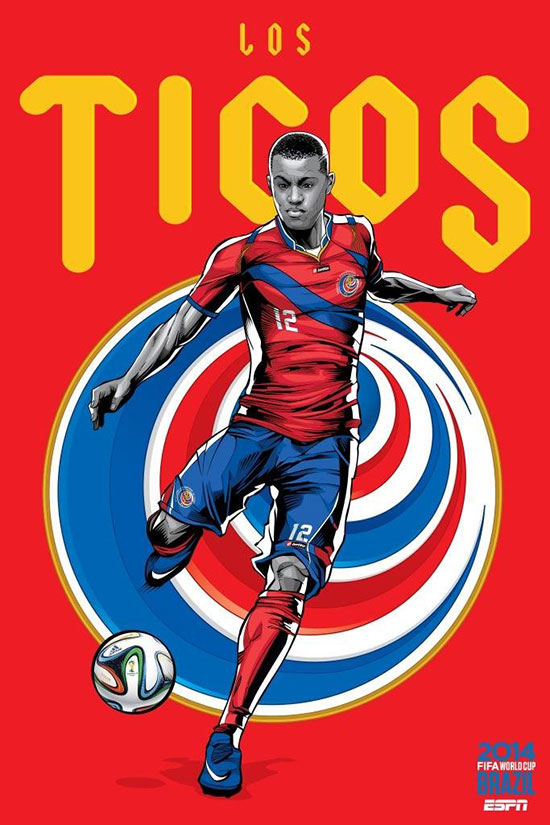
RIO DE JANEIRO (June 28, 2014) — I was just listening to the excellent Guardian Football Podcast, posted daily during this World Cup, and someone described Costa Rica’s performance against Italy — a 1-0 group-stage victory for Los Ticos — as having proved particularly brave.
These podders are UK -based, mainly, and describing a soccer performance as brave is a particular British way of phrasing it. But as with many things English — the game, our language, Rosamund Pike’s jeans — it fits remarkably well.
What does brave really mean? There are so many contexts that inform, but futbol outfits like Costa Rican — lightly regarded based on WC Qualifyingperformance, history of producing players and teams of quality, their domestic league, number of players playing abroad in good leagues — would typically approach with trepidation a match with four-times world champions Italy.
What does that mean? It means the opposite of bravery: defend like the dickens, in great numbers — say, 9 “behind the ball,” always between that ball and their own goal. The hope? To lure enough Italians away from their defensive positions into goal-scoring positions, whereby the Costa Ricans can win possession and quickly counter-attack against relatively few defenders.
Brave Futbol vs. Practical Futbol
That’s a legit strategy, a common one for soccer teams playing a “superior” opponent. It’s a time-tested option — the strategy Jurgen Klinsmann looks to deploy with this American team, for example. Those tactics aren’t brave. They’re practical. Choosing praticality over bravery, or vice versa, is part of what makes international football so interesting to watch, because it can work to great effect: An inferior-but-disciplined team can beat a superior undisciplined one.
Costa Rica took no account of the fact that the Italians — and the Uruguayans, and the English — are considered superior in all the ways listed above. They simply went at them, all over the field, contesting every inch of it, and ultimately scored way more goals than their opponents.
They were brave and they were richly rewarded.
Chile were brave yesterday vs. Brazil, a team that has now knocked them out of the last three World Cups. The strategic thing to do against the five-times world champions (who just happen to be playing at home, where they’ve not lost a competitive match since 1975) would be the practical, counter-attacking route. But Chile played their fellow South Americans toe-to-toe.
A Brave World Cup
In general, this has been a particularly brave World Cup. The evidence is simple and straightforward: There have been lots of goals — the most in a group stage since 1958 — and a remarkable predominance of open play.
In part, it’s the Brazilian ethos that has made the World Cup field so brave. That’s my opinion, but how can you got to Brazil — the soccer nation that invented “flair”, that pissed away additional World Cups because they insisted on playing open, brave football — and not play open, attacking, “Samba” soccer? Forget the fact that this particular Brazil team is among the most “practical” the country has sent to a World Cup; it was chosen to grind out results rather than simply outscore its opponents. Indeed, apart from Neymar, they appear to have a real striker problem; Fred and Jo have been next to useless.
But the Samba Ethos was formed decades before and will outlive this current Brazil squad. More than in any World Cup I can remember, teams came to this World Cup to win and look good doing it. Italy refused and couldn’t get out of the group. England flirted with the idea, gave it up and went home.
There are dangers to playing bravely, of course. Portugal is going home because it continued to go forward after falling behind Germany — then going down to 10 men. If they had hunkered down and kept that game 2-0, the Portuguese might ultimately have gone through. Instead, disinclined to damage control, they absorbed a costly 4-0 defeat. That goal difference sent the US to the round of 16 in their place.
Quarterfinals don’t invite Adventurism
Which is why today’s Sunday’s slate of knockout games is going to be so interesting. The Mexicans play like Chile, i.e. almost incapable of throttling back their pressure game all over the field. Surely the Mexican coaching brain trust, and the players themselves, understand the Netherlands can utterly shred that sort of adventurism. Witness their plucking of Chile, 2-0, in the group stage. Later, the Dutch embarrassed reigning World Cup champion Spain, 5-1.
And then we have brave Costa Rica taking on the most practical, disciplined side left in the tournament, Greece, who never play bravely but have a knack for eking out results against better teams. Indeed, they won a European Championship doing this, in 2004. This was perhaps the most remarkable underdog performance in the history of major tournament football. Just 10 years removed from that experience, the Greeks are loath to switch strategies.
Will Costa Rica just fly at them and let the chips fall where they may? Here is a side brimming with confidence — but here is a side that is poised to produce the greatest sporting result, perhaps the greatest geo-political result — a spot in the World Cup quarterfinals! — in its national history. Perhaps they temper the bravery and try to beat their opponents another way, lest they risk conceding an early goal and playing into the Greeks’ hands.
The choice is the Costa Ricans’ to make. This afternoon we will test the conventional wisdom, that fortune favors the brave.
Ed. For those who may not remember, Los Ticos defeated Greece 5–3 on penalties after a 1–1 draw, before falling to the Netherlands on penalties in the quarterfinals.
RIO DE JANEIRO (July 25 2014) — What the preternaturally peckish Luis Suarez did to Italy’s Giorgio Chiellini on Tuesday was certainly a red-card offense. And yeah, it was weird — even more disturbing when you consider the man’s track record. The Uruguayan has now chomped on three guys in his illustrious and notorious career. There have also been charges of racist taunts, for the record.
But this most recent biting episode went unnoticed by the referee, Marco Rodriguez of Mexico, and banning Suarez post facto is not the answer.
The ref missed Mamadou Sakho’s no less deliberate but ultimately more painful offense the next day. In the first 20 minutes of France’s mind-numbing but practical nil-nil draw, Les Bleus central defender Sakho delivered an elbow to the face of Oswaldo Minda during a corner-kick skirmish in front of the Ecuadorian goal. It was deliberate and on target. It went unnoticed by the referee and so, the game went on. No one is calling for a ban today.
This not to excuse an of these acts, but shit happen. When referees observe such infractions, off the players should go. The red card issued Wednesday to Antonio Valencia, Ecuador captain, was not exactly swift. The referee took almost 2 minutes to brandish it. But ultimately the punishment was sure, because it was seen.
There’s a great Monty Python sketch that begins with a pan of some uninhabited, heathland meadow. The viewer is informed that, in fact, there are 40-odd people in this shot, including Mr. E.R. Bradshaw of Napier Court, Black Lion Road, London SE 14. The film’s narrator invites Mr. Bradshaw to show himself, which he does. At which point, he is shot dead.
“This demonstrates the value of not being seen,” the narrator points out.
Suarez Track Record Complicates the Matter
Here’s the thing: You can’t ban a guy for being a nut case. This last bite was no worse, in a soccer sense, than Sakho’s elbow to Minda’s kisser (which wasn’t seen, nor called by the ref) or Daniele De Rossi’s elbow to Brian McBride’s face at World Cup 2006, which was observed. The Italian was sent off.
Slapping Suarez with an after-the-fact ban —covering subsequent World Cup matches presumably — seems arbitrary, though FIFA seems determined to do something; on Wednesday it “charged” Suarez with biting.
The fact that Suarez has bitten guys twice before, and was allowed to play in this competition —and all competitions for club and country in the buildup to Brazil 2014 — argues further against a ban. Biting an opponent is bizarre, but no more a rules infraction than elbows to the face or, in Valencia’s case, studs-up tackles over the ball.
One final word and let’s reserve it for Italy’s own King of Capers, Chiellini. Thick was the irony that he played the foil here. The Italians are futbol’s champion practitioners of win-at-all-costs gamesmanship — a mantle they share with Argentina, which, of course, was settled largely by Italian emigres. Chiellini pushes the limits of this dark genius further than any of the current Azzurri. I wish FIFA kept records for the number of times players are whacked in the chest, inadvertently or otherwise, and fall to the ground clutching their faces. Chiellini would lead the category.
So yeah: Suarez bit another guy. The ref didn’t see it. It was Chiellini, which seems fitting. Next game, please.
The column below was written/posted at hp.net in June 2014, after tying Portugal but prior to facing Germany in the final group game. The piece is prescient in quite extraordinary ways, especiallyl in laying the groundwork for my 2022 history of American soccer, "Generation Zero." See editor's notes in bold.
The column below was written/posted at hp.net in June 2014, after tying Portugal but prior to facing Germany in the final group game. The piece is prescient in quite extraordinary ways; see editor’s notes in bold. More broadly, the top sections laid the groundwork for my 2022 history of American soccer, “Generation Zero.”
RIO DE JANEIRO (June 24, 2014) — Even as another brilliant World Cup serves up so many tasty morsels of soccer drama — some of them inspired by our own boys. the ones in golf shirts — let’s NOT get carried away. American soccer has never been healthier, but the penultimate group game vs. Portugal should serve as fair warning. It looked done and dusted, a place in the Round of 16 secured — only for the opponent to equalize with the last kick of the game. It’s a pretty good metaphor: The game owes no country a damned thing, no matter how far we may have come.
We should, of course, support this US squad with complete abandon, regardless of our purported soccer sophistication. Because it is ours… Neither is it very good, and yet the squad is producing remarkable, dramatic results.
Oft-maligned anager Jurgen Klinsmann has pushed every button correctly. Kyle freakin’ Beckerman is starting at defensive midfielder and looking not the slightest bit too slow for the international game. Jermaine Jones has summoned all his unpredictable energy, skill and menace to pull off a damned convincing impression of Edgar Davids. Clint Dempsey’s swashbuckling game has clearly not been dumbed-down by his move to MLS. Twenty-year-old Seattle Sounder teammate Andre Yedlin, a man few though Klinsi had the balls to actually play during this tournament, delivered excellent service to Deuce and others throughout the Portugal match.
All this is great for MLS and the U.S. Men’s National Team, whose World Cup games are drawing crowds to parks and plazas all over the nation. They are evidence no one could have dreamed of — even during the game’s “puppy love” moment here in the US, World Cup 1994. (The game’s “nighttime emissions” moment was Italia ’90. That provged a huge step forward but ultimately a slightly embarrassing event that, for the U.S., mercifully played out in relative privacy.) Ed. I love the “puppy love” coinage. Can’t believe I never used in it in GZ.
Tipping point achieved, but…
But again, let’s maintain a sense of proportion: World Cup 2014 has prompted a creditable response from U.S. Soccer Nation. The scene in RiRa, the bar where I watched the win over Ghana, would have done any country proud. There is a real feeling, supported by MLS, the women’s national team, and the never-lying demographics, that futbol has truly cleared a tipping point in the culture. Yet American Soccer Love will likely remain a mere quadrennial happening in this country, for decades to come. The sheer mass of our sports landscape provide so little room for another “major” sport. MLS just isn’t a compelling product, not yet.
Most important, the DNA of US soccer is such that the national team has always been the focal point of the sport’s popularity here. Once the NASL died, back in 1984, the men’s national team was all there was — it was the only American soccer focal point, full stop. Once we started qualifying for World Cups, it was the national team alone that fixed the public’s attention on the game’s qualities. In a way peculiar to international football, the U.S. national team plays an outsized role in domestic soccer consumption here.
Which is fine. One of the game’s most attractive qualities is exactly that international outlook, the pitting of one nation against another. As American sports fans, we really don’t have that opportunity anywhere else, with any other team sport. We don’t care about world championships in basketball. Indeed, American football and baseball — our national sporting obsession and pastime, respectively — are entirely domestic to the point of insularity. The World Series? A peculiar name when you think about it, and one that really bothers international sports fans.
Precisely because soccer is unabashedly internationalist in its outlook, supporting the national team is that rare opportunity to root for America vs. Some Other Country — in something other than the latest trumped up military action. It’s sort of surprising that a nation so stuck on itself, and so militaristic in most every other way, has taken so long to appreciate the allure of this joyously partisan activity. But there were are. Ed. Quite sure these internationalist themes debuted in this post. They’re all matured into prominent in “Generation Zero.“
Ahead of the Group-State Finales
And here we are, staring down the barrel of Germany in our final group game with all to play for: a spot in the last 16 and at least one more glorious June weekend of packed bars, communal viewing venues, flag-draping and face-painting. I’m just glad we all lived to see it. Not because it’s the fulfillment of some prophecy, but because it’s damned good fun. A few thoughts and observations on the first 10 days of World Cup 2014:
• There’s a 50-50 chance that Ghana could effectively put us out of a third straight tournament. Yeah, we stole that game off them in the opening match. If Germany beats the US on Thursday, and there’s every reason to think they will — they are one of the world’s top 3 sides, and they must get a result to qualify for the last 16 themselves — all Ghana needs to do is beat Portugal and the Black Stars are tied with the Americans on 4 points. Goal difference is the decider. After two games, we’re +1 and they’re -1. But we lose buy a goal, they win by a goal, and it’s a dead heat. Germany beats us by two and we’re toast. Ed. Portugal beat Ghana and the U.S. advanced to the Round of 16 vs. Belgium.
• The Black Stars of Ghana. Good team name. The US needs one. We don’t do this sort of thing in America, mainly because, as stated above, we don’t field international teams very often — in sports about which anyone gives a rat’s ass. The men’s national team has progressed to this level of interest, and so should have one bestowed. There are good names out there: Cameroon’s Indomitable Lions. There are bad names: Australia’s Socceroos (the Rugby Union team is the Wallabees; much better). Names do not reuire animal inspiration. Germany’s national team is known as the Mannschaft (simply “The Team”). Italy has its Azzurri (“The Blues”), Brazil its Selecao (“the Select”). What would embody the American psyche and inform a proper American soccer nickname? There was a guy in the Manaus crowd, against Portugal, dressed as Teddy Roosevelt, in full Rough Rider gear (if you have trouble placing that, think of the Colonel in the classic ‘60s cartoon “Go-Go Gophers”). Rough Riders deserves consideration, especially for this World Cup, where Theodore so famously visited after his presidency, big guns in tow. Ed. A theme that showed up in my second soccer book, “Sibling Rivalry.” (2026) I still like Rough Riders, and we still don’t have a nickname better than USMNT.
• The most encouraging thing about America’s inspired performance thus far (gutty vs. Ghana, truly sophisticated and creative vs. Portugal) has been the fact that all has been achieved without a decent showing from Michael Bradley. The conventional wisdom strongly held that he was the team’s indispensable man. We couldn’t play with the big boys if he didn’t show up. Well, he didn’t really show up, twice, and others stepped up in his place. I love Bradley’s game. He will come good vs. Germany, which gives one hope.
• This has been the World Cup of Nipples. Thanks to the new skin-tight fashion and sweltering heat.
• Still reeling from the Portugal game. Realized that the US played a truly great 90 minutes of soccer in that match. Portugal scored after a total brain fart from Geoff Cameron after 5 minutes; we dominated the next 90, and then Cameron watched the equalizing cross sail over his head. It must be said that but for those two moments, the Stoke Man (a Maryland Terrapin, my Terp brother-in-law reminded me today) played an excellent match. Sometimes 90 good minutes are not enough.
• Coaches will often sub guys during injury time to help run out the clock, to use up more time. But referees will often add 30 seconds to injury time for every sub that comes on during any game. They’ll do the same thing with goals: 2 goals = 2 minutes of injury time at a minimum. Klinsi sent on Omar Gonzalez, our tallest defender, during injury time. Not only did he not make a difference (indeed, he has come on late three times in the last 2 weeks and the opponent has scored in all three games), that extra 30 seconds of injury time may have extended the game just long enough for the equalizer.
• I can’t help myself, but it’s exhilarating to watch the Mexicans win World Cup matches. They are so into it — the team, the coaches, the fans. It bothers me that they almost certainly do not reciprocate in this regard. Even after our completely unnecessary late-game goals vs. Panama in the final Hexagonal qualifier, Mexico wishes us ill. That result got them into the final pre-World Cup playoff and saved their entire country from mass sporting psychosis. They were all full of love and kisses that night. But methinks they’d love to see us crash out on Thursday. Doesn’t seem right. Ed. Little did I realize in 2014 that issues of identity, envy and scorn make it impossible for Mexicans to root for the U.S. in any soccer context. Or so I learned in researching SR.
• Me? I’m a CONCACAF guy, because I have to be. I live here and support a team in the federation. Accordingly, it warms the cockles of my heart to see Mexico do well, and Costa Rica has been a revelation — already qualified after two games and fending off FIFA drug testers, because no one can believe this superlative run of form. If the US can qualify, that’d be three North/Central American teams in the final 16. Maybe those guys at The Guardian will stop make fun of us now (!). I have mused with my soccer podcast buddies Tom Wadlington and Dave Batista about how difficult playing in Central America truly is — compared to European qualifying. Just how would a team like England fare at an away qualifier in San Jose, or Tegucigalpa, or Mexico City? The final game in Group D might have provided some insight into this, on a neutral field, had the Ticos (pretty good name) not already qualified for the knockout stage, and had England not soiled itself so very quickly and publicly.
• I would have pegged Andre Yedlin, pre-tournament, as pretty much the 22nd guy on the 23-man World Cup roster. No one expected him to set foot on the field, unless we were getting blown out or playing some meaningless, third group game after being eliminated. Yet Klinsmann threw him on vs. Portugal, with the game and tournament in the balance, and he delivered. Still, I will eat my hat if he exposes young Julian Green to the rigors of World Cup play. The 18-year-old German-American phenom is the property of Bayern Munich, but he has never played a minute for the senior club. He looked beyond skittish in the three pre-tournament warm-up matches. He’s simply not ready. So, why is he on the roster? No one is admitting that Klinsi cut a deal with Julian Green, i.e. “Julian, join the USA long term [he could have declared for Germany] and we’ll bring you to Brazil.” Canny long-term politics but you can’t waste a roster spot at the World Cup. Lo and behold, Jozy Altidore pops a hammy and now we’re short a back-up striker. Aron Johannson — another young phenom, Icelandic-American; vetted in the top Dutch league but basically unproven on the international level — was useless vs. Ghana. Chris Wondolowski is an MLS journeyman. Terrance Boyd was left at home, and so was a fellow named Donovan. Ed. Green was a non-factor at this World Cup, though he did get thrown on in the dyiing moments of the 2-1 overtime loss to Belgium. He managed to score an absolutely worldy, but otherwise looked lost. Wondolowski, for his part, missed a sitter in regulation that would have won the Yanks a spot in the quarterfinals.
• Landycakes and Klinsmann have never seen eye to eye on how American footballers should behave. Donovan took a sabbatical from the game two years ago; Klinsi was reared, played and coached in Germany, where footballers don’t do sabbaticals. I understand the Green negotiation, but there will come a time in this World Cup when the US could have used 30 minutes of Donovan at the end of a game — to hold the ball and more effectively counter-attack with a lead, to change the angle/mode of attack when behind. This is not some sentimental point. That’s why/how older strikers are deployed in tournaments like this: Didier Drogba for Ivory Coast, Kershikov for Russia, Cassano for Italy, etc. I hope this bit of personality conflict, and the way Klinsmann handled it, doesn’t come back to bite us in the ass. Ed. Klinsi pushed every button right but this one. Altidore’s injury and Green’s roster inclusion left the Yanks bereft of strike options. Donovan would have played and, it says here, made a difference. For a start, he would have potted Wondolowski’s sitter…
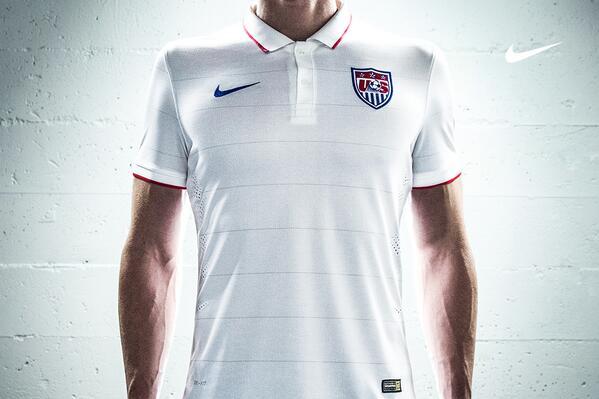
RIO DE JANEIRO (March 3, 2014) — As there is little media crossover between the golf and soccer worlds, allow me to relate one such news nugget — namely, the sartorial tempest now brewing over what the USMNT will be wearing when they take the field at June’s World Cup in Brazil.
See above. Apparently this is the new U.S. Men’s National Team home jersey for the upcoming tournament, soccer’s quadrennial world championship. Notice anything familiar about it? Yep, it looks remarkably like your one of youyr dad’s golf shirt. Is there anything wrong with that? I’m a dad. I have plenty of golf shirts. But early returns from soccernistas the world over have not been positive. See here some of the chatter the new shirt has generated online.
One could reasonably argue as to why anyone should care. But considering the blockbuster sales opportunities represented by futbol jerseys, here and abroad, it was an odd choice by U.S. Soccer and its official outfitter, Nike. There are undeniable similarities between traditional soccer jerseys and modern day golf shirts, namely the collar and button-style placket. But it’s odd that U.S. Soccer and Nike would appear to have missed the mark by two years — this looks like something Tiger Woods or Phil Mickelson would wear to Brazil in 2016, when golf makes it return as a bona fide Olympic event.
USMNT Jersey: Golf a Peculiar Touchstone
Maybe you’re like me, in that you’re a bit sensitive about golf’s less-than-stellar track record in the duds department. We’ve made some admirable progress in this regard, I think, as it wasn’t that long ago that outsiders considered golf a game for rich white guys in bad pants. It’s unfortunate enough that a) the good folks at Loud Mouth are trying to bring back utterly ridiculous trousers; and b) white belts have successfully wheedled their way back into the golf couture (somewhere, Greg Brady is laughing).
Now we have soccer fans ragging golf, indirectly, for the plain-vanilla, markedly uncool nature of golf shirts, which, thanks to clothiers like Nike, have actually come a long way.
The whole thing is a bit mystifying, and it’s hard to see how golf gains. Nike is known for pushing the envelope with its golf stylings. What could possibly have moved them to put forward something so lacking in flash? If this was an attempt at something retro, I, as a soccer fan, don’t see the reference point. I think it’s safe to say that if one can plausibly wear a soccer shirt for a round at dad’s club, and it doesn’t look out of place beneath a blue blazer, the youth market will not be impressed.