Pay College Golfers? Maybe on a Per-Antic Basis…
The majority of Wesleyan students during the 1980s were indifferent to sports and would've been hostile to the golf team, had they known it existed.

Pay College Golfers? Maybe on a Per-Antic Basis…

Most Wesleyan students during the 1980s were ambivalent toward organized sports and would’ve reserved an outright hostility for the golf team, had they known it existed.

The June 2021 Supreme Court decision allowing for the paying of collegiate athletes nevertheless provided little guidance as to how those athletes should be paid. What revenue might college golfers, for example, possibly generate and ultimately demand? Future touring professionals might reasonably command/accept endorsement money from Titleist or the like, but most collegiate golf programs themselves generate no revenue at all. They are essentially loss leaders at most colleges and universities. Back in 2017, Sports Illustrated reported that the University of Oregon annually budgets around $650,000 for its men’s golf team. This might still represent some time of standard for Division I college programs, but that sum is probably jolting to anyone who participated in small-college programs, which accommodate the vast majority collegiate golfers.

It’s positively mind-blowing to those of us who competed for Division III Wesleyan University during the 1980s. This was competitive golf, but it was the stuff of van-enabled matches, mismatched shirts, and the odd overnight invitational. We got paid a couple times: per diems of $5 for lunch at the Big Boy just off I-91 in Agawam, Mass.

Still, while I would never hold up my college golf experience as an argument for or against strict amateurism, neither would I trade the experience. WesGolf was an absolute blast. What stands out today, 35 years on, aren’t the personal victories (which were sadly few) but the ridiculous personalities the game attracts and the sometimes-absurd situations tournament golf continually drops in our laps. You can’t put a price tag on this stuff. At hippy Wes, where the vast majority of students essentially scorned athletics, golf kept a very low-profile. Indeed, our fellow WesKids would have surely been appalled had they known the varsity golf team existed.

•••

Two of my teammates and I recently harkened back to those days via an email roundtable. Rich “Danny” Gibbons and John Brais each shared three Wesleyan golf seasons with me. Despite what the rest of campus didn’t know or ignored, much hilarity ensued.

John Brais: So I’m in Professor Greene’s class, which is set up to produce your Senior paper, to complete your History major. We’re at his house for dinner, about 10 of us, and we’re sitting around the table, setting up the schedule to present our papers. Two separate dates: First day, five people present and the other five choose a paper to critique. The following week, same thing but reversed. Problem for me was the second week was the first day of New England Intercollegiates at New Seabury and I present this dilemma to the professor while going over the schedule, in front of everyone. I suggest that I present and critique on the same day, first week. Professor Greene’s response: “You do know, John, that I was on a committee to cancel the golf program outright as certain students have protested that to support golf, which is obviously an elitist sport, is against the moral and ethical principals that Wesleyan represents.” I replied, If these people knew the members of the golf team, I am sure they would reconsider this opinion. Professor Greene went on to say, “It is your decision to make, if others in the group agree… By the way, congratulations for the great year on the hockey team. My son and I are huge fans.” The other students were stunned.

Rich Gibbons: Talk about worlds colliding. Golf team and the People’s Republic of Wes ethos…

JB: I seem to remember we consumed several cases of beer and an assortment of doobies that trip to New Seabury.

Hal Phillips: I seem to remember that was the case any time we traveled with the golf team. There was one epic quarters game and general piss-up inside some condo where we stayed at New Seabury. Much silliness. That was the year Teddy Galo shot 75 or something on the easy course, when all the good teams were playing the gnarly Ocean Course. So he was, like, top 5 overall after Day I. He pointedly maintained a level of sobriety that night but went out and shot something in the high 90s next day. Classic.

JB: It was 102 actually.

HP: Epic. That may be the biggest spread in the history of New England Intercollegiates.

JB: Wes golf was an absolute forum for top-notch comedy. You remember that 1st hole at New Seabury, the Ocean Course, like 590 yards dead into the wind to a green about an acre in size? Dude from Middlebury (you know that guy… blonde, blue eyes, 6’4” basketball player with no personality) is on the back of the green putting downhill, downwind to the front, about 120 feet of putt. The three of us are near the pin as he crouches down to read the putt. Now picture his golf getup. He’s got tan Haggar slacks (the kind Jack Nicklaus made popular in the ‘70s) with not a millimeter of room to spare around his waist… He crouches down and we hear this amazingly long and loud tear. He has split his paints, front near the belt buckle to back near his belt. He looks like he’s wearing one of those huggy blankets, only this one is for his legs not his arms. He plays nine holes like this and actually turns out to be a great dude.

RG: I recall the guy shredding his pants. What a cruel game. What a wealth of material. New Seabury brings to mind another, but it may have been my senior year after you graduated… I’m rolling a few on the green in preparation for the tumult that is a New Seabury round in wind/rain/cold. Pat Dudley comes out of the clubhouse, walks onto the green looking vexed. Then he’s shaking his head and muttering to himself. “Pat, what’s wrong?” He says, There’s some poor guy in the bathroom just pissing out his ass with diarrhea. I don’t know how he’s going to go 18… College golf. Nothing better. Life lessons of endurance and fortitude abound.

HP: And empathy. Pat could have been that guy. Remember when we did an overnight for the NESCAC Championships, spring of my senior year, up at Middlebury? As captain, I had located for us a killer party on campus. On the way back to the hotel, Pat projectile vomited out the passenger-side window of the Wesleyan Athletics van, into the cold Vermont night. We got him home and, next morning, revived him in time to stumble onto the 1st tee, successfully drive the ball in play, and walk down the 1st fairway — into a gathering snow squall! This was, like, March or early April, in Vermont. Poor Pat. He turned back to those of us assembled on the tee behind him with profound resignation. He and his ghost-like pallor disappeared into that freak storm like an old time baseball player into a field of corn.

JB: Incident B — some horrible condo course outside Hartford…

HP: I think that place was called Farmington Woods. Tightest course in captivity.

JB: Yes. It’s Wes, Trinity and Coast Guard and the course is short and tight with condos on BOTH sides of almost every fairway. White stakes everywhere. The guy from Coast Guard is tall, thin and rigid in both swing and personality. I’m telling you, he had one way to play every hole: aim dead left off the tee and hope the first half of the trajectory cleared the trees. If this occurred the ball would slice back into play and land on the right side of the fairway. He was not a good player — but he was even par going into the 9th!! I swear it was a miracle round and he was actually loosening up and we were having a good time. Now, why am I telling you this: Well, we all know the golf gods are sometimes with us and sometimes against us, usually within reasonable degrees. The golf gods were not going to be reasonable for this poor sucker, not this day. The way they set this poor bastard up for the fall made me rethink my own faith. Like I said, he’s going into nine even par… the round of his life… and that 80-yard slice is working like a charm. So he gets to the 9th tee, aims dead left, straight at one of those condos — and hits the condo. No slice. Out of bounds, so he re-tees. No slice. Hits the roof. He re-tees, no slice — puts it in the backyard. He re-tees, no slice, hits the house again. Finally he takes out a 5 iron, finishes the hole and cards a 15. Poor bastard.

HP: What about the Isao Aoki incident?

RG: Lyman Meadows GC, circa 1985. My putting is a disaster at the time. Eager to try ANYTHING to shake me out of my rut, I adopt an unconventional address/stroke that seemed to be getting some traction on the practice green. Brais and I are playing an afternoon practice round with, I think, Teddy [Galo]. My Aoki set up with the hands-low, putter-heel-down has been working well for six or seven holes, allowing me to sink several over 20 feet. Finally, Brais can’t take it anymore. I roll in a 17-footer and you’re standing on the apron shaking your head, incredulous, yet also disgusted: “Look at him. He looks ridiculous… but he’s FUCKIN’ DRAININ’ THEM!!!” Delivered in your Chowderhead accent of course, which made it.

JB: Gotta shed light on the Little Three foursome.

HP: This is the year we did three-way match play against Williams and Amherst?

JB: Yeah. Me and Matty Shatz, alternate shot. We have no business being in this match but I swear every time I hit a putt, the ball drops in. The other guys are pissed, as we are one up with two to play (9-hole format) after I hit a seeing-eye 30-footer on 7. It was ridiculous. Matty steps up on the 8th tee, 160-yard par 3. He makes his swing but unfortunately that swing just did not hold up. His left side collapsed like an overcooked noodle and he shanked it dead right, 50 feet into the woods. The ball MAY have gotten two feet off the ground. I remember just trying to comprehend the simple physics of that shot. I think I came to the conclusion that only Matty and a jai alai player could produce that one.

So I get into the woods and find the ball. I’d say 110 yards through bushes, trees, you know, the works. I figure we got nothing to lose and just whack a half 5-iron. It clears everything: hits a mound, launches over a bunker and miraculously bends up 40 feet from the pin, on the apron. Marty stands over the putt and rolls it down the hill — and it lips out. He almost made the putt! I tap in which means we go to the last hole all square. Poor Matt is shaking like a leaf. He steps over the ball in the fairway and all five of us literally cover our eyes and, unfortunately, that swing just doesn’t hold up…

HP: Danny, perhaps now’s the time for you to share with us the “Brutalization of Matty Shatz” story.

RG: Circa 1986, Herb was coming down the passenger side of that huge white van. It was parked close to another vehicle, creating a tight alley. He was trying to get by Matty. In what was likely just Herb clowning around, but taken by Marty as an act of overt derision by the coach, Herb shoved him against the sheet metal of the van and walked past while muttering something. Marty was stammering and stupefied, repeating to anyone who would listen in high falsetto, “Did you see that???!?!! He just shoved me. HERB SHOVED ME INTO THE VAN!!” If you’d told me that day Marty was Woody Allen’s nephew, I would have bought it. Piss-your-pants funny.

HP: We haven’t talked much about Herb Kenny, our coach. He was the basketball coach at Wes, too, and a good one. Was an assistant on the 1972 Olympic team, or something like that. Golf was just a lark for him, another way to snag a stipend. I wouldn’t call him fun-loving. But he wasn’t a grouch either. Danny, tell the good people how Herb screened incoming freshmen to determine whether they had the right stuff to play golf for Wesleyan.

RG: “You got shoes? You got clubs? Alright then…”

JB: That’s pretty much all it took.

HP: I will say this about Herb — in my last match as a collegiate, he trotted me out at no. 1 against some dude from Williams, who was New England Champion, all divisions, and some other stud from Amherst. It was three-way match play and I had been playing no. 3 or 4 that year. He tried to pass it off as an honor to play no. 1, as it was my last match as a collegiate, my last match as captain, etc. I was like, “Fuck that, Herb. You’re sacrificing me.” He just smiled and sent me off. The miracle was, I halved the guy from Williams. When I reported in after the round, he seemed genuinely happy and impressed. “Let me buy you a beer,” and he did.

RG: I recall one spring afternoon, Herb engaging in some “coaching”… We were mustered on the practice green and he called us over, intoning:

“If you’re having trouble with your 7-iron, get out there on the range and practice your 7-iron.”

“If you’re having trouble with your 6-iron, get out there on the range and practice your 6-iron.”

“If you’re having trouble with your 5-iron, get out there on the range and practice your 5-iron.”

“If you’re having trouble with your 4-iron, get out there on the range and practice your 4-iron…”

I looked around desperately to lock eyes with someone. Anyone. I was stunned.

I was this close to asking, “Herb, are you going to go through the whole bag?!”

Spanish Avant-Garde Cinema Informs Travel Hell

Spanish Avant-Garde Cinema Informs Travel Hell

About 25 years ago, as part of an avant-garde film series at college, I saw this great Louis Brunuel movie called The Exterminating Angel. Well, it wasn’t exactly “great”, now that I think back on it, but it was surreal enough to have made a lasting impression. In it some 12 to 15 members of Franco’s upper crust gather in a stylish Castilian villa. The first 40 minutes or so depict these men and women seated around a well appointed table, exchanging witty repartée on various existential topics. The movie basically goes nowhere during these early stages and I remember thinking — sitting there in the same lecture hall where I endured Psych 101 — that here was yet another obtuse, hyper-intellectual, dialectical drama of the mind that explores, in excruciating detail (and in Spanish), Iberian class struggles circa 1962. Sorta like My Dinner with Andre meets The Discreet Charm of the Bourgeoisie.

Just about the time my roommates and I were getting restless, wondering what better things we might be doing with our youth, the guests do a funny thing: Instead of going home, they all crash in the music room. Next morning, a military fellow in the film calls attention to himself with great ceremony and indicates that, sadly, he must take his leave. But his friends won’t have it; they talk him out of it… Before long a couple stands and makes a gracious but unmistakable move to depart. When the group protests, they look at each other and decide to stay… More high-blown conversation ensues before another guy excuses himself, thanks his hosts, dons his coat and gets as far as the door jam. Those assembled seem prepared to let the man go, but for reasons he doesn’t seem to understand, he turns around and resignedly re-takes his place on the couch.

It becomes clear that no one, for reasons they’re unable to articulate or comprehend, can leave the room.

Eventually the situation becomes dire. Even the servants have fled the premises for reasons they themselves cannot explain. Yet the guests are trapped, by what they don’t know. Hours pass. The police show up outside and attempt to coax them out with bull-horned pleas and instructions. Nothing works. It’s become a veritable hostage situation and eventually the guests eat all the leftovers and dicker themselves into a state of desperate exhaustion. Days pass, farm animals materialize in house (!) and one by one the guests collapse from a lack of food and water.

I can’t remember how the movie ends but my family and I are traveling over the impending holiday. Here’s hoping that life doesn’t mimic art exactly.

Like Brunuel’s dinner guests, we’ve all of us found ourselves stuck inside the some airport’s secure gate area, the bewildered prisoners of grim circumstances beyond our comprehension. Over and over again we try to leave, but for a variety of reasons — some practical, some damned surreal, all of them out of our control — we cannot.

Hour upon hour of travel impotence inevitably leads to contemplation, some of it darned existential. Surely Brunuel must have been an experienced air traveler. I looked into it, and found this telling quote re. The Exterminating Angel: “Basically,” the filmmaker explained, “I simply see a group of people who couldn’t do what they want to… That kind of dilemma, the impossibility of satisfying a simple desire, often occurs in my movies. From the standpoint of reason, there is no reason for this film.”

Godspeed to all of us this holiday season, everyone.


McShane Deserves a Bust in Rogue’s Gallery

McShane Deserves a Bust in Rogue’s Gallery

For reasons I’ve never quite understood, I’ve maintained an odd recollection of and attachment to the 1969 film, If it’s Tuesday, This Must be Belgium. It was on TV when I was a kid but no more frequently than any other junkie films that populated the late-night film archives of local Boston affiliates. Why would I so fixate this film? For a while I assumed it was the presence of a youngish, sneaky hot Suzanne Pleshette, and maybe that’s it. But maybe, just maybe, it was the fact that her love interest was played by Ian McShane.

I keep running into this guy. I just plowed through three seasons of Deadwood, in which he hit it out of the park as iconic Gem Saloon owner Al Swearengen. Now I’m onto a British mini-series production of Ken Follett’s Pillars of the Fall, where McShane presides as the conniving Bishop Waleran. This son of Blackburn, Lancashire has been around forever but it wasn’t till the other day that I realized what a long screen relationship I’ve had with him.

His big screen credits frankly leave a bit to be desired. I wouldn’t call them four thousand holes in the resume, but several decades of nothing films have been followed, of late, by a series of grey-eminence roles (Coraline, The Golden Compass) and bit parts in animated features (Shrek the Third, Kung Fu Panda). He may be the only British actor who failed to land a sinecure via the Harry Potter franchise. Sexy Beast was a fine film, though his solid portrayal of Teddy Bass was overshadowed (along with everything else in this 2000 feature) by the sublime, astonishingly evil Ben Kingsley character (yeah, he’s got range but who knew Ben had that in him?). McShane’s Blackbeard in the latest installment of Pirates of the Caribbean, On Stranger Tides, was probably a nice payday but it ain’t gonna win him any Best Supporting Actor nominations.

On TV, however, McShane has turned in a hall-of-fame-caliber roster of work, on both sides of the pond. God praise Wikipedia for logging it all for posterity. This guy is a mini-series maestro — Roots, Disraeli, Pillars — and has starred and/or appeared in a laundry list of fine or otherwise noteworthy series: Space 1999, Magnum P.I., Miami Vice, Dallas, The West WingDeadwood’s well earned praise, and his centrality to the show, now overshadow what had been the jewels in his crown: eight years as the unabashedly mulletted, somewhat slimy antique dealer, Lovejoy, and a recurring role in the equally laudable (and British) series Minder.

I’m not trying to make any monumental cultural point here. Only that no one does rogues of ambiguous motivation like Ian McShane.

Who pioneered the blog? I did. No, really. I did.

Little known fact: I invented the blog. Managed to do it proto-style, in print, and achieve a level of virality before the Internet even existed. A pretty neat trick, if you think about it. Should’ve made me famous, or rich at the very least. Instead, all I got was this lousy WordPress account.

In 1992, I moved to Maine from my native Massachusetts and, as a way of keeping up with friends and family, I started publishing a newsletter dubbed The Harold Herald, a moderately clever handle enabled by my given name, Harold Gardner Phillips III. The motto, “All the news about Hal that Hal deems fit to print”, pretty much summed up the original mission. I wrote all the copy, accounting for the vagaries of my new existence, laid it out in Pagemaker, made a bunch of copies and mailed them out. My mother thought it was hilarious.

Technically it was what 90s media folks would term a fanzine, and there were a few of those around at the time, though, without the Internet, what did we really know about what was happening elsewhere in the world? However, no self-published newsletter that I was aware of, or have since been made aware of, fixated so pointedly on the personal — the way blogs and other social media do today, routinely.

Much of The HH was a parody of journalism in general.Newspapers had mastheads so I concocted and continually updated a fake one larded with cultural snark and inside jokes:

Publisher: Harold Gardner Phillips, III

Editor-in-Chief: Hal Phillips

Virtual Editor: Dr. David M. Rose, Ph.D.

Managing Editor: Formletter McKinley

Associate Editor: Throatwarbler Mangrove

Production Manager: Quinn Martin

Circulation Manager: Dr. Margaret Bean-Bayog

Weapons Consultant: Michael Fay

Drug Tsar: Lou’s “Man”

Spiritual Consultant: Massasoit

Bamboo Advisor: Lee Kwan Yoo, Prime Minister Emeritus

Motivational Consultant: Danny Gibbons, Speak, Inc.

Like Barnaby Jones and Mannix, The HH was a Quinn Martin Production.

This sort of content was interspersed with actual travel logs, book and movie reviews, commentaries, cartoons featuring a recurring neo-nazi named Gunther, even actual news items. Of course, when I bought a new pair of boots, or had a crazy dream about body odor, that was news. In time, an increasing number of contributors added their own banalities to the mix and it was all the richer for it.

These HH issues — from 1993 through 1998, I averaged 8-10 editions annually — got passed around. The Portland Press-Herald did a page-1 feature and the phenomenon garnered a bit more press, in the Boston Globe and the New England Newspaper Association Bulletin. At one point I cheekily pressed readers for stamp money ($20 earned one a lifetime subscription) and lo and behold they responded. I wouldn’t say the money rolled in, but still… At its high point, we had nearly 900 subscribers and a dozen regular contributors. It pays to have friends and family who can write.

When we moved to Camp Vanderlips in 1998, we had a party and naturally the invite warranted full-on feature coverage. A half dozen people I’d never met showed up; one, the sainted Luella, brought a vintage two-man saw with “Camp Vanderlips” emblazoned on the blade, a housewarming gift. It hangs on our porch to this day.

Eventually the responsibilities of family, home and my business squeezed the life out of The Herald Harold. There was simply no time for such frivolity, and there certainly wasn’t any money in it. When the Internet arrived and blogging began in earnest, there was a half-hearted attempt to adapt it (an early and quite primitive bulletin-board version). But the thrill and the moment were gone. Now I have this blog and, if you think about it, I’m more or less contributing to the burial of my own legacy.

This makes no sense at all.

Read More

Postponing the Deadwood Finale, Because I Can…

Postponing the Deadwood Finale, Because I Can…


It is possible, Virginia, to keep oneself in suspense. When playing 7-card stud, for example, and the dealer delivers the final card, down and dirty. It’s far more fun to hide it awhile behind the two existing down cards before slowly “squeezing” the last one into view, effectively teasing oneself with visual clues: Be round, baby. Be round!

In the age of TiVo, DVDs and DVRs, it’s perhaps even an easier and more common practice. I almost never watch a sporting event live on television these days; far better to DVR that sucker, skip the ads and condense a 3.5-hour Patriots game into a single 70-minute experience. What’s that? Dinner’s ready and Tom Brady’s driving New England toward winning 4th quarter touchdown? Simply pause it and mull the possibilities over a relaxing Sunday repast.

The television series on DVD offers the opportunity to raise this dynamic to high art, and I’m purposely poised at the precipice as I write you this evening. In September, I secured all three seasons of HBO’s acclaimed series, Deadwood. I brought them home from Asia (read: I bought a pirated version for a song). There are 36 shows in all. I have watched 35 and I’m savoring the possible denouements awhile before I break down and watch the final episode.

I don’t want it to end. So, for now, I’m withholding climax.

Deadwood came to this viewer with an extraordinary amount of fawning advanced billing, even from those I would judge to be hard cases and otherwise culturally snobbish. I don’t subscribe to HBO, never have. So it was going to require a DVD purchase to get a look. I managed to put that off for a long while, or otherwise blanked when rummaging through the bins of pirated DVD material during earlier visits to the side-street vendors of Saigon, Bangkok and Beijing.

Then there was the matter of having finally purchased Deadwood as part of September’s larger, stellar haul of video fodder. I also came home with Inception, Friends with Benefits, Winter’s Bone and the entire Game of Thrones series, another HBO-produced tour de force. My son and I have dipped into that one (which the Vietnamese pirate-packager endearingly labeled Game of Thorns).

One downside to HBO programming (and there aren’t many) is the interminable opening-credit sequences. I’ve not timed them, but the intro to each episode of Game of Thrones and Deadwood, for example, must run a full minute. Doesn’t sound like much, and the opening to Game of Thrones is actually quite well done — a sweeping, 3-D, helicopter-view tour of the mythical kingdoms over which rival factions fight in this absorbing epic. But it feels interminable after the first couple viewings, and here again we just fast-forward through it now.

[Digression: I heard a Fresh Air interview with Seth McFarlane the other day. He’s the force behind Family Guy, a show that has its moments but isn’t really my cup of tea. Too scatological for its own good, though the show’s opening is a clever take on the ditty Edith and Archie sang to start each episode of All in the Family. McFarlane noted that the trend today on commercial TV runs toward much shorter show openings, enabling network philistines to pack ever more advertising into a 30- or 60-minute slot.]

Okay, back on message. Having saved the best for last, I can report that Deadwood is really, really good. I’m dreading the idea that once I desist with the self-imposed suspense and watch the finale, it’ll all be over. One doesn’t get that same sense of dread when catching up on Mad Men or other worthy series still in production, where new material’s in the offing. The whiff of disappointment at finishing the final disc is tempered by the fact that there’s more to come. But it’s far worse contemplating the close of Deadwood, which, for reasons I mean to explore once I’m finished (so as not to ruin the ending), simply pulled the plug after Season III.

I’ll write more on the series itself when I’ve taken it all in. Until then, I’ll leave you in suspense.


What’s in a Fantasy Name? Only Everything

What’s in a Fantasy Name? Only Everything

The NBA Lockout has concluded. The players got played, and while anyone who doesn’t buy that assessment is encouraged to read Dave Zirin’s take, we owe it to the Hoop Gods, and ourselves, to press on.

Lots of rumors floating about as to how the 30 NBA teams will constitute themselves in the next 25 days, prior to the Christmas Day openers. Yet the situation is even more fluid on the fantasy front. Our league, Maine Hoops, has not even conducted the annual draft and poker bonanza; NBA free agency doesn’t commence until Dec. 9, and where those 30-odd influential players go will determine productivity not just for the 30, but for the rosters they join, or eschew.

The only responsible and productive thing to do, then, is to ponder the name of one’s fantasy team. Here is something we can control (our draft appears to be set for Sunday Dec. 18, with poker the night before).

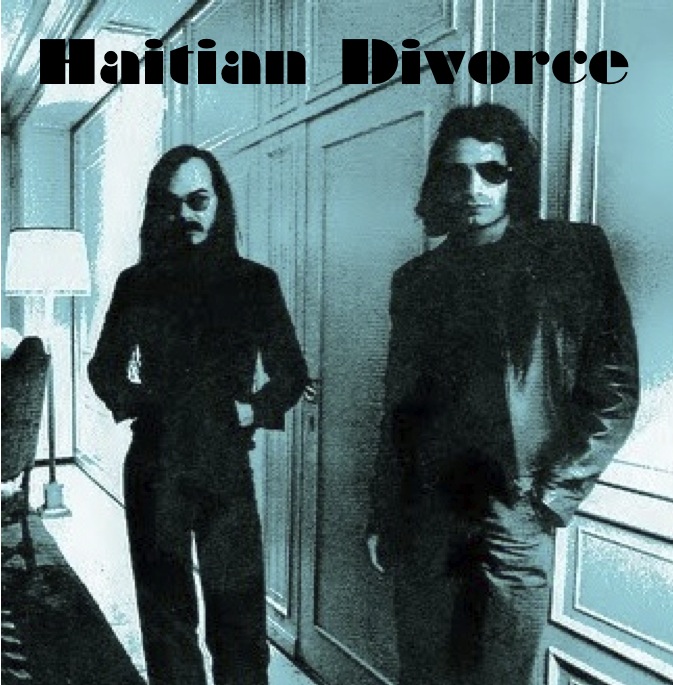
My friend Jammin’ and I co-own a team that, during the 2010-11 season, went by the name of “Haitian Divorce”. We like the Steely Dan theme (see our team logo from last year, above), and while it’s not been formally decided, I’m lobbying for another show of faith in the mystical powers of Fagen and Becker.

What’s clear is that Haitian Divorce, despite the killer logo, didn’t do the job; we finished tied for 5th last year in our 13-team league. So allow me to enlist your input. Here are some alternatives, in keeping with the Steely Dan theme. Let me know which ones you like best, or feel free to suggest alternatives:

Black Cow

Hats & Hooters

The Caves of Altimira

Chase the Dragon

Can you tell I’m listening to Aja and Gaucho while mulling this extremely serious matter? Lyric excerpts work as well as actual song or album names. I’ve already dubbed the basketball podcast here at halphillips.net “Glamour Profession”, so that’s out. Still, so much to choose from.

Schoolyard Supermen

Illegal Fun

LA Concession

Bodacious Cowboys

Mystical Sphere

Jammin weighs in with this: “If we must use a Steely Dan theme then the only choice would be Bad Sneakers… But it doesn’t really matter what we call our team because this is our year.”

True that.


Whitbread Headlines Intriguing TV Saturday for US Soccer Nuts

Whitbread Headlines Intriguing TV Saturday for US Soccer Nuts

Keep your DVRs at the ready. The U.S. Men’s National Soccer campaign is done for 2011, but that doesn’t mean we can’t check on the progress and form of key individual squad members, as they toil for European clubs and, in some cases, strive to catch the eye of American coach Jurgen Klinsmann. Indeed, Saturday, Nov. 26 provides us three televised games on the trot, all featuring Yanks abroad worth watching.

The most interesting game, the one I’ll be watching closest, is the 10 a.m. EST tilt featuring Norwich City and Queens Park Rangers on Fox Soccer Channel. Not the most compelling or glamorous match on its face, but it’s hoped here that City’s Zak Whitbread, the central defender and Houston native, will earn a start in the Canary back four. Whitbread is not a household name. He’s bounced around England’s lower divisions for some time. He’s no spring chicken, either: 27 years old, meaning he’d be 30 by the time Brazil 2014 rolls around and, so, hardly a more youthful alternative to either Carlos Bocanegra and Clarence Goodson. Klinsmann’s current top choices at center defense have not wowed anyone with their pace nor their ability to play the ball confidently and creatively out of the back. I’ve no idea whether Whitbread is a serious alternative to either one, but how may other Americans are playing central defense for EPL teams nowadays. Who is this guy? Whitbread spent most of his life in England and Singapore (his father, Barry Whitbread, was the coach of the Singapore national football team in the late 1990s). He matriculated via Liverpool’s respected youth academy but never caught on with the senior club. He played at Millwall and now he’s at Norwich. I can’t say that I have any real familiarity with this guy’s game. I’ll be looking to change that  Saturday.

Equally enticing is the 2:30 p.m. EST Serie A match on Fox Soccer Channel pitting Chievo against AC Milan. Michael Bradley showed everyone he deserves a place in the U.S. team with a fine performance in Slovenia last week. I think the hubbub re. whether Klinsi was somehow dissing Bradley in wake of his father being ousted as U.S. coach, in August, was way overplayed. All this fall, Bradley the Younger had been fighting for a place with his new Italian club, and Klinsi would have done him no favors by pulling him out of training for a friendly v. Honduras. Again, we don’t get to see a lot of Chievo on American television, and so we’ll see for ourselves Saturday what sort of place Bradley has fashioned for himself — against top-flight competition in Milan.

I think we know all we need to know about Clint Dempsey at this stage. He’s America’s top talent, can play anywhere in any attacking formation, and does so for both the USMNT and his EPL club, Fulham. Sandwiched between the two games noted above, The Cottagers travel to Arsenal in a 12:30 p.m. EST start on FSC. The Gunners have found their form of late, while plucky Fulham have exhibited difficulty scoring home and away. Here’s hoping FFC scores first in this London Derby, on a Dempsey goal, thereby averting what I fear could be a route.

Paterno? Forget that… What did Posnanski know?

Paterno? Forget that… What did Posnanski know?

For a cringe-inducing sports podcast experience without peer, it’s hard to beat Jonah Keri’s Nov. 3 Grantland Network pod with Sports Illustrated writer Joe Posnanski, who, prior to sitting down for this lengthy interview, had apparently spent the last several months ensconced in State College, Pa., researching a biography of Joe Paterno.

Subscribe to the Grantland Network via iTunes, listen to the first 18 minutes of this interview, then note its issue date: Nov. 3, 2011. It was recorded/aired roughly 48 hours before the college football world was rendered slack-jawed and the Fiefdom of Joe utterly torn asunder by revelations that Paterno’s longtime defensive assistant had, before retiring 12 years ago at age 55, allegedly been molesting young boys under the cover of a philanthropic foundation he administered — one that shared facilities with and operated with the imprimatur of JoePa’s storied football program in State College.

By now the details of this story and these allegations are widely known. However, listening to Posnanski on Nov. 3 is nothing short of surreal: One would never have gathered the slightest inkling that any of this was about to come down. Set beside the events of more recent days, the contrasts and ironies of this interview are myriad, stunning and puzzling.

No one can forecast the future, of course. On Nov. 3, 2011, the story had not yet been broken nationally.

Still, one has to wonder what sort of research Posnanski was doing all that time in State College. These rumors had been circulating in the local press since April 2011, as we’ve since learned, and it seems strange that a writer of Posnanski’s professional standing could immerse himself in Penn State culture and know absolutely nothing about it.

Further questions come thick and fast.

Is this merely an intersection of art and commerce? To be sure, the writer of this sort of book has a stake in building up the subject, not tearing him down. That’s part of the reason he did the interview with Keri, to promote the book. There’s nothing inherently wrong with sports biographies, or promoting them, but it strains credulity that Posnanski could have been researching one while unwittingly sitting atop one of the biggest powder kegs in American sports history.

Forget Paterno. What did the writer know and when did he know it?

Posnanski isn’t saying, not directly. He posted on his SI blog Nov. 8, with the clear implication that he will not be elaborating further. This story “needs time”, he wrote. Two days later, on Nov. 10, he apparently spoke to a Penn State class called “Joe Paterno: Communications and the Media,” during which he had this to say. [This tweet and other’s like them have been scrubbed; here’s a lesson for you journo students out there: always link and reproduce the tweet in the body of your story, for posterity].

For his part, Posnanski is sorta damned if he did know and damned if he didn’t. If he knew anything about what was going down and sat on it — in order to secure continued access to and cooperation from Paterno and Penn State; in order to protect his investment in the book project — it’s not unreasonable to question his ethics.

If he didn’t have a clue, it’s not unreasonable to question his research methodology and motivation.

Journalists don’t like to spell this out, but motivation drives research. It’s perfectly reasonable to expect that an uncritical, hagiographic book on Joe Paterno would never delve deeply or critically enough into the subject to produce revelations like those we’ve seen in the last two weeks.

Some in the Penn State community, some in the local media clearly knew what was going down. Grand Juries aren’t called out of thin air (its report was what busted this story wide open on Nov. 5). Prior to Nov. 5, all but a few locals surely treated this as a highly classified state secret, especially when an SI reporter was in their midst.

Posnanski’s situation would be a lot less complicated if he admitted that it was never his intention to write anything but a puff-piece biography on Paterno. That sort of motivation would explain his never having conducted enough real research to learn of this mess ahead of Nov. 5, 2011. He might simply maintain that he took on this project because he clearly admired Paterno and everything he’d built at Penn State (you can hear this esteem coating everything Posnanski said about the coach, the program, State College and PSU during his pod chat with Keri) and because Paterno would soon be passing Eddie Robinson for the all-time record in Division I college football victories, something that indeed did take place on Oct. 29, 2011 vs. Illinois.

From a sentimental, hagiographic and pecuniary standpoint, this is just the sort of formula around which obsequious sports biographies are routinely written, published and sold. (No one could have dreamed that record-setting victory would be Paterno’s last game as a Penn State employee.)

But that’s not what Posnanski is saying.

In his temporary farewell blog item, Posnanski does not take that tack. He appears determined to portray Paterno as a complicated figure of longstanding — as someone whom people have always simultaneously revered and despised. It was this complicated personality that attracted him, Posnanski writes.

Well, complicated figures have detractors. If Posnanski was motivated by the complicated nature of Joe Paterno’s story, it’s hard to imagine during his long sojourn in State College he didn’t sit down and chat at some point with Mark Madden, the Beaver County Times columnist who has been following this story all along, or simply read Madden’s April 3, 2011 column online. That’s all it would have taken not to have been blindsided by the Nov. 5 Grand Jury report.

For a guy who could be damned either way, there’s a strong likelihood that Posnanski will come out of this smelling like a rose. The terminus of this story is nowhere in sight, but Posnanski will surely be weighing in, eventually, with a book — a very different sort of book than he’d planned, one that stands to be far more prurient, far better promoted, far better read, and far more lucrative than the fawning bit of treacle he was promoting on Jonah Keri’s podcast Nov. 3.

I don’t know what that is, but it ain’t justice.

The Top 50 College Basketball Players Ever: A Riposte

The Top 50 College Basketball Players Ever: A Riposte

As we inch toward another college basketball tournament (remember when March Madness actually finished in March?), Chuck Klosterman’s compelling, ambitious ranking of the top 50 college basketball players of all time deserves review — as does this piece below, which refines the matter for all time. Indeed, the foreseeable future won’t bring any changes because college basketball has come to be dominated by a serial collection of 1-and-done, unpaid contract workers whose impact on posterity is minimal, compared to those whose college “careers” lasted 3 or 4 years, not just 1.

When the ranking was first issued, back in 2011, it caught me unawares. By that time I had well developed my unlikely ambivalence toward college basketball. How else to judge its ever-lengthening regular season that, with each passing year, degenerates more brazenly into a tawdry exercise in mere broadcast-content provision? Ninety-five percent of Division I games these days are ultimately meaningless exhibition/cash-grabs leading up to an admittedly thrilling denouement, the NCAA Tournament, which can obscure, for one month each spring, just how ridiculous it is that these basketball “programs” are attached to, and wield such extraordinary fiscal and emotional power over, universities and their attendant communities. I won’t even get into the fact that all this money is being generated — for colleges, media outlets and corporate advertisers — on the backs, jerseys and computer-generated likenesses of unpaid laborers.

[For the record, I’ve transferred my hoop attentions to the unabashedly professional version of the game — for the same reasons Abraham Lincoln once threatened, rhetorically, to abandon his native country for Moscow: Our progress in degeneracy appears to me to be pretty rapid, Lincoln wrote to his friend Joshua Speed, in 1855. As a nation, we began by declaring that “all men are created equal.” We now practically read it, “all men are created equal except negroes.” When the Know-nothings get control, it will read, “all men are created equal except negroes and foreigners and Catholics.” When it comes to this, I shall prefer emigrating to some country where they make no pretense of loving liberty — to Russia, for instance, where despotism can be taken pure, and without the base alloy of hypocrisy.]

But there was a time in my life, from 1973 through the turn of the millennium, when I firmly and happily resided in the college basketball camp. Nothing so captured my sporting imagination in fact. As a middle-schooler, my friends and I devised a gaming scheme that pre-dated brackets: 32 teams in a brown paper bag, pull one for buck; if your team makes the Final Four you’re in the money. We closely followed teams from the old Yankee Conference and Eastern 8. I recall being devastated when one of those YC champs, Rhode Island, lost by a point in the 1978 NCAA Tournament — to Duke, which would go all the way to the Final (that Ram team, led by Sly Williams, was very, very good — Elite 8 good). The Big East took shape in 1979, when I was in high school, transforming (through the power of media exposure) players already known to us — Craig Shelton, Roosevelt Bowie, Corny Thompson, even Dan Calandrillo — from nice ballplayers into gods. In college I subscribed to something called Eastern Basketball magazine, written largely by a guy named Dick Weiss, whose life as it then appeared to me — covering college hoops 24/7 for junkies like myself — only strengthened my resolve to be a sportswriter.

Perhaps this is why Klosterman’s story struck such a nerve. It transported me to a time when I cared so much for college basketball, a time when the mendacity of it all wasn’t so striking, when perhaps the game wasn’t so shabby, or when I was naïve enough to believe it so. Chalk another one up to the palliative powers of nostalgia.

KLOSTERMAN’S LIST is preceded by several qualifiers, the rules of engagement as it were. The James Dean rule applies: Talent is the main criterion, but it helps to have died young. Most controversial but central to his working model is the idea that any player whose NBA stardom proved more “meaningful” than his college exploits is not eligible. Fair enough. If all were eligible, the Top 50 would too closely mimic the NBA’s Top 50 of all-time (issued in 1999), and what would be the point of that?

Read More

Born to Run? A ‘This American Life’ Experience

Born to Run? A ‘This American Life’ Experience

The temptation when giving it up for the routinely superb This American Life is to lavish too much praise on Ira Glass. I mean, could he really have purposely, out of sheer genius, slotted the show on Sunday nights when my family (and presumably lots of other families) were driving home from a weekend at their parents’ house, obliging anyone with any sense (and more than an hour to kill) to make some lemonade of the journey by flipping on a show that more or less required one to give himself over to something longterm and really listen? Not hardly. But pretty much everything else about This American Life is, when you had the time to pay attention, consistently quirky and captivating.

I recalled the moment this dynamic became clear to me a few days ago, upon reading Christopher McDougall’s thought-provoking piece, The Once and Future Way to Run”, in the New York Times. The subject here is the contention that early man ran more efficiently than we do today, barefoot, and that modern running technique and athletic footwear have conspired to rob humans of the ability to run long distances, and to do so without injury.

I was sorta surprised the story didn’t cite a 1997 This American Life story, “Running After Antelope,” an amazing tale from Scott Carrier about his efforts to personally prove what was then a new, less accepted anthropological theory: that bipedalism is an adaption for long-distance running, that early man hunted deer and other game, not by throwing spears, but by tracking animals over long distances, essentially running them down, tired and silly — then sticking them with a spear or even a blunt object.

It’s a fascinating topic and this was the episode of TAL that first hooked me. My wife and I sat spellbound, listening ever more absorbedly as we drove north on a darkened Interstate 95, the kids asleep in the backseat. I’ve always been a radio guy, but I’d never heard anything like this — a discursive, dreamy narrative told by a guy, Carrier himself, whose nasal, warbling deadpan was not the sort voice one heard much on the radio, and whose gripping story was equal parts personal quest and anthropological daring.

This is the stuff we’ve come to expect from Ira Glass and TAL, of course. I never manage to make time for the show on Sunday evenings; maybe he wasn’t such a canny scheduler after all. But whenever I do make that time, I am rewarded. Whatever you do, whatever you think of my observations or me, listen to “Running After Antelope.” It’s a mind bender.